
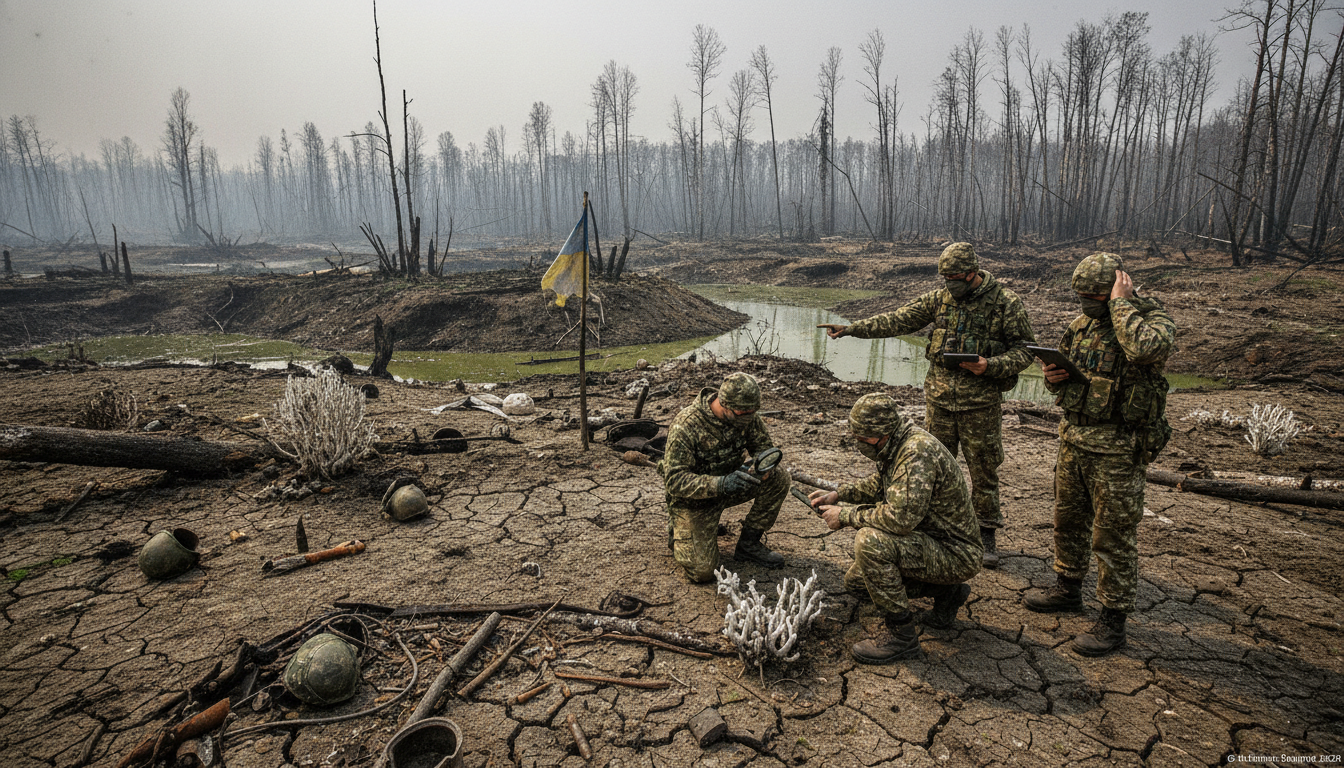
Ukraine’s ecosystems under siege: Biologists document war-driven extinction risks
Biologists working near front lines warn that Ukraine’s ecosystems are suffering catastrophic harm from warfare, pollution and habitat disruption. Ukraine’s ecosystems are being altered by military activity, damaged infrastructure and changing land use, researchers say. Teams operating in Kherson and other contested regions are collecting field evidence of species at risk and novel threats emerging from the conflict.
Frontline researchers document ecological damage
Biologists including Oleksiy Vasyliuk have established makeshift laboratories near the front to monitor wildlife and habitat changes despite bombardment and drone threats. Their work focuses on direct battlefield impacts, such as habitat fragmentation, and indirect consequences like pollution and altered water regimes. The teams are gathering data now to inform future restoration and to identify species that need urgent protection.
Fiber-optic cables found woven into bird nests
Soldiers operating near combat lines have reported bird nests constructed from discarded fiber-optic cables used to guide drones and communications. Field observers say these synthetic materials are pervasive across landscapes where infrastructure and military equipment are abundant. Experts warn that such novel nesting materials can cause entanglement, toxin exposure, and long-term changes in nesting behaviour that may reduce reproductive success.
Endemic Kherson species face extinction risk
Researchers estimate dozens of endemic species in the Kherson region are uniquely vulnerable because their ranges are small and tied to local habitats. Vasyliuk and colleagues note at least 22 plant species and 12 animal species are endemic to the area, making local destruction disproportionately severe. The risk is compounded where combat has converted crucial habitats into no-go zones or where populations have been fragmented beyond natural recovery thresholds.
Pollution surge after Nova Kakhovka dam breach
The June 2023 collapse of the Nova Kakhovka dam unleashed tens of thousands of tonnes of contaminated sediment into local waterways, researchers say, amplifying ecological stress. Pollutants swept into river systems have altered water chemistry, damaged spawning grounds and spread contaminants through floodplains. Scientists working on post-breach assessments stress that restoration will require targeted remediation and long-term monitoring to track recovery and species response.
Sand mole rat and river-dependent species imperilled
The sand mole rat, a species confined to the Dnieper river corridor, exemplifies how narrow-range species are imperilled by frontline fighting. Where riverbanks have become battle zones, burrowing mammals lose habitat and face population collapse, according to field reports. Conservationists warn that without immediate measures to protect key refuges, species restricted to single river systems may be lost before recovery efforts begin.
Przewalski’s horses impacted by northern remilitarization
Populations of Przewalski’s horses in the Chernobyl exclusion zone have been affected by a renewed military footprint along the Belarus border, researchers say. Camera-trap footage and field accounts indicate shifts in grazing patterns as horses avoid areas of human activity, which increases predation risk and exposes them to remaining mines. Scientists report several fatalities from mine detonations and call for urgent surveying and mitigation to protect these reintroduced herds.
Black Sea cetacean monitoring hampered by conflict
Marine researchers and organizations such as the Conflict and Environment Observatory have documented how instability has curtailed surveys of the Black Sea, limiting knowledge of dolphin and porpoise populations. Linas Svolkinas and other specialists say that systematic censuses are largely impossible in contested waters, and teams instead record increased numbers of stranded or bycaught animals. This lack of baseline data hampers conservation planning and obscures the full toll the conflict is taking on marine life.
Post-conflict restoration will require careful, science-led planning that incorporates the altered climate, changed hydrology and novel contamination patterns that have arisen during warfare. Vasyliuk and peers emphasize that replanting or rebuilding must not be done reflexively; ecosystems and local climates have shifted and restoration strategies should prioritize endemic species and resilient habitats. Political leaders and reconstruction planners will need to integrate ecological assessments into rebuilding budgets and timelines to avoid irreversible losses.
The evidence gathered by frontline biologists underscores a broader challenge: protecting biodiversity amid and after armed conflict demands coordinated international support, long-term monitoring and targeted remediation. Without those measures, Ukraine’s ecosystems risk losing species that exist nowhere else, and the environmental legacy of the war could hinder human and economic recovery as well as natural recovery for decades to come.
