
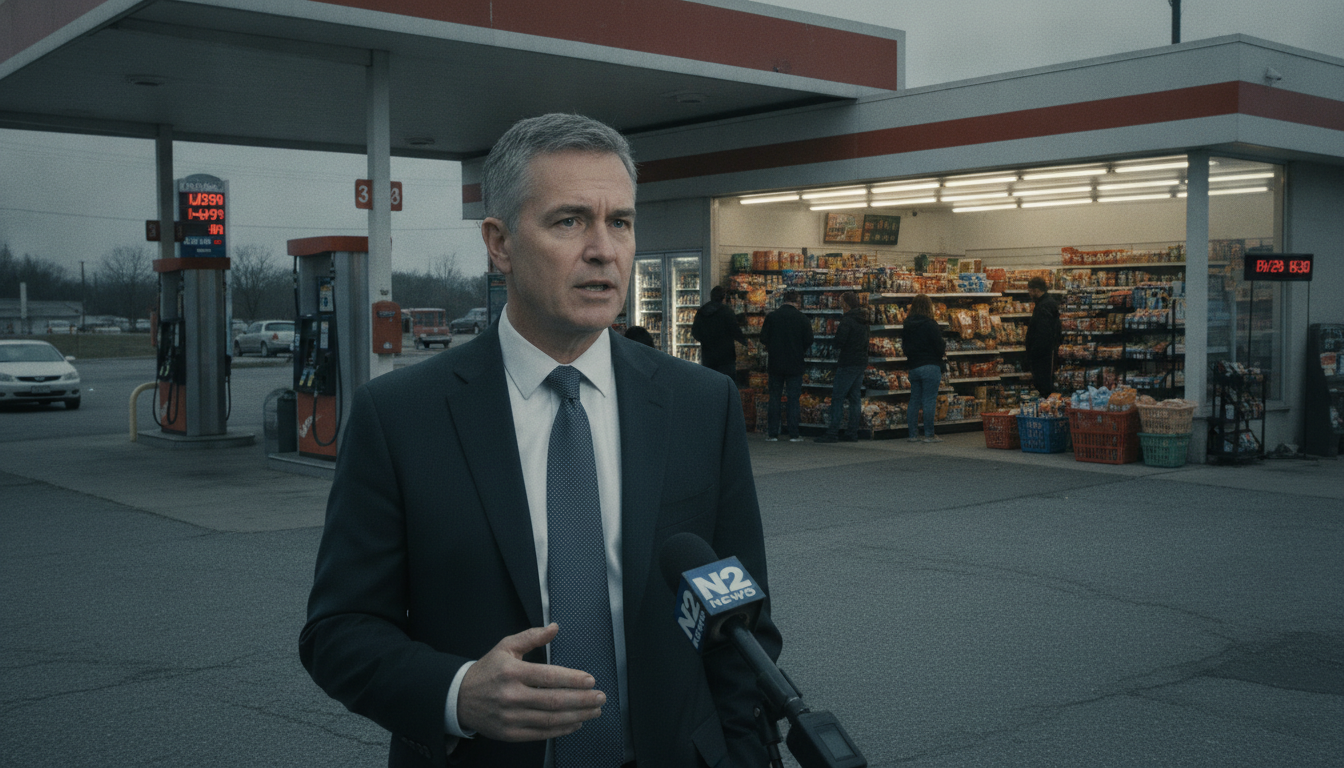
Gas stations squeezed as thin fuel margins push owners to rely on retail sales
Thin fuel margins and rising consolidation force Canadian gas stations to rely on convenience sales, reshaping local retail and driving closures and buyouts.
Independent gas stations across Canada are feeling the squeeze as razor-thin fuel margins force owners to depend on convenience-store revenues to stay afloat. Industry observers say the old model of competing on gasoline prices has given way to a new reality where pop, chips and tobacco determine profitability. “I used to refer to this many years ago as ‘gas bar shenanigans,’ where they try to outdo each other, outwit each other by losing money selling gasoline and making more money selling pop, chips and smokes,” McTeague said.
Independent Gas Stations Face Squeezed Fuel Margins
Operators report that margins on gasoline sales have narrowed to the point where selling fuel is often a loss leader rather than a reliable profit center. Rising wholesale costs, pressure from large retailers, and unpredictable pump price swings leave little room for independent dealers to recover operating expenses. For many small owners, profit margins now hinge on the items sold inside the store rather than the litres pumped.
Several owners say the contest to offer the lowest pump price is unsustainable and encourages a race to the bottom. That dynamic, they add, contributes to closures or the sale of family-run stations to larger chains. The result is fewer locally controlled gas stations and more outlets that are part of broader retail operations.
Convenience Sales Become the Core Revenue Stream
Convenience-store items such as beverages, snacks, and cigarettes increasingly subsidize fuel losses and cover fixed costs like wages, rent and credit-card fees. Owners describe shifting inventory strategies to emphasize higher-margin goods and quick-turn products to boost average ticket values. Loyalty programs, prepared food counters and expanded foodservice are now common tactics to draw customers beyond fuel purchases.
This pivot alters the customer experience at many locations, with owners investing in updated point-of-sale systems and merchandising. The move toward non-fuel revenue also requires different staffing and supply arrangements, adding complexity for small operators who once focused primarily on pumps and tanks.
Big-Box and Convenience Chains Intensify Competition
Large retailers and vertically integrated convenience chains have the buying power to undercut independents on fuel while leveraging broad product assortments to capture in-store spend. Their economies of scale make it difficult for isolated stations to match pricing or promotional reach. Industry insiders say this consolidation is a major factor in the steady takeover of smaller sites by national and regional players.
The competitive pressure extends beyond price; big operators can invest in modern store formats, branded food offerings and technology-driven loyalty programs. Those investments make it harder for stand-alone stations to attract the foot traffic needed to keep convenience revenues healthy.
Operators Adapt With New Strategies and Partnerships
In response, some independent operators are diversifying services, adding car washes, parcel pickup points and specialty coffee to increase visit frequency and basket size. Others form cooperative buying groups to access better wholesale pricing on merchandise and fuel. Franchise agreements and branding partnerships also offer a pathway to stability for owners seeking to preserve a local presence without sacrificing purchasing power.
Still, these adjustments require upfront capital and managerial capacity that not all owners possess, particularly older proprietors nearing retirement. For some, the decision to sell to a larger operator is a pragmatic exit strategy rather than a sign of failure.
Regulatory and Price Pressures Shape Market Outcomes
Government policies on fuel taxation, environmental regulation and retail zoning can influence station economics and long-term viability. Compliance costs for storage tanks, reporting requirements and environmental safeguards add to the fixed overhead that owners must cover with increasingly thin fuel margins. Analysts warn that without policy coordination, small operators may find the regulatory burden disproportionally heavy relative to their revenue base.
At the same time, shifts in consumer behaviour—such as increased use of electric vehicles—are already prompting operators to reconsider investments in traditional fuel infrastructure. The pace of that transition will affect which stations can adapt and which are more likely to be absorbed into larger retail footprints.
Communities Face Changing Local Retail Landscapes
As independents close or are acquired, residents in some neighbourhoods may lose locally oriented service, including late-night access and community-based employment. Conversely, larger operators often bring standardized offerings and broader product mixes that some consumers appreciate for convenience and consistency. The net effect varies by region, depending on population density and the presence of alternative retailers.
Local planners and community groups are beginning to weigh the trade-offs, particularly in smaller towns where a single gas station can be a vital amenity. Decisions about redevelopment, zoning and community benefits are increasingly part of the conversation when stations change hands.
The pattern McTeague describes—where competition on pump prices gives way to reliance on in-store sales—signals a structural shift in how gas stations operate in Canada. For many independent owners the challenge is clear: adapt to a retail-first model, join a larger network, or exit the market. Consumers and communities will continue to see the effects of that shift in the coming years as the retail landscape around fuel evolves.
