
Canada-U.S. trade talks continue in Washington as negotiators race to avert sweeping tariffs
Canada-U.S. trade talks in Washington intensify as negotiators work to stave off a looming U.S. tariff deadline and resolve contentious supply-management issues.
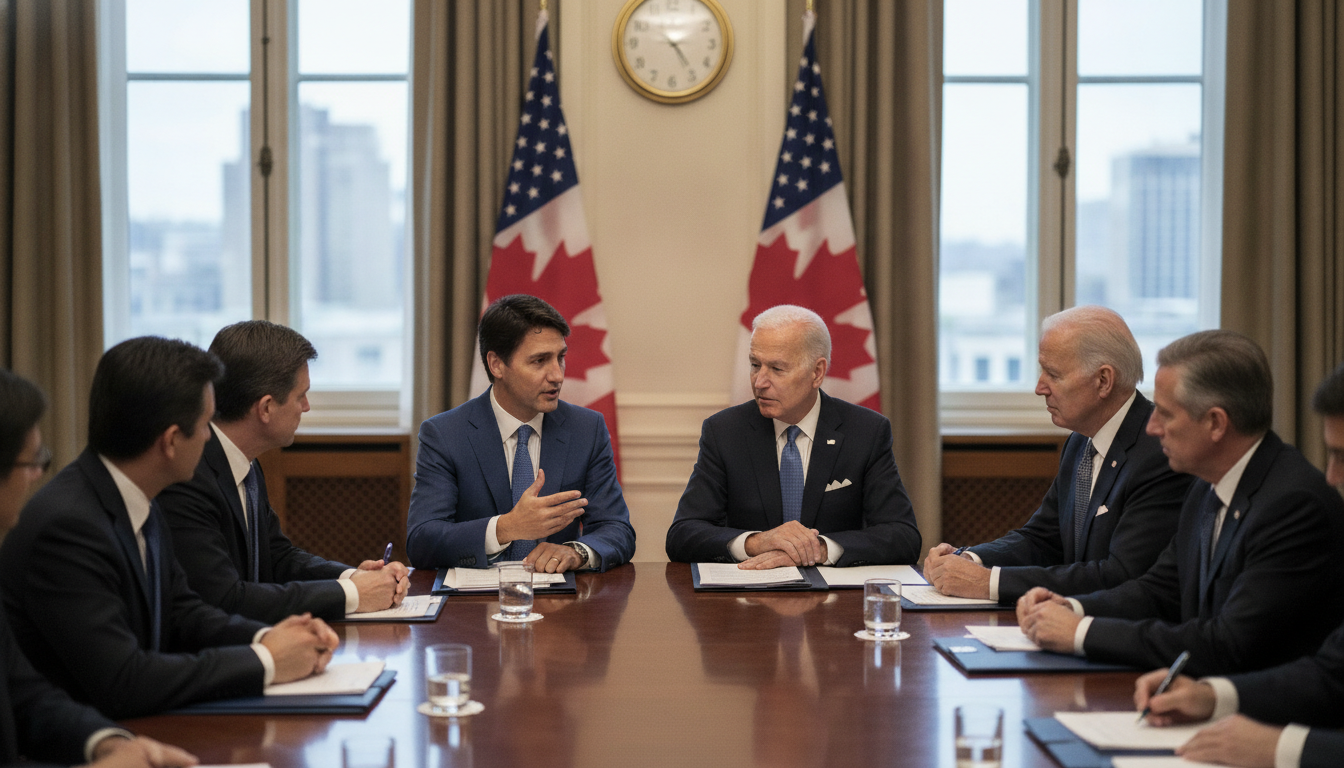
Negotiators for Canada and the United States held extended discussions in Washington on Thursday as officials raced to finalize a trade understanding before a U.S. deadline that could trigger steep tariffs. Canadian Minister Dominic LeBlanc described the talks as lengthy and significant, and chief negotiator Janice Charette remained inside continued meetings aimed at producing a deal to calm an escalating tariff dispute. With a temporary reprieve set to expire overnight Friday, officials said work would continue until an acceptable agreement was reached.
LeBlanc and U.S. trade officials meet in Washington
Dominic LeBlanc emerged from a session with U.S. Trade Representative Jamieson Greer saying the discussion had been extensive and important. He emphasized that talks were ongoing and that Canada’s lead negotiator was continuing bilateral negotiations inside the meeting venue.
LeBlanc declined to answer questions at his departure but indicated negotiators would press on until they secured terms satisfactory to both sides. The talks come amid an accelerated schedule as Washington’s temporary hold on new tariffs approaches its deadline.
Tariff deadline and stakes for Canadian exporters
Officials are working against a narrow window: a U.S. postponement of potential 50 percent tariffs is due to lapse late Friday into Saturday, putting pressure on negotiators to agree terms quickly. If the reprieve ends without an agreement, Canadian exporters in several sectors could face sudden and disruptive duties.
Sources close to the negotiations say the elements under discussion include tariff rollbacks and sector-specific protections, with steel, aluminum, autos and lumber among the priority issues Ottawa hopes to shield. Canadian officials have urged swift resolution to restore certainty for businesses and workers tied to cross-border supply chains.
Supply management at the heart of dairy dispute
Supply management — the system that regulates dairy, poultry and egg markets in Canada — has emerged as a central and politically sensitive issue in talks. U.S. agriculture officials have criticized the Canadian framework as disadvantaging American farmers, and Washington’s negotiating team has pressed for concessions.
U.S. Agriculture Secretary Brooke Rollins publicly amplified those concerns on Thursday, criticizing Canada’s rules while promising to pursue changes to benefit U.S. producers. Canadian political leaders and farm representatives have warned against any agreement that would undermine domestic supply-management protections.
Quebec and party leaders voice firm red lines
Quebec’s provincial and federal political figures have been vocal about protecting provincial cultural and agricultural protections during the negotiations. Bloc Québécois leader Yves-François Blanchet signalled strong opposition to any erosion of Quebec’s dairy sector, warning that concessions could displace local cheeses and yogurt on store shelves.
Provincial premiers were briefed by federal officials, and Quebec Premier Christine Fréchette said she received answers from federal negotiators but still awaited clarification on several elements. Liberal candidates with farming backgrounds have also expressed confidence that their party would not accept terms that harm producers’ incomes.
Provinces pressed on alcohol procurement and procurement rules
The federal negotiating team has asked provincial governments to adjust alcohol procurement policies, including potentially allowing American products back onto provincial store shelves in some jurisdictions. Several premiers confirmed they had been asked to review procurement conditions to ensure they do not explicitly exclude U.S. suppliers.
Nova Scotia Premier Tim Houston said the request stemmed from the negotiation table, while Saskatchewan Premier Scott Moe noted the ask would not affect his province’s approach to consumer choice. Provinces will now weigh local policy priorities against the wider national interest in securing a trade settlement.
Parallel outreach to Mexico and ACEUM renewal emphasis
Alongside U.S. talks, Prime Minister Mark Carney spoke with Mexican President Claudia Sheinbaum to underscore the urgency of renewing the Canada–United States–Mexico Agreement. Both leaders highlighted the importance of restarting a trilateral framework that supports North American businesses and workers.
Ottawa has pursued increased commercial engagement with Mexico this year, noting the country is a significant trading partner. Officials framed a renewed trilateral pact as a way to deliver more certainty for exporters across the continent.
Negotiators said that, while details remained largely under wraps, the goal was to secure protections across Canada’s most strategic industries while preserving access and stability for North American commerce.
The coming hours will determine whether talks produce a concrete pact or whether the tariff reprieve lapses, forcing both sides to reassess options and the economic fallout for industries on both sides of the border.
