
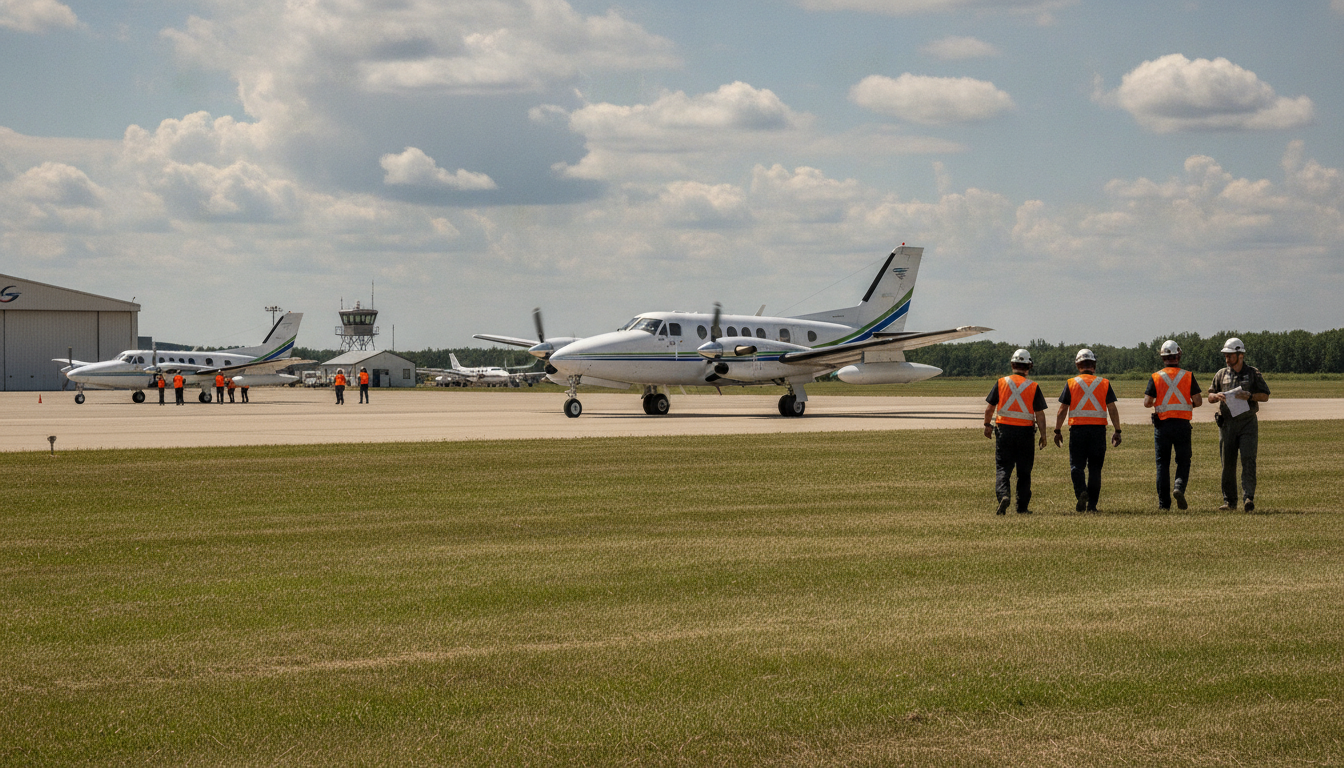
Cloud seeding activity surges across central Alberta, official reports
Cloud seeding in central Alberta has intensified, with operators reporting about 55–60 summer seedings to bolster water supplies and curb wildfire risk.
This summer has seen a marked increase in cloud seeding operations across a broad swath of central Alberta, an operator said, with dozens of seedings taking place during peak months. Brainard, who works with colleagues covering territory from High River north to Ponoka and from Sundre east to Three Hills, described the season as especially busy compared with recent years. The reported pace—roughly 55 to 60 seedings over the summer in some areas—signals heightened reliance on the practice amid pressing water and fire-risk concerns.
Scale of operations reported by regional crews
Regional crews have stepped up flights and ground-based activity through the busy months, Brainard said, reflecting coordinated effort across multiple jurisdictions. The number he cited represents seedings conducted across a contiguous area that spans several municipalities and diverse terrain.
Operators and weather teams are scheduling sorties when atmospheric conditions are judged favourable, typically targeting convective systems and cloud layers that could be augmented. The reported volume of interventions suggests a sustained campaign rather than isolated experiments, officials and operators say.
Geographic footprint from High River to Three Hills
The operational footprint described covers southern and central Alberta communities, stretching from High River to the northward limit of Ponoka and eastward from Sundre to Three Hills. That corridor includes agricultural zones, small towns and watershed areas that supply municipal and irrigation demands. Local topography and prevailing summer storm patterns help define where and when seeding is attempted.
Because cloud seeding requires specific atmospheric windows, crews deploy across that region when satellite and radar data indicate potential for precipitation enhancement. The dispersed nature of the program means multiple teams may operate concurrently to cover different target cells.
Methods, aims and common techniques
Cloud seeding generally involves dispersing particles into clouds to encourage droplet formation; common agents include silver iodide and hygroscopic salts, used depending on the cloud type and the intended outcome. Aircraft or ground generators are the typical delivery platforms, with timing and particle selection tailored to meteorological conditions. The stated aims for the increased operations include boosting local water supplies, supporting agricultural needs and reducing conditions that favour wildfires by encouraging earlier or more widespread rainfall.
Operators emphasize that interventions are timed to maximize chances of measurable precipitation while minimising unintended impacts. Monitoring before and after seeding—including radar observations and rain gauging—is customary to evaluate whether specific projects achieved their objectives.
Stakeholder response and municipal planning
Municipal officials, water managers and some agricultural stakeholders have voiced support for interventions that can increase reservoir and soil moisture levels during dry spells. Increased seeding activity is being discussed in council chambers and water utility planning as one component of broader drought mitigation strategies. At the same time, community members and interest groups have called for clear reporting and transparency around when and where seeding occurs.
Local governments are weighing operational benefits alongside budgetary and oversight questions, and some jurisdictions are seeking more regular briefings from operators. Public information efforts have grown as seedings become more visible in discussions about summer water management and wildfire preparedness.
Effectiveness, monitoring and scientific questions
Scientific assessments of cloud seeding effectiveness vary, and experts caution that proving causation for any individual rainfall event is challenging. Studies often examine statistical trends over many operations rather than single sorties, and results can depend heavily on baseline climate variability. This has prompted calls for rigorous monitoring protocols, including pre- and post-operation measurement, independent analysis and peer-reviewed evaluation of long-term outcomes.
Operators acknowledge those complexities and say that cumulative data, when collected consistently, can help determine whether the program delivers meaningful gains in precipitation. Researchers and policymakers continue to debate the cost-benefit balance and the best metrics for assessing program performance.
Cloud seeding in central Alberta has become a routine tool for some operators and planners during the summer months, according to regional personnel. Brainard described the season as exceptionally active, noting the roughly 55–60 seedings occurring across his coverage area over the summer months. As municipalities and stakeholders track water and fire risks, officials say they will continue to monitor operations and outcomes to inform future decisions.
