
Global push for a social media ban for children as UK joins international wave of age limits
UK joins Australia and others in pursuing a social media ban for children under 16, spurring debate on enforcement, privacy and legal timetables.
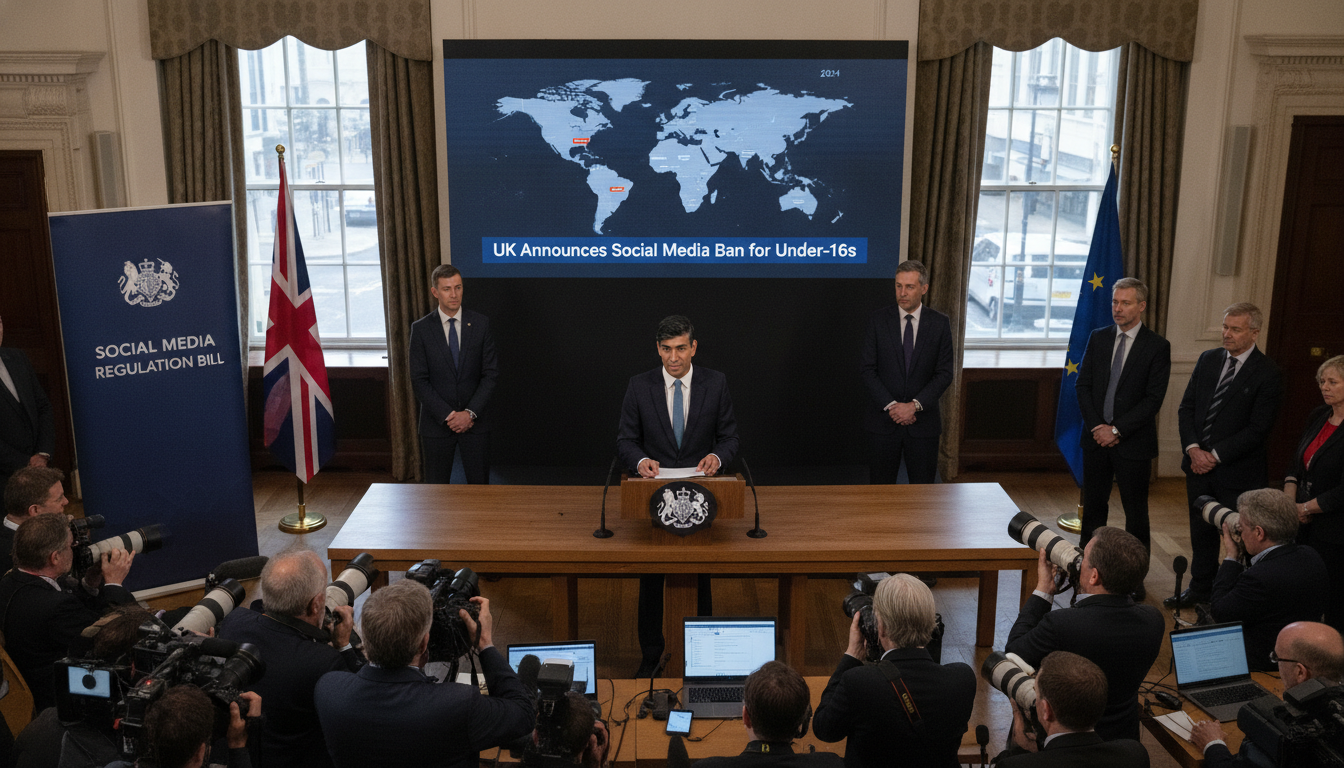
In a significant policy shift, the United Kingdom on June 15 announced plans for a social media ban for children that would bar under-16s from major platforms while exempting private messaging services. The announcement makes the UK the latest high‑profile government to propose age-based restrictions, a movement that began with Australia and has since spread across Europe and parts of Asia. Policymakers say the measures aim to reduce harms such as addiction, anxiety and online abuse among young people.
UK Announces Ban on Social Media for Under-16s
The British government said the proposed ban would cover public social platforms including mainstream video and image services and social networks, while leaving encrypted messaging apps outside the restrictions. Officials signalled that AI-driven companion chatbots and similar services would face separate age limits, with adult-only access required for certain chatbot features.
Prime Minister Keir Starmer acknowledged enforcement challenges but indicated the government believes a ban can be made operational, setting a target window for implementation in spring 2027. Ministers have framed the move as part of a wider digital safety agenda aimed at reducing time spent on social feeds and protecting children from manipulative design and harmful content.
Australia’s 2025 Rule Set a Global Precedent
Australia became the first country to introduce a broad age restriction in December 2025, requiring platforms to prevent children under 16 from using a range of social networks and to adopt more rigorous age verification. The Australian framework allows for substantial fines for noncompliant companies and specifically excludes some services that are primarily private messaging or child‑focused offerings.
That early adoption has been cited by other governments as a model and a warning, depending on perspective, because it forces tech companies to design or deploy verification systems at scale. Canberra’s approach has accelerated international discussion about what constitutes acceptable verification and the trade-offs between protecting minors and preserving privacy.
Europe and Asia Move Toward Uniform Age Limits
Across Europe, lawmakers in countries such as France, Denmark, Austria, Germany and Spain have advanced proposals that set minimum ages between 14 and 16 for general social media access. Several central and eastern European states — including Poland, Slovenia and Greece — are drafting or passing similar measures, with some schedules calling for implementation within the next year.
In Asia, governments from Indonesia to Malaysia have announced plans to restrict access for younger teens and preteens, citing public health and safety concerns. The patchwork of ages and legislative timelines reflects differing social priorities, legal frameworks and political calculations, but the overall trajectory is a clustering of national policies aimed at limiting adolescent exposure to algorithmically curated social platforms.
Industry, Rights Groups Raise Privacy and Practicality Concerns
Technology companies and civil society groups have pushed back on blanket bans, arguing that stringent age verification mechanisms can be invasive and may drive minors toward less regulated corners of the internet. Human rights advocates warn that requiring identity checks or intrusive biometrics risks putting users’ personal data at greater risk and could disproportionately affect marginalized families.
Experts also caution that enforcement may prove difficult in practice, as determined users can falsify ages or access platforms through shared family accounts, virtual private networks or alternative apps. Critics contend that blanket prohibitions may overlook constructive approaches such as stronger content moderation, parental controls and education about digital hygiene.
Enforcement, Verification and Legal Timelines
Governments proposing bans are wrestling with technical and legal questions about how to verify age without breaching privacy standards, who bears liability for noncompliance, and what penalties are proportionate. Proposals under discussion include multi-factor age checks, industry codes of practice, and new digital credentialing apps that could attest to age without transmitting unnecessary identity details.
Legislative processes vary: some measures are already passed by lower houses or parliaments, others are in draft form, and a number of countries have signalled multi‑stage consultations before final votes. Observers say the next 12 to 18 months are likely to determine whether these national proposals converge into a common international practice or fragment into divergent regulatory regimes.
Internationally, companies will face a complex compliance landscape if multiple countries insist on different age thresholds or verification regimes. That could prompt strategic changes from platforms, ranging from geofenced features to universal age gating, each with distinct operational and legal implications.
Public health arguments, data protection concerns and questions about enforceability will continue to shape debate as legislatures refine the proposals. Families, educators and technology firms are likely to press for clearer guidance on how age checks can be implemented fairly and safely while preserving children’s access to educational and civic resources.
As governments move from proposals to lawmaking, the balance between protecting minors online and safeguarding privacy rights will remain the central tension driving policy choices worldwide.
