
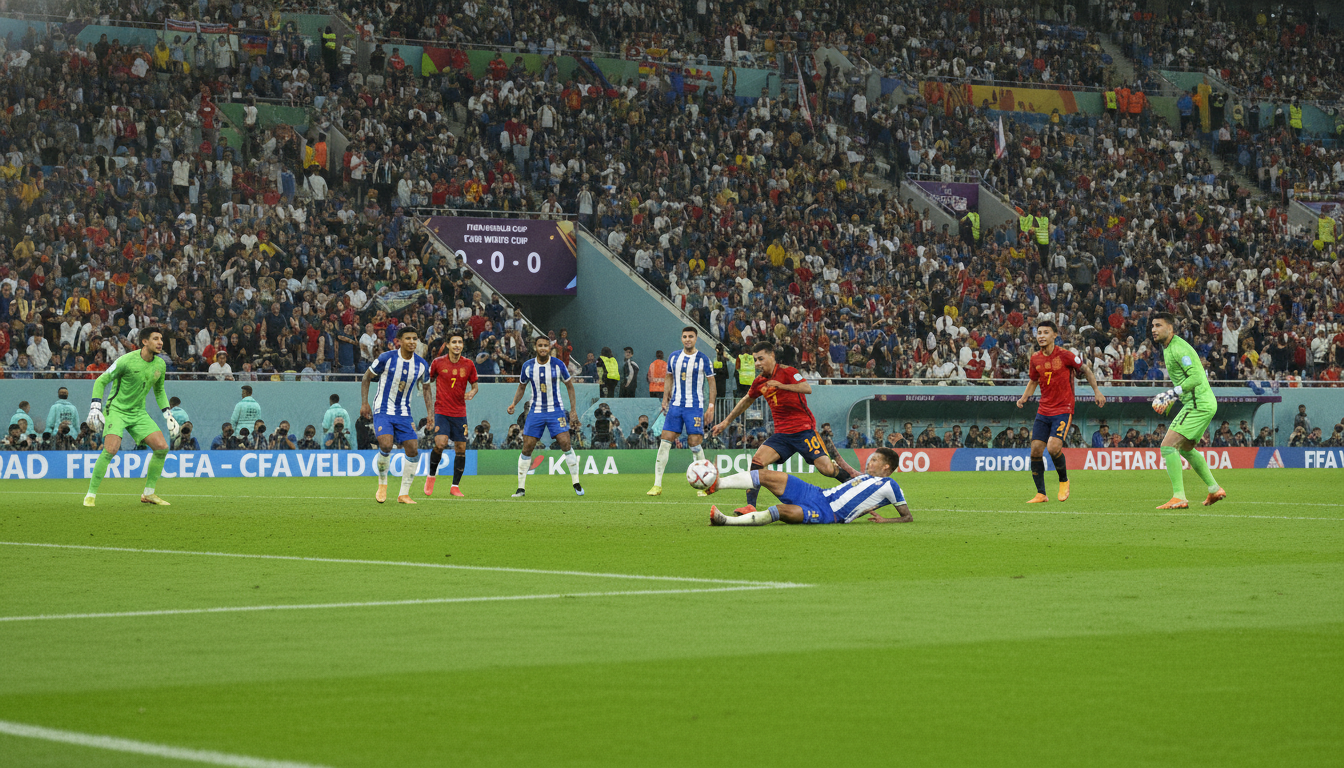
Cape Verde stuns Spain in World Cup debut, holding European champions to 0-0 draw
Cape Verde stuns Spain in World Cup debut with a 0-0 draw in Atlanta, as veteran keeper Vozinha thwarts threats and the islanders claim a landmark point.
Cape Verde stunned the soccer world in Atlanta, holding Spain to a 0-0 draw in the African nation’s first-ever World Cup match. The result was driven by a commanding performance from 40-year-old goalkeeper Vozinha and a disciplined defensive effort that frustrated a Spanish side filled with star talent. The draw stands as the tournament’s most unexpected outcome to date and marks a historic moment for the island nation. Spain created chances but could not break through a compact Cape Verde defense that defended resolutely for the full 90 minutes.
Vozinha’s veteran performance
Vozinha produced a series of decisive saves that kept Cape Verde level against one of the tournament favorites. The goalkeeper, whose experience spans decades of international play, made crucial stops before halftime and a handful of pressure moments in the second half. His positioning and reflexes frustrated Spain’s best attackers and forced the visitors to rely on shots from distance and narrow angles. Vozinha’s leadership from the back gave Cape Verde confidence to maintain shape and absorb waves of possession.
Key chances and a late header
Cape Verde almost claimed all three points when Diney Borges rose to meet a late cross, but his header was pushed away by Spain’s Unai Simón. Earlier, Ferran Torres struck the crossbar and later forced another strong save from Vozinha, keeping the match goalless. Spain also had efforts through Pedri and other attackers that were denied either by the goalkeeper or Cape Verde defenders clearing goalmouth scrambles. The match featured tense end-to-end sequences in the closing minutes, but neither side could convert their opportunities.
Spain’s lineup and tactical frustration
Spain fielded a roster heavy with household names and sought to impose its typical possession-heavy style from the outset. Despite dominating possession, the Spanish attack struggled to create clear-cut openings inside the penalty area against a compact defensive block. Coach Luis de la Fuente had warned beforehand that Cape Verde could be a surprise package, and his concerns were borne out as his side was unable to find the breakthrough. Substitutions, including the introduction of teenage talent Lamine Yamal, altered the tempo but did not yield the decisive moment Spain needed.
Cape Verde’s historic World Cup debut
The draw represents a landmark achievement for Cape Verde, an island nation of roughly half a million people playing on football’s biggest stage for the first time. Their tactical discipline, physical commitment, and collective organization under pressure revealed a team prepared to compete at the highest level. Players from domestic leagues and clubs abroad combined effectively to execute a game plan focused on compact defending and quick transitions. The result will be remembered in Cape Verde’s sporting history as the national team’s most significant match on the world stage to date.
Tactical approach and second-half resilience
Cape Verde adjusted tactically at halftime to blunt Spain’s most dangerous channels, dropping players to limit space between the lines and forcing Spain to reset their attacks. The islanders mixed zonal marking with timely individual interventions, and their back line repeatedly blocked shots and cleared crosses under sustained pressure. Spain’s ball retention often lacked the final pass precision needed to test Vozinha from close range. In response, Cape Verde attempted counterattacks when possible, producing the late headed chance that nearly yielded a memorable victory.
Tournament implications and reactions
The draw reshuffles expectations in the group, giving Cape Verde an unexpected platform and leaving Spain with a point that feels short of pre-tournament aspirations. Coaches and analysts will now reassess match plans and personnel choices ahead of the next fixtures, with Cape Verde buoyed by the result and Spain facing questions about finishing and creativity in the final third. Luis de la Fuente publicly acknowledged the challenge posed by his opponents and warned that Cape Verde could be one of the tournament’s surprise teams. For Cape Verde, players and staff celebrated a result that validates years of development and international investment.
The match in Atlanta provided one of the World Cup’s most memorable opening-day narratives: a small nation defending with discipline against a European champion and a veteran goalkeeper producing the kind of performance that can define a tournament. As both teams turn their focus to their remaining group matches, Cape Verde will carry confidence and belief, while Spain must find sharper attacking solutions if it hopes to contend for the title.
