
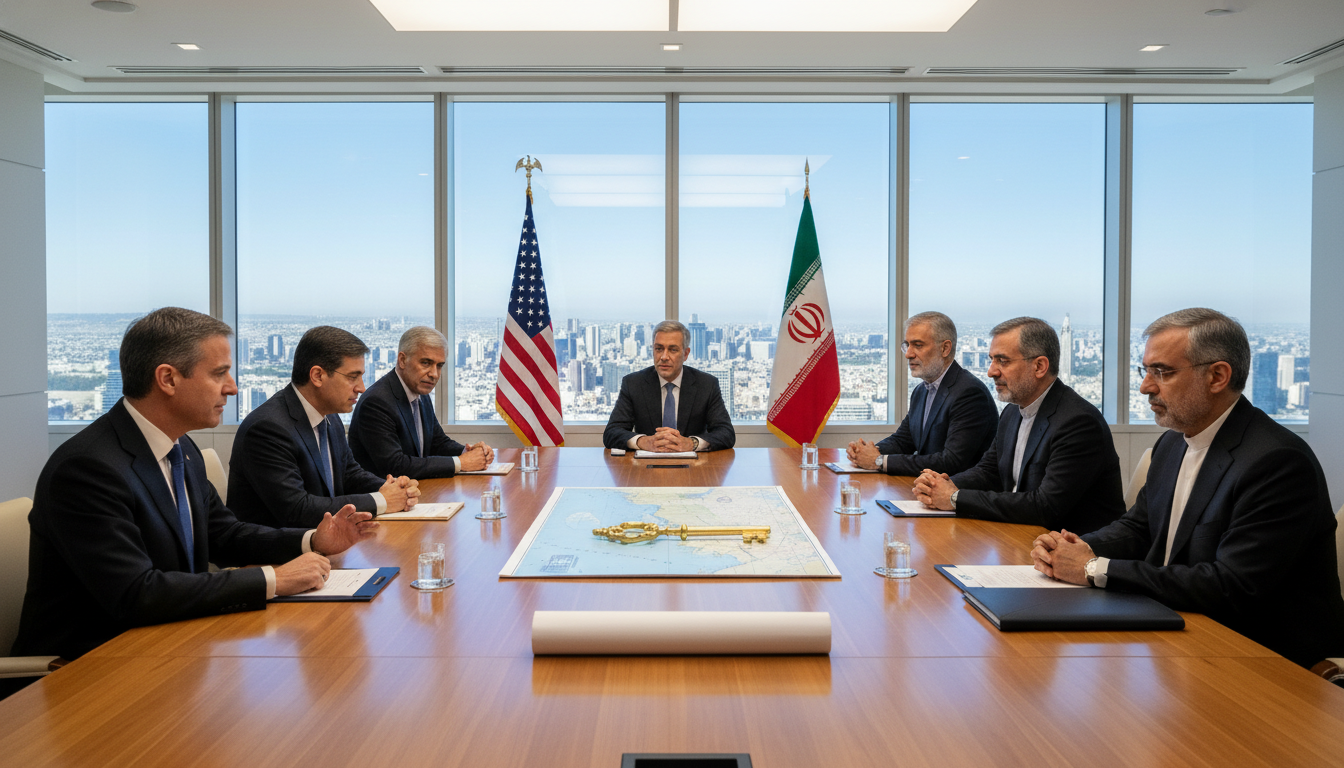
U.S. Ready for Iran Nuclear Talks if Strait of Hormuz Reopened, Rubio Says
U.S. says it will enter Iran nuclear talks if Tehran reopens the Strait of Hormuz, linking negotiations to disposal of highly enriched uranium, Rubio says.
Senator Marco Rubio said the United States is prepared to enter Iran nuclear talks if Tehran reopens the Strait of Hormuz, tying the resumption of diplomatic engagement to immediate changes in maritime access. Rubio made the remarks Sunday during a visit to New Delhi, saying Washington would pursue negotiated, phased discussions rather than demanding an immediate elimination of Iran’s nuclear capabilities. A U.S. official subsequently described an agreement in principle that would reopen the waterway while Iran considers measures on its highly enriched uranium stockpile.
U.S. Officials Link Talks to Reopening of Strait of Hormuz
Rubio framed the reopening of the Strait of Hormuz as a precondition for serious negotiations, saying the United States expects Tehran to restore safe passage as a first step. He emphasized that reopening the strait would trigger talks “under agreed-to parameters” covering enrichment and Iran’s pledge not to acquire nuclear weapons. U.S. officials described the linkage as a diplomatic lever to secure near-term confidence-building measures.
Agreement in Principle Reported by U.S. Official
A U.S. official told reporters there was an agreement in principle to a deal that would lead to the reopening of the Strait of Hormuz with a commitment from Iran to dispose of highly enriched uranium. The official provided few details publicly and said technical parameters still need to be negotiated between the parties. Iran had not offered a public confirmation of its stance on the enriched uranium stockpile at the time of the U.S. update.
Rubio Signals Phased, Technical Negotiations
Rubio said a phased approach was necessary because complex nuclear-technical issues cannot be resolved overnight, noting “you can’t do a nuclear thing in 72 hours on the back of a napkin.” He told reporters that while the administration’s objective of preventing Iran from obtaining nuclear weapons remained unchanged, the United States was willing to accept interim steps to build toward that outcome. The senator described the negotiations as likely to involve detailed technical work on enrichment levels and uranium disposition over weeks or months.
Regional Backing for Diplomatic Push
Speaking in New Delhi, Rubio said seven or eight regional governments were endorsing the U.S. approach and that Washington intended to move forward with that coalition. He framed the regional support as a key element in applying diplomatic pressure on Tehran while broadening the negotiating base. Officials involved in the discussions view such backing as important to sustaining any phased agreement and ensuring compliance.
Sixty-Day Warning and Military Options
Rubio also warned that the administration could renew threats of military action if diplomacy did not produce the desired results within a short timeframe, saying that the president retained “every option available” after 60 days. The comment underlined a timeline within which the United States expects tangible progress from talks or from the implementation of any preliminary measures by Iran. U.S. officials said the statement was intended as a warning to preserve leverage, not as a specific timetable for strikes.
Technical Hurdles and Criticisms of Interim Deals
Experts and critics have cautioned that interim agreements can reduce negotiating leverage by allowing Iran to delay substantive concessions while gaining time and economic relief. The core technical issues involve defining what constitutes highly enriched uranium, securing verifiable disposition or dilution measures, and setting clear benchmarks for each phase of a negotiated settlement. Diplomats will need to craft verification and enforcement mechanisms that can be implemented rapidly if the strait reopens and the parties move into formal talks.
The next steps hinge on Iran’s public response and the negotiation of concrete technical and verification terms, with Washington and regional partners expected to press for binding commitments on uranium disposition. If Iran confirms more detailed concessions, diplomats will face the task of translating principles into enforceable measures that address both enrichment limits and timelines. Absent such confirmations, U.S. officials have signalled the administration will reassess its options while continuing to seek a diplomatic path forward.
