
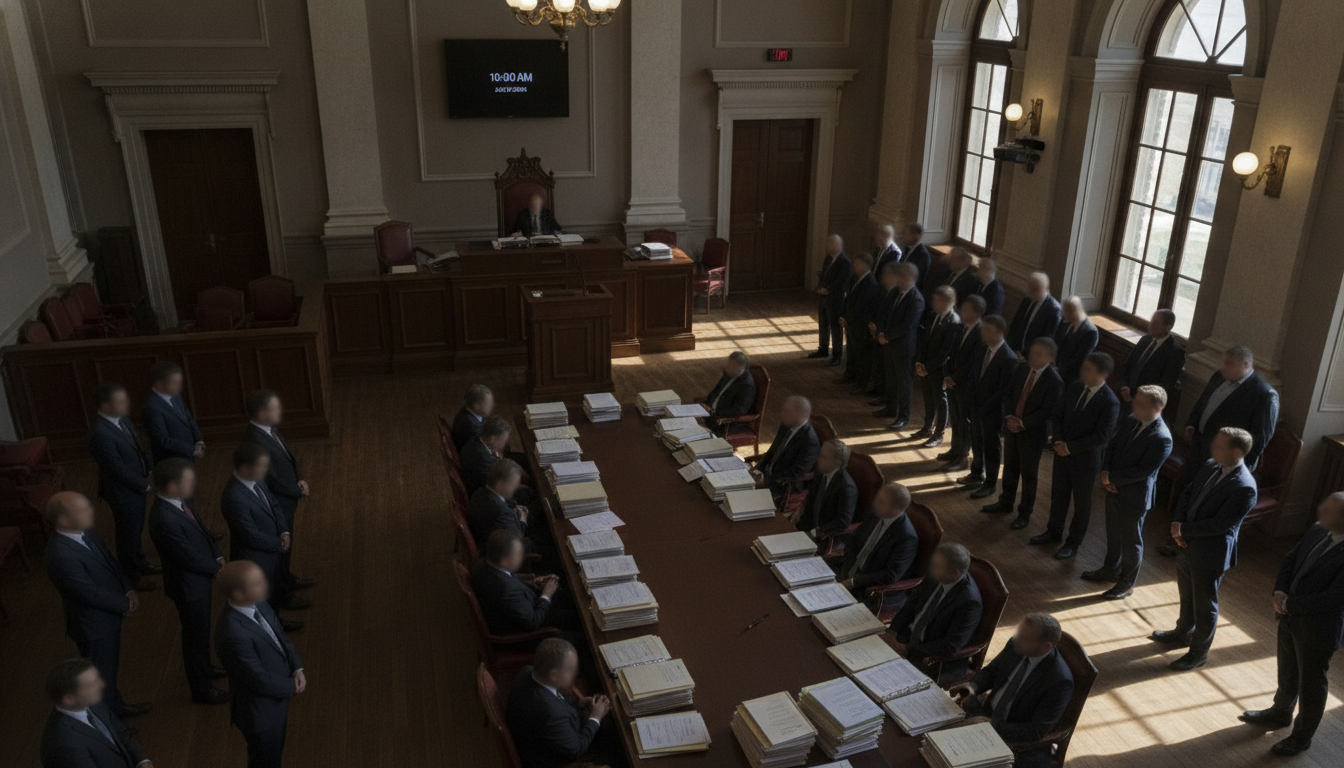
Trial resumed July 20 after disclosure review as publication ban shields witnesses
This trial resumed on July 20 after a review of disclosure halted proceedings earlier in the year, with the case having opened in January 2026. A voir dire was held before the adjournment to examine the admissibility of contested evidence. Both prosecution and defence then returned to court to elicit detailed testimony while a publication ban protects witness identities.
Timeline of proceedings since January
The matter first came before the court in January 2026 and moved through preliminary stages that included witness scheduling and evidentiary motions. A voir dire was convened at the outset to resolve disputes over whether certain statements and materials could be admitted. The judge later ordered a pause in the trial to allow counsel and the court to review disclosure material.
Reasons for the disclosure review and adjournment
Counsel requested additional time to examine documents and materials disclosed by the opposing side, prompting the temporary adjournment. The disclosure review aimed to ensure that both parties had full access to evidence required for a fair trial. The judge cited the need to prevent surprises at trial and to uphold the accused’s right to make full answer and defence.
Return to court on July 20
When the trial resumed on July 20, both prosecution and defence immediately turned to witness testimony and documentary proof. Courtroom activity resumed under the same judge and within the procedural framework established during the earlier voir dire. Attorneys continued to probe details relevant to the timing and location of alleged events.
Witness testimony focused on time, place and documentation
Witnesses called after the resumption were questioned about specific times, locations and the sequence of events, as well as any documentation that might corroborate their accounts. Both counsels systematically elicited information about observations, processes and background to establish context and reliability. The line of questioning included how records were created, stored and who had access to them.
Voir dire considered admissibility of key material
The earlier voir dire addressed whether contested statements and certain pieces of evidence met legal standards for admissibility. Counsel argued over relevance, reliability and potential prejudice that could arise if particular material were presented to the jury. The judge’s rulings during that stage shaped the scope of what would be permitted during the resumed trial.
Publication ban shields witness identities
A court-ordered publication ban remains in place to protect the identities of witnesses, preventing media and the public from publishing names or identifying information. The ban is designed to safeguard witness safety, preserve the integrity of testimony and reduce the risk of prejudicing jurors. Media coverage is therefore limited to the substance of proceedings without revealing who the witnesses are.
Procedural safeguards and counsel strategy
Both prosecution and defence relied on procedural safeguards available in criminal proceedings to question the admissibility and weight of evidence. Lawyers used the resumed hearings to explore witness credibility, to challenge documentation and to clarify timelines. These tactics reflect the adversarial process where each side seeks to construct a coherent account while testing the other side’s assertions.
Potential impact on trial schedule and outcomes
The disclosure review and voir dire consumed time but were described in court as necessary steps to protect the fairness of the process. Further adjournments remain possible if new material emerges or additional procedural issues are raised. Any rulings on admissibility could significantly shape the evidence the jury ultimately hears and may affect the length of the trial.
The case continues with testimony and legal argument under the supervision of the presiding judge, and court officials have reiterated that witness identities will not be released while the publication ban remains in force.
