
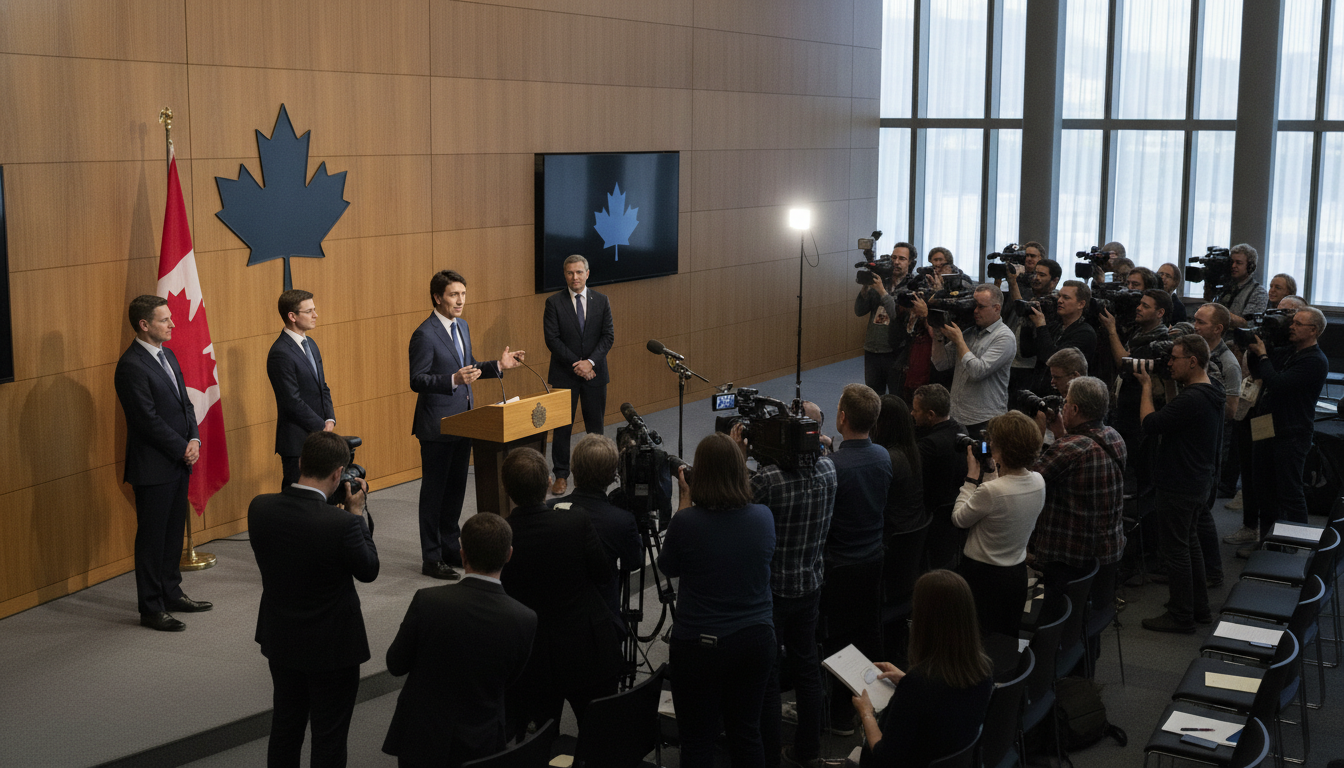
Government signals plan to replace CRTC streaming services contributions with public funding
Ottawa to end CRTC mandate requiring streaming services contributions, replacing them with public funding and a $600-million annual package.
Federal filing signals policy shift
The federal government told a court on July 17 that it intends to remove the CRTC obligation requiring streaming services contributions and replace those payments with public funding. The judicial filing, lodged by the office of the attorney general, frames the move as a broader policy change tied to a forthcoming directive to the Canadian Radio-television and Telecommunications Commission.
The announcement echoes previous statements from Ottawa in June, when the government said it would issue new guidance to the CRTC after the regulator raised mandatory contributions by major streaming platforms from 5 per cent to 15 per cent. The government also committed to providing $600 million annually to support the cultural sector instead of the regulated levies.
CRTC decision and recent regulatory context
The CRTC’s recent increase in required contributions from streaming platforms prompted an immediate reaction from both industry and government. Regulated services were told to boost their financial support for Canadian audiovisual production, a step the regulator said was needed to strengthen the domestic cultural ecosystem.
Ottawa signalled in June it would intervene with a policy directive, and the July 17 court filing suggests that intervention will remove the baseline contribution requirement. The filing states the directive will be published in the coming weeks, though the government has not provided a precise timetable or final text.
Industry response and mixed messages
Not all stakeholders reacted to the filing in the same way, and some broadcasters expressed surprise at the message conveyed to the court. The Canadian Association of Broadcasters said the wording of the government communication did not match what it had heard directly from officials, warning against drawing definitive conclusions from an administrative court exchange.
Kevin Desjardins, president of the broadcasters’ association, urged caution and said it would be premature to treat the filing as the final policy position of the government. Broadcasters remain concerned about certainty and predictability for future investment in Canadian programming should streaming services contributions be removed.
Political criticism from Quebec’s Bloc
The proposed shift has already drawn partisan criticism, with the Bloc Québécois framing the decision as a surrender to foreign commercial interests. Bloc leader Yves‑François Blanchet accused the federal Liberals of abandoning cultural protections and allowing online platforms to profit in Canada without contributing to the development of French-language and local content.
Bloc statements described the move as contravening domestic law and failing to secure tax or contribution commitments from global streaming companies. The party also referenced recent U.S. trade commentary that labelled the Canadian measures an “obstacle” to trade, noting Washington’s response did not necessarily yield full recognition for a policy reversal.
Government messaging and unanswered questions
Officials have been circumspect in public, offering limited comment beyond the legal filing. The office of Minister of Canadian Heritage Marc Miller declined to elaborate when asked to clarify whether the elimination of streaming services contributions would be temporary or permanent.
A spokesperson reiterated that a new policy direction is being developed and that further details were not available. The government’s public framing emphasizes support for cultural production in both official languages, a priority repeatedly raised as justification for targeted funding.
Funding package and potential impacts on content production
Ottawa’s plan to replace levies with an annual $600‑million cultural fund is intended to channel public dollars into Canadian production, including French‑language projects. Proponents argue that stable, government-backed funding could provide predictable support for domestic creators and help sustain film and television industries across the country.
Critics counter that removing mandated contributions from streaming platforms risks reducing ancillary private investment and the direct incentives that tied platform revenues to local content production. Broadcasters and some producers worry that public funding may not replicate the scope or conditionality of regulated contributions and could shift bargaining power away from domestic content makers.
Next steps for the CRTC and industry
The government’s filing says the directive to the CRTC will be published in the weeks ahead, marking the next formal stage in the policy process. Once the directive is issued, the regulator will be expected to align its rules with Ottawa’s guidance, potentially rescinding or amending the contribution requirement that has been central to recent regulatory debates.
Industry groups are likely to press for clarity on how the $600‑million fund will be administered, what accountability measures will apply, and whether contributions will be targeted to specific regions or language communities. Legal challenges and political lobbying could continue as stakeholders seek to shape the final design of the funding mechanism.
The unfolding policy change raises immediate questions about how Canada will balance international trade pressures, domestic cultural objectives, and the evolving economics of streaming platforms as the government moves to replace streaming services contributions with a public funding model.
