
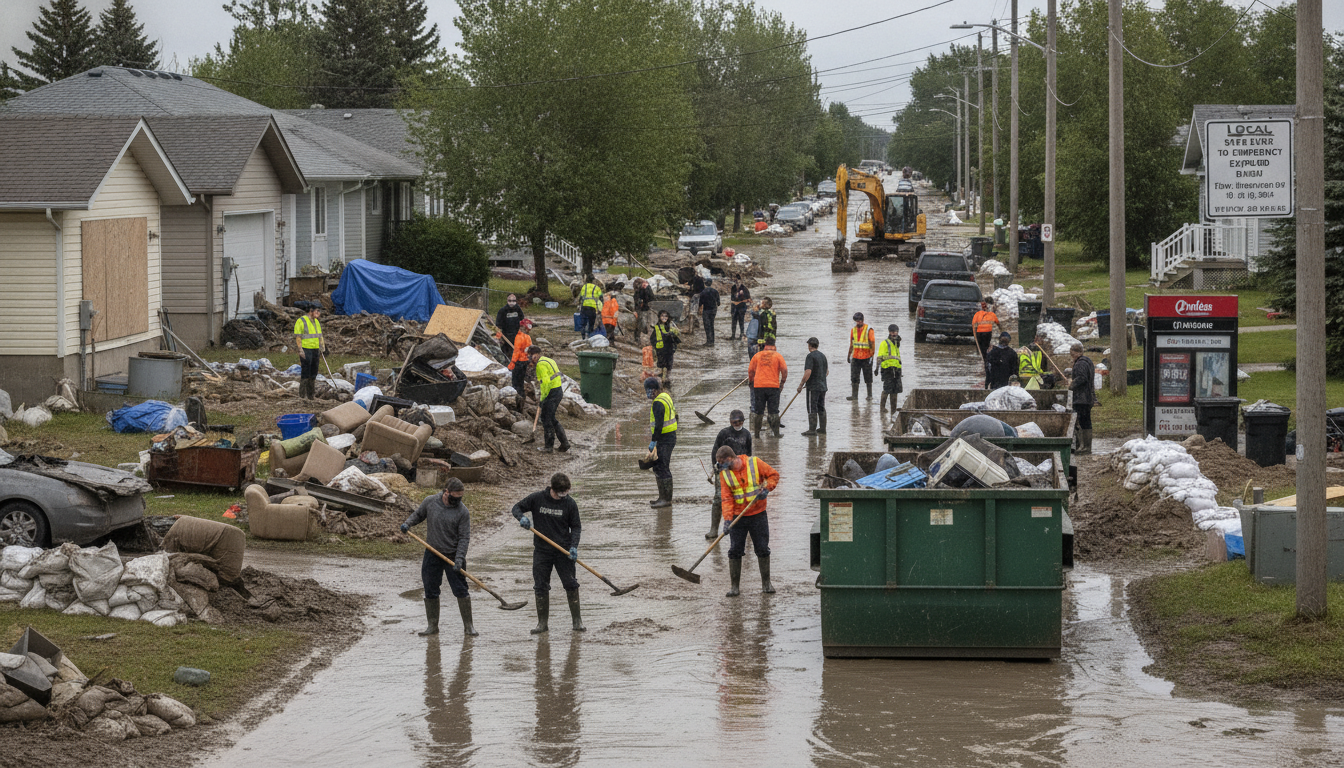
Tofield flooding: State of emergency lifted as town begins months-long cleanup
Tofield flooding cleanup began in earnest after the town’s state of emergency expired on July 5, 2026, following a late‑June storm that dropped about 20 cm of rain. Recovery efforts are underway with municipal crews, volunteers and industry partners working to remove water, sandbags and debris. Local officials say the greatest needs now are infrastructure repairs and sustained support over coming months.
State of emergency lifted July 5, 2026
The town of Tofield, Alberta, about an hour southeast of Edmonton, allowed its emergency declaration to expire on July 5, 2026, as floodwaters largely retreated. Mayor Adam Hall reported that water south of the railway tracks has mostly receded around commercial properties, while small pockets of standing water remain in low spots. He said creeks feeding the area are full but flowing along expected channels, which officials view as a positive sign for immediate flood risk.
Municipal staff continued to monitor culverts, ditches and the lagoon approach after the declaration ended, prioritizing access for repair crews and emergency vehicles. The decision to let the state of emergency lapse followed a multiagency response that focused on stabilizing affected properties and securing critical infrastructure. Town leaders emphasized that the expiration does not signal the end of recovery work, but rather a change in operational posture from emergency management to cleanup and repair.
Residents in the hardest hit sections were advised to follow local notices as crews inspected private and public structures for damage and contamination risks. Health and building inspectors completed site checks at affected businesses before allowing them to resume operations. Officials have maintained a coordinated communication channel between the town office, Beaver County officials and contractors to sequence repairs efficiently.
CN, neighbours and volunteers supply pumps and manpower
Canada National Railway provided six industrial pumps to help remove standing water from business districts and low-lying neighbourhoods, a contribution municipal officials described as critical to early mitigation. Crews from neighbouring towns and community volunteers arrived with additional pumps, sandbags and small equipment to supplement municipal assets. The influx of donated equipment and hands-on assistance allowed priority sites to be stabilized while town crews focused on roads and public infrastructure.
Organized volunteer efforts concentrated on shoring up businesses and vulnerable residences with sandbags and temporary pumping operations, according to municipal sources. Local emergency managers coordinated volunteer drop‑off points for supplies and established simple safety briefings to reduce risk during manual sandbagging and pumping work. The combination of corporate support, municipal coordination and community solidarity was repeatedly cited by town leaders as decisive in limiting structural damage.
Officials said the pump deployments shortened the period that properties were inundated, reducing the likelihood of deeper structural water damage and contamination of refrigeration or utility systems. Deployments were targeted to commercial corridors and to locations where groundwater or surface flow threatened critical services. Town spokespeople noted that having access to heavy-duty pumps reduced the scope of later repairs, but that substantial cleanup remained.
Tofield Packers and businesses fend off rising waters
Local businesses on the south side of town faced some of the worst flooding, with one meat packing facility surrounded by water at the storm’s peak. Owners of the packing plant, operating under the name Tofield Packers, reported a sustained defence involving more than a thousand sandbags and continuous pumping for several days. Family members and staff worked round the clock to keep water away from coolers, drains and production areas to avoid food safety and equipment losses.
After health inspectors completed assessments, the plant was allowed to resume operations a few days after the storm, a development the owners described as a relief for employees and local supply chains. Management said damage was limited mostly to the building’s exterior parking surface and not to machinery or storage areas, which helped accelerate their return to service. The successful, rapid reopening was attributed to preemptive sandbagging, multiple sump pumps and immediate community assistance.
Other small businesses reported varying impacts, from temporary closures for cleanup to localized water intrusion that required professional remediation. Proprietors described a frenetic scramble to protect inventory and equipment, then a methodical process of drying, sanitizing and repairing facilities. Economic losses from downtime and repair work will be tallied in coming weeks, but early accounts from owners suggested a strong resilience and a willingness among customers to support restorations.
Public infrastructure held, but trail and rural roads damaged
Municipal engineers reported that the town’s sanitary sewer and most core utilities performed as designed during the intense rainfall event, avoiding widespread sanitary failures. That assessment relieved officials, who had feared sewer backups and more extensive contamination in commercial areas. However, a popular walking trail suffered significant washouts and will require reconstruction, reflecting how public recreational assets bore the brunt of erosive surface flows.
Access roads leading to the town lagoon and several county-maintained rural roads experienced erosion and surface degradation that will need heavy repair work. Municipal crews and county crews have begun inventories of pavement, culvert and shoulder damage to prioritize repairs by safety and functionality. While internal town roads within the core community required mostly localized fixes outside commercial zones, the rural network faces longer timelines because of heavier structural damage.
Creeks and drainage channels that run through municipal and county land were reported full and flowing, sending more runoff toward downstream catchments than typical. Engineers cautioned that full channels increase the potential for bank erosion and undercutting of culverts unless reinforced promptly. Officials plan to schedule targeted inspections to confirm the integrity of bridge abutments, culvert inlets and ditch lines before heavy autumn rains.
Cleanup timeline and municipal recovery strategy
Mayor Hall has forecast that the full cleanup and repair program will extend over several months, with initial priorities set around reopening businesses and restoring critical municipal services. Town staff are compiling damage assessments to inform short- and medium-term budgets and to seek potential provincial or federal assistance. That data will also feed into discussions about how to allocate limited municipal capital for repairs versus long-term mitigation investments.
Short-term actions include hauling sandbags to disposal sites, contracting for paving repairs on damaged parking areas, and scheduling trail reconstruction work with local crews. The town is also coordinating with Beaver County on rural road repairs and longer haul maintenance that requires heavy equipment. An early focus is to prevent secondary health and safety issues by ensuring that standing water is drained and that water-damaged materials are removed from buildings promptly.
Longer-term planning is already on the agenda, with municipal leaders discussing structural mitigation such as installing additional culverts, upgrading stormwater outfalls and regrading sensitive drainages. Engineering studies are expected to be commissioned to identify pinch points in the town’s drainage network and to propose costed options. Council members said they will seek public input and weigh competing priorities as they consider infrastructure work that could reduce the risk of similar inundation in future high‑precipitation events.
Community response, volunteers and lessons learned
Residents and business owners repeatedly praised the rapid response of neighbours, municipal staff and outside helpers who arrived with sandbags, pumps and labour. The informal volunteer networks that formed during the initial 72 hours after the storm became a linchpin for private property protection and for keeping essential businesses functional. Community leaders said that same spirit of cooperation will be vital in the weeks ahead as debris removal and access repairs proceed.
Local emergency management officials indicated that volunteer management and donation drop‑off systems functioned under pressure but saw areas for improvement in future incidents. Officials plan to review volunteer check‑in procedures, supplies staging and messaging to better streamline aid distribution in any future event. The municipal review will also weigh how to expand local stockpiles of sand, bags and temporary pumping capacity to reduce reliance on outside help.
Public health staff reminded residents to follow safety guidance during cleanup, including wearing protective gear, ensuring proper drying and mold mitigation inside buildings, and observing safe practices when handling contaminated materials. Businesses were encouraged to document losses and keep receipts for cleanup expenditures to support potential insurance or grant claims. Municipal communications stressed the importance of coordinated information so residents know when sites are safe to enter and when inspections are required.
The mayor and business owners both underscored that while the town dodged the worst-case scenarios for structural damage, the event exposed vulnerabilities and opportunities for strengthening resilience. Conversations about infrastructure upgrades, emergency planning and community preparedness are expected to continue into council meetings and public consultation sessions. Town officials said they will use the lessons from this event to refine response plans and to prioritize investments that reduce future flood risk.
Residents in affected neighbourhoods have formed informal working groups to assist elderly or mobility‑limited neighbours with cleanup and debris removal. These grassroots efforts are helping to reduce immediate burdens on municipal crews and speed the process of returning homes to habitable condition. Community volunteers also coordinated fundraising and logistics to supply meals, water and other basic needs to those working long shifts on sandbagging and pumping efforts.
As recovery transitions from immediate damage control to planned repairs, local leaders said transparency and regular situational updates will be essential. The town has committed to publishing progress reports and to holding community information sessions to explain timelines, budgets and expected impacts of proposed mitigation measures. Officials acknowledged it may take months to patch roads, rebuild trails and complete engineering studies, but they emphasized a focus on safety, accountability and prudent spending.
Final paragraph
The Tofield flooding event in late June 2026 has left a clear path of cleanup, repair and planning ahead, and town leaders say the coming months will test municipal capacity and community resolve. Residents, businesses and corporate partners like CN have already shown a swift and practical response, but sustained support and careful infrastructure investments will be needed to move from recovery toward greater resilience.
