
Calgary Stampede noise complaints reach 70 in opening days as Badlands ticketed
City reports 70 noise complaints in first three days of Calgary Stampede, with Badlands fined and Cowboys readings within permitted limits.
The City of Calgary logged 70 noise complaints across multiple Stampede tents and events during the first three days of this year’s Calgary Stampede, city officials confirmed.
That figure includes a concentration of reports tied to the Cowboys Music Festival, as well as complaints focused on the Badlands Music Festival and several downtown tent venues.
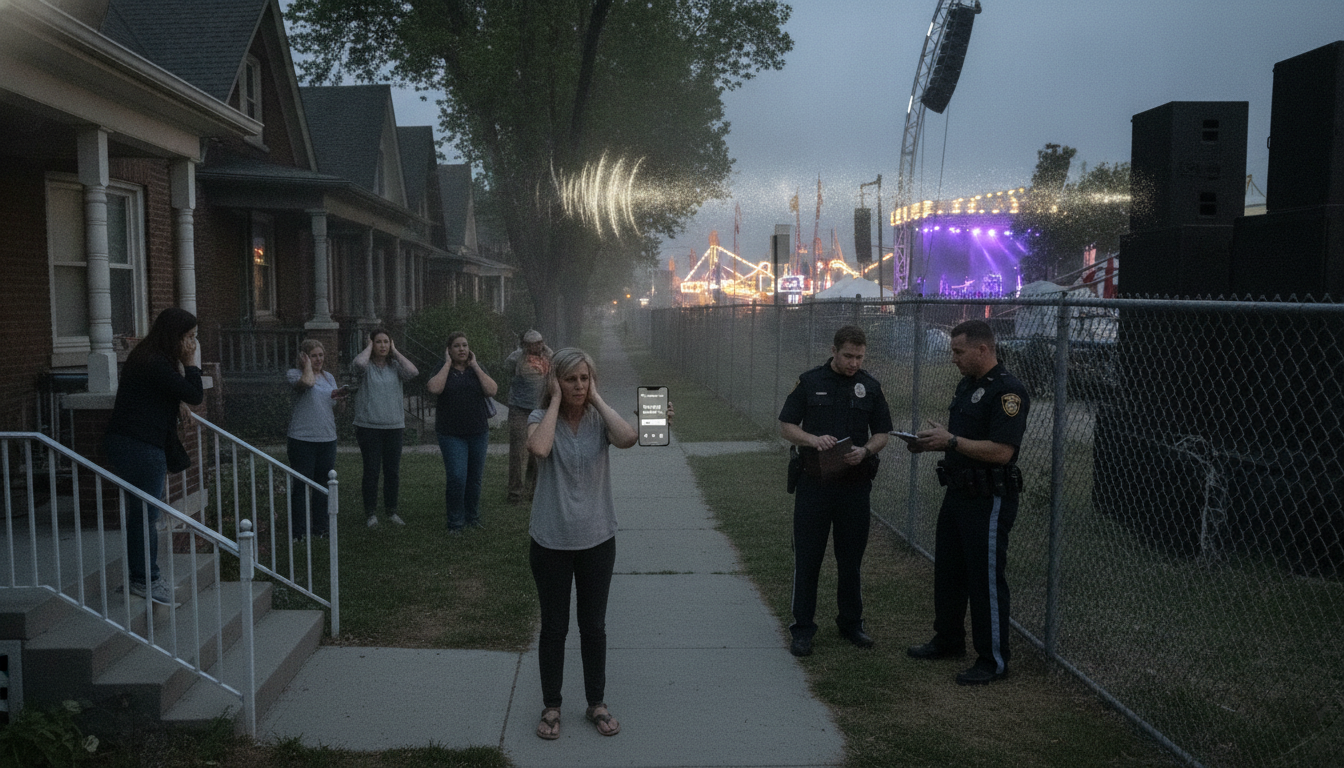
Community Safety Peace Officers have been deployed nightly to take decibel readings in residential areas near entertainment sites while one festival organizer received a ticket for exceeding permitted noise limits.
City records and venue breakdown
The 70 complaints include 40 directed at the Cowboys Music Festival, a number only slightly higher than the 39 complaints recorded at the same point last year.
Badlands drew 15 complaints in the opening three days, up from six complaints recorded at this time last year, indicating a notable increase in concern for that festival.
Other venues named by complainants include 15 reports against the National Saloon, five against Whiskey Rose and a single complaint related to Mexifest, producing the citywide total of 70.
Ticket issued to Badlands after exceeding decibel limit
On Sunday night, city officials issued a ticket to organizers of the Badlands Music Festival after a Community Safety Peace Officer determined the event exceeded its allowable maximum decibel limit.
The ticket follows the officer’s on-site noise measurement and reflects the city’s enforcement of noise regulations tied to approved permits and exemptions.
Officials said the enforcement action was taken in the interest of protecting nearby residents’ right to a reasonable level of quiet during late-night hours.
Cowboys Music Festival readings remain within permit levels
Despite drawing the largest share of complaints so far, noise readings taken near the Cowboys Music Festival have remained below the maximum levels set out in that event’s Noise Exemption Permit.
City staff said permit thresholds establish the allowable decibel limits for specific locations and times, and measurements taken near residential receptors are used to determine compliance.
The distinction between complaint volume and measured noncompliance underscores that a high number of public reports does not necessarily equate to permit breaches.
Nightly monitoring by Community Safety Peace Officers
Community Safety Peace Officers are conducting nightly patrols and taking noise readings in residential locations near major festival sites to monitor compliance with the city’s noise framework.
Officers use calibrated instruments and follow prescribed measurement protocols to assess whether events are exceeding permitted sound levels at specified receptor points.
City authorities said the monitoring program is intended both to enforce the law and to provide objective data that can inform conversations between residents, event organizers and regulators.
Context: last year’s complaints and bylaw changes
Last year the city received 225 noise complaints during the entire Calgary Stampede, with Cowboys cited in roughly 125 of those complaints, a volume that prompted a municipal review of concert noise regulations.
Following public concern and council debate, city council made adjustments to the noise bylaw ahead of this Stampede, including reductions to allowable noise levels and refinements to how exemptions are administered.
Those bylaw changes were designed to balance the economic and cultural importance of Stampede entertainment with the need to protect residential quality of life.
How noise exemptions and permits work
Noise Exemption Permits allow events to operate at sound levels above standard bylaw limits for defined times and locations, subject to conditions tailored to nearby land uses.
Permits outline allowable decibel thresholds at specified residential receptor points and typically include requirements for monitoring, response plans and consequences for noncompliance.
When measurements exceed a permit’s limits, enforcement actions can include warnings, tickets or, in extreme cases, orders to curtail amplified sound.
Resident concerns and patterns in complaints
Residents who file noise complaints often cite late-night amplified music, bass vibration and repeated disturbances as the primary sources of their distress.
Patterns in the early three days show complaints clustered around large festival sites and popular tent venues, suggesting proximity and venue orientation are key factors.
City staff noted that complaint numbers can spike quickly during live performances even when measured levels remain within permitted thresholds, as subjective disturbance and cumulative exposure affect residents’ tolerance.
Responses from organizers and businesses
Event organizers typically point to their Noise Exemption Permits, monitoring practices and mitigation plans when responding to complaints, emphasizing efforts taken to meet permit conditions.
Venue operators have, in many cases, engaged acoustic consultants, adjusted speaker placements and implemented curfews or sound checks to reduce offsite impacts.
Business owners in entertainment districts argue that live events are vital to economic activity during Stampede week, while acknowledging the need for cooperation to lessen community friction.
Enforcement challenges and measurement details
Enforcing noise limits presents technical and operational challenges, including establishing appropriate measurement locations, accounting for background noise and dealing with intermittent peaks tied to musical dynamics.
Officers measure sound at predefined receptor points intended to represent nearby residential exposure rather than the event’s on-stage levels, a method that can produce readings lower than what some neighbours perceive inside their homes.
Officials say enforcement relies on a combination of objective measurements and complaint-led investigations to determine whether action is warranted.
What the city says about next steps
City officials indicated they will continue nightly monitoring for the remainder of the Stampede and will take enforcement actions when permit limits are exceeded.
They also emphasized that complaint data and monitoring results will feed into post-event reviews to assess whether further bylaw adjustments or operational changes are needed.
Officials urged residents to use the city’s complaint channels so that officers can respond and gather accurate measurement data in a timely manner.
Historical tensions and council decisions
The recurring debate over Stampede-related noise has been a fixture of Calgary civic politics, with prior years’ complaint totals spurring council-led reforms and increased scrutiny of event approvals.
Council’s recent modifications to the noise bylaw came after deliberations about how best to calibrate permitted sound for large outdoor events while protecting adjacent neighbourhoods.
Those policy shifts were intended to reduce overnight noise exposure and clarify enforcement authority for municipal staff.
Balancing culture, economy and neighbourhoods
The Calgary Stampede remains a central cultural and economic driver for the city, drawing visitors, supporting music and hospitality sectors, and contributing to downtown vibrancy each summer.
At the same time, the concentration of amplified music and late-night activity tests the boundaries of residential livability in areas close to festival sites.
Municipal leaders, operators and residents face the ongoing task of finding practical compromises that allow large-scale celebrations without unduly burdening those who live nearby.
The first three days of complaint reporting during this year’s Stampede make clear that the issue of amplified sound continues to draw public attention and municipal resources.
Objective noise measurements, enforcement through tickets when limits are breached, and continued monitoring by Community Safety Peace Officers are the city’s immediate tools for managing tensions as the event proceeds.
City officials, event organizers and community members now face the near-term work of maintaining compliance and the longer-term task of refining rules so Calgary’s signature festival can coexist with neighbourhood expectations.
