
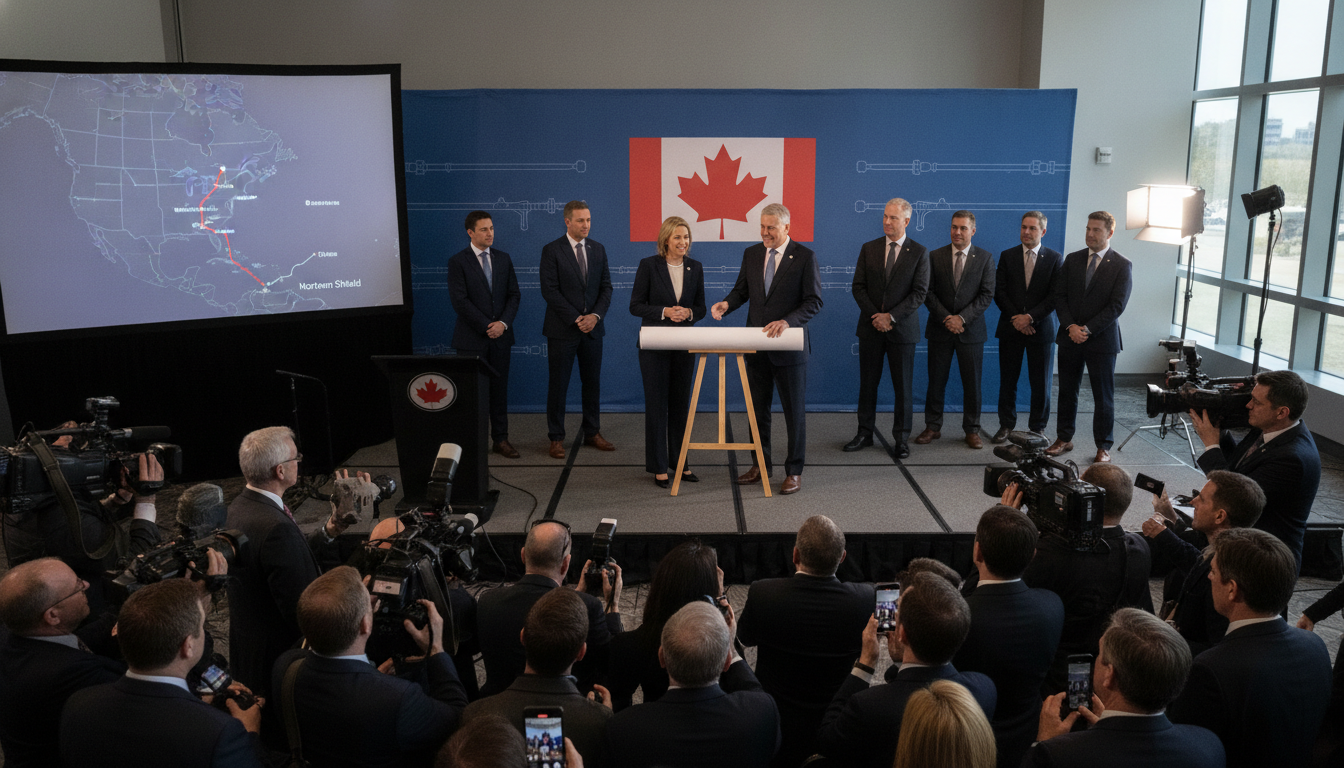
Alberta and Ontario unveil Northern Shield pipeline linking Hardisty and Sarnia
Premiers Smith and Ford announce the Northern Shield pipeline on July 6, 2026: a proposed 3,300 km, 500,000-bpd route from Hardisty, Alberta, to Sarnia, Ontario.
The Northern Shield pipeline was announced on July 6, 2026, by Alberta Premier Danielle Smith and Ontario Premier Doug Ford as a proposed 3,300-kilometre oil corridor designed to carry up to 500,000 barrels per day from Hardisty, Alberta, to Sarnia, Ontario. The plan aims to bolster east–west energy connectivity and was described by provincial leaders as a major infrastructure initiative with potential economic benefits for communities along the route. Officials said the project remains at the proposal and feasibility-study stage, with many regulatory, commercial and consultation steps yet to be completed.
Premiers announce scope and intent
The proposal, named Northern Shield, sets out a transprovincial route that would traverse Alberta, Saskatchewan, Manitoba and Ontario and could include an additional spur to the Port of Churchill. Provincial leaders framed the initiative as a move to strengthen Canadian energy supply chains and increase domestic processing and distribution options. Both premiers stopped short of committing specific funding in the announcement, saying feasibility work and further government consultations will shape next steps.
Route, capacity and communities affected
The pipeline would begin near Hardisty, Alberta — a small energy-service town southeast of Edmonton — and terminate in Sarnia on Lake Huron’s southern shore. Project proponents cite a planned capacity of 500,000 barrels per day and a corridor length of roughly 3,300 kilometres, figures that would place it among Canada’s largest interprovincial energy projects. Saskatchewan officials have expressed support, while Manitoba has yet to endorse the plan, leaving provincial alignment and route details as key outstanding issues.
Local leaders outline expected economic gains
Hardisty’s mayor highlighted the town’s deep integration with the energy sector and said a major pipeline could deliver construction jobs, increased patronage for local businesses and longer-term employment in operations and maintenance. Sarnia’s mayor described his city as an eastern energy hub with existing pipeline infrastructure and suggested the project could generate significant national economic activity. Municipal leaders emphasized that tangible benefits will depend on final project design, procurement choices and workforce sourcing.
Questions over funding and market demand
Critics and fiscal watchdogs noted the announcement raised immediate questions about who would pay for construction and whether public funds might be used. Provincial officials did not rule out public financing during the initial announcement, prompting calls from groups such as the Canadian Taxpayers Federation to prioritize private investment and regulatory reforms instead. Observers also pointed to recent pipeline developments — including the 2024 Trans Mountain expansion and federal–Alberta memoranda on west-coast capacity — questioning whether there will be sustained oil-market demand to justify a new eastward export corridor.
Industry investment and regulatory hurdles
Energy analysts said the Northern Shield pipeline would require substantial upstream investment from oilsands producers to fill capacity, which could mean years of greenfield development before throughput targets are achievable. Environmental assessments, Indigenous consultations, provincial permitting and federal approvals were identified as major regulatory milestones that could extend timelines and change project scope. Stakeholders called for transparent, early engagement with Indigenous communities and clear environmental planning to avoid the lengthy legal challenges that have stalled past projects.
Next steps and political context
Ontario has launched a feasibility study to evaluate technical, economic and environmental dimensions of the route, while Alberta has signalled provincial support and Saskatchewan has publicly backed the idea. The federal government’s stance and potential involvement were not definitively set in the July 6 announcement, making Ottawa’s response a pivotal factor in shaping momentum. Political leaders on both sides framed the initiative as a demonstration of interprovincial cooperation, even as critics warned that shifting governments and policy priorities could alter timelines.
The announcement has already sparked a mix of optimism about job creation and concern about market viability, environmental risks and the possibility of taxpayer exposure. As feasibility work proceeds, proponents say they will press for private-sector investment and streamlined regulatory pathways, while opponents urge rigorous assessment and stronger climate and Indigenous safeguards. The coming months will determine whether Northern Shield moves from a provincial proposal into a funded, formally permitted project ready for procurement and construction.
