
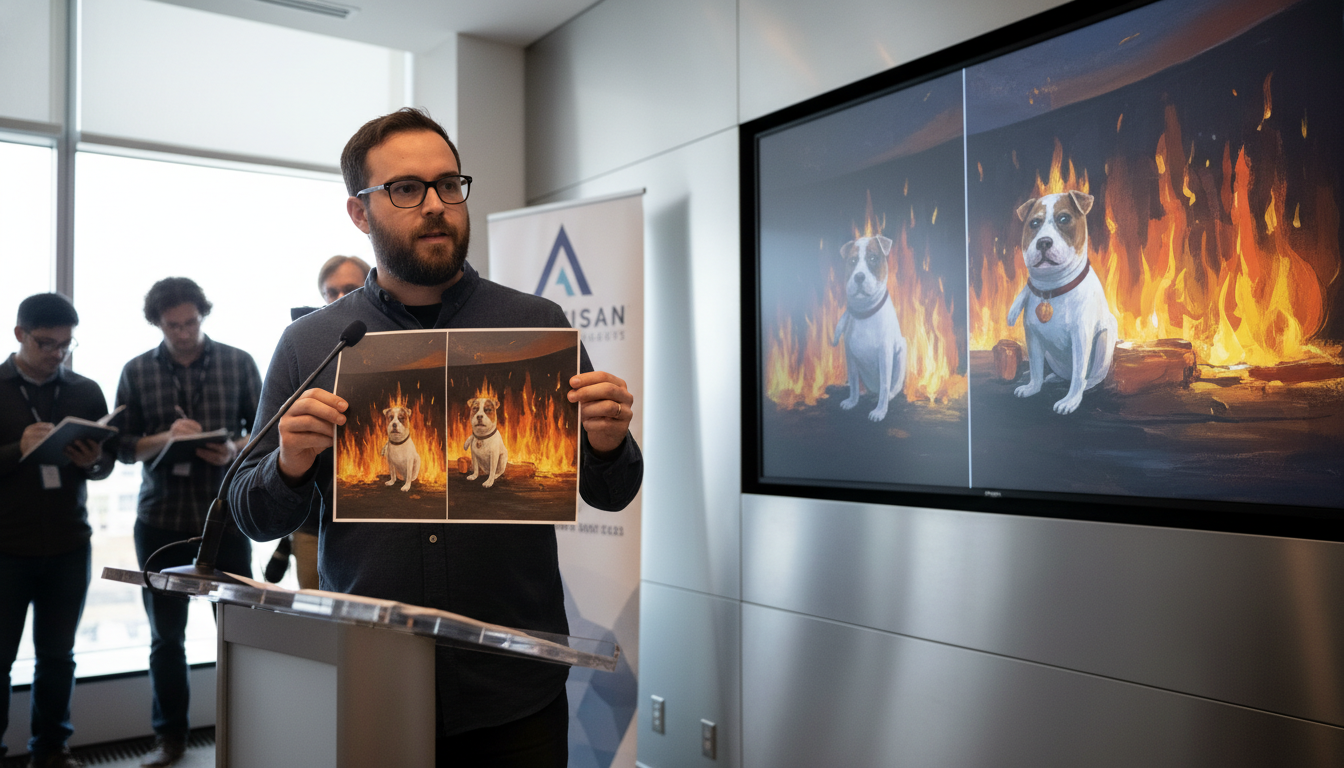
Artisan Ad Uses This Is Fine meme Without Permission, KC Green Says Artwork Stolen
Artisan ran a subway ad using KC Green’s "This Is Fine" meme without permission; the artist says his work was stolen and is now pursuing legal options.
Artist Alleges Unauthorized Use in Subway Ad
KC Green, the cartoonist behind the "This Is Fine" meme, says an AI startup used his iconic comic in a paid subway advertisement without his consent. The ad reportedly replaces the comic’s original caption with a line about an AI pipeline being on fire, while promoting a synthetic sales assistant called Ava the AI BDR. Green publicly stated the artwork was taken and used commercially without agreement, and he has begun exploring legal representation to address the matter.
Ad Content and Placement Draw Attention
The advertisement was displayed in a subway station and featured the anthropomorphic dog from Green’s 2013 webcomic "Gunshow." In the ad, the dog appears in the familiar flames but utters a new line about a failing pipeline, with overlay text urging commuters to "Hire Ava the AI BDR." Observers circulated images of the poster on social platforms, prompting several readers and creators to alert Green to the placement and prompting a broader online reaction.
Artisan Acknowledges the Artist and Seeks Contact
Artisan, the company behind the campaign, told media outlets it had respect for KC Green’s work and reached out to him directly after inquiries about the ad emerged. Company representatives said they scheduled time to speak with the artist and expressed willingness to discuss the situation. The firm previously attracted attention for provocative marketing that questioned hiring practices, a history that has already drawn scrutiny from parts of the tech community.
Creator’s Response and Call to Action
Green has publicly pushed back on the commercial use of his art, characterizing the ad as “stolen like AI steals” and urging followers to act if they encounter the poster. He said the need to pursue legal remedies is frustrating because it diverts time away from his creative work. The cartoonist also emphasized that meme culture does not negate creators’ rights when their work is monetized or used for promotional purposes without authorization.
Precedents in Unauthorized Meme Commercialization
Creators have pursued legal action in comparable disputes where characters or memes were exploited for commercial or political purposes. Past settlements and lawsuits demonstrate that unauthorized commercial use of artistic characters can lead to litigation, though outcomes depend on copyright ownership, licensing history, and how defendants acquired or transformed the work. Copyright law treats original comics and illustrations as protected works, and commercial advertisements typically require explicit permission or licensing to use such material.
Industry and Legal Implications for AI Marketing
This episode raises questions about how AI startups source imagery for marketing and whether the technology’s role in content generation excuses using recognizable art without consent. Companies running ad campaigns must ensure they hold clear rights to visuals, whether generated or adapted, to avoid infringement claims. Legal experts say disputes like this will likely accelerate discussions about attribution, licensing practices, and the responsibilities of firms that deploy AI tools in creative and promotional workflows.
Public Reaction and Creator Community Response
The incident prompted rapid discussion across social networks and among fellow artists, who noted a broader pattern of meme art entering commercial circulation without clear credit or compensation. Some creators have successfully enforced rights when works are commercialized, while others say the viral nature of memes complicates enforcement. The community reaction has underscored a tension between memetic culture and the economic interests of original creators.
KC Green indicated he will continue to explore formal legal avenues and called attention to the wider issue of creators’ work being co-opted by companies. Artisan has signaled willingness to engage, and the coming conversations may determine whether the ad is withdrawn, altered, or subject to a settlement. For now, the dispute has renewed focus on the boundaries between internet culture and commercial advertising, and on how companies should handle iconic imagery when promoting AI products.
The outcome of these discussions could influence how startups approach creative assets in future campaigns, and it may prompt more explicit licensing agreements when memes or widely shared comics are used in paid media.
