
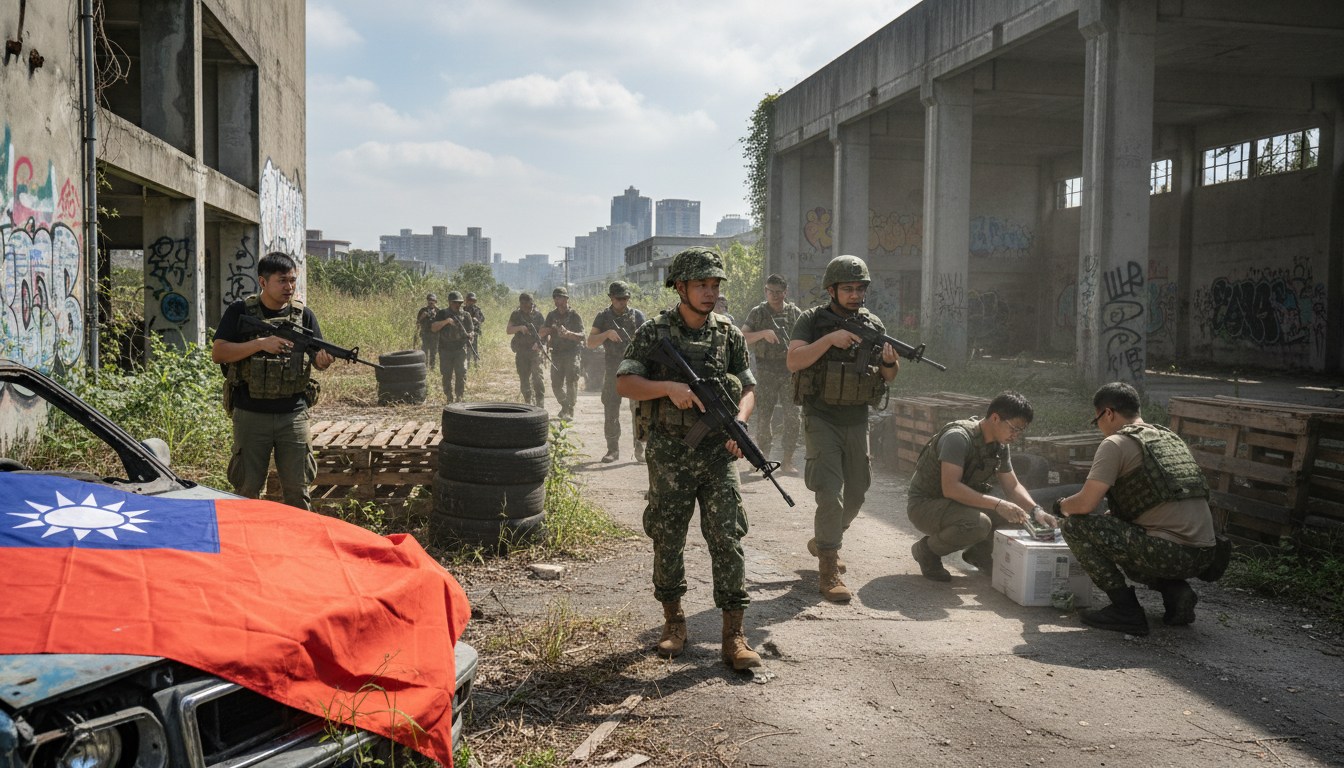
Taiwan Defense Training Intensifies as Civilians Mobilize amid Rising Tensions with China
Civilians across Taiwan are expanding defense training as Beijing’s claims escalate, raising security concerns ahead of talks between Xi Jinping and Trump. (May 11, 2026)
Civilians Organize Community Defense Programs
A growing number of neighbourhood groups and volunteer networks in Taiwan have launched structured Taiwan defense training programs focused on emergency readiness and territorial defence. Participants range from retirees to students and small-business owners seeking practical skills they say would matter in a crisis. Organizers describe the efforts as civic preparedness rather than a formal militia, emphasizing first aid, communications and coordinated response plans.
The movement has been partly driven by local municipal initiatives that provide space, instructors and basic equipment for drills. Community halls, sports centres and former military facilities are being repurposed for weekend exercises. Trainers include retired service members and civilian emergency planners who teach participants how to sustain operations if conventional supply lines are disrupted.
Curriculum Includes Tactical, Medical and Communications Skills
Courses under the Taiwan defense training umbrella typically combine low-intensity tactical techniques with disaster medicine and radio communications. Trainees practice small-unit movement, concealment, improvised barricades and basic field triage, according to program outlines shared by organizers. Communications training emphasizes the use of amateur radio and mesh networks to maintain local coordination if public networks fail.
Instructors stress safety and legality, distinguishing civilian drills from armed combat operations that fall under military authority. Programs also include modules on civilian protection — evacuation routes, shelter management and the protection of critical infrastructure like water and power — which organisers say are aimed at reducing civilian casualties in any large-scale incident.
Training Is Spreading Beyond Major Cities
What began in Taipei and other urban centres has spread into smaller towns and rural townships, reflecting concerns across the island. Coastal communities, particularly those facing shorter warning times, have adopted drills tailored to maritime scenarios and early-warning response. Organizers report rising enrolment in municipalities across the north and south since the start of the year.
The geographic spread has prompted some prefectural governments to coordinate volunteer lists and equipment caches, while others remain cautious about endorsing activities that could be seen as provocative. Local police and civil defence agencies have increasingly partnered with volunteer groups to align civilian training with official emergency protocols.
Beijing’s Pressure and Diplomatic Context
Beijing’s continued assertion of sovereignty over Taiwan is a central factor driving the surge in civilian preparedness, officials and community leaders say. The island’s status has been prominent in international discussions and is expected to be raised in talks between China’s leader Xi Jinping and former U.S. president Donald Trump this week, observers noted. Such diplomatic attention has amplified anxiety among residents about the potential for miscalculation.
Taiwanese authorities have maintained that civil preparedness is a complement to military deterrence, arguing that a resilient civilian population can complicate any aggression. At the same time, analysts warn that highly visible civilian militarization could strain regional diplomacy if not clearly framed as disaster-readiness.
Military and Security Experts Assess the Shift
Defence analysts say civilian training can enhance national resilience by reducing panic and sustaining essential services in disrupted environments. “Prepared communities are able to absorb shocks more effectively,” said one former defence official, noting that non-combat skills like logistics and medical response are particularly valuable. Experts caution, however, that training must be tightly coordinated with professional forces to avoid interference or unsafe practices.
Some military planners express concern about the potential for misinformation or poorly supervised activities that could endanger participants. Proper equipment, certified instructors and clear legal boundaries are cited as necessary safeguards. Several think tanks have begun evaluating how civilian programs might be integrated into broader civil defence strategies without escalating tensions.
Public Debate and Government Guidance
The expansion of Taiwan defense training has prompted debate among citizens, lawmakers and officials about the appropriate balance between preparedness and provocation. Supporters argue the measures are pragmatic and necessary in a region with increasingly assertive military postures. Critics warn that highly visible preparations risk inflaming rhetoric and complicating diplomatic manoeuvres.
In response, central government agencies have published guidance on civilian training standards and legal limits, and some ministries have offered certified courses to improve oversight. Officials have also urged transparency and public reporting on exercises so that neighbouring states and international partners can distinguish civic readiness from offensive preparations.
Local businesses and civil society groups have contributed equipment and volunteer hours to many programs, seeing preparedness as a community service. At the same time, civic organizers emphasize that Taiwan defense training is primarily about survival and continuity — keeping hospitals, utilities and supply chains functioning under stress.
The movement reflects broader unease on the island about security, while also showcasing grassroots capacity to organize and adapt. As discussions involving regional powers continue, community-level initiatives may shape how Taiwan balances deterrence, diplomacy and daily life in an uncertain strategic environment.
