
Edmonton Public Schools reviews mandatory second-language requirement amid enrolment and space pressures
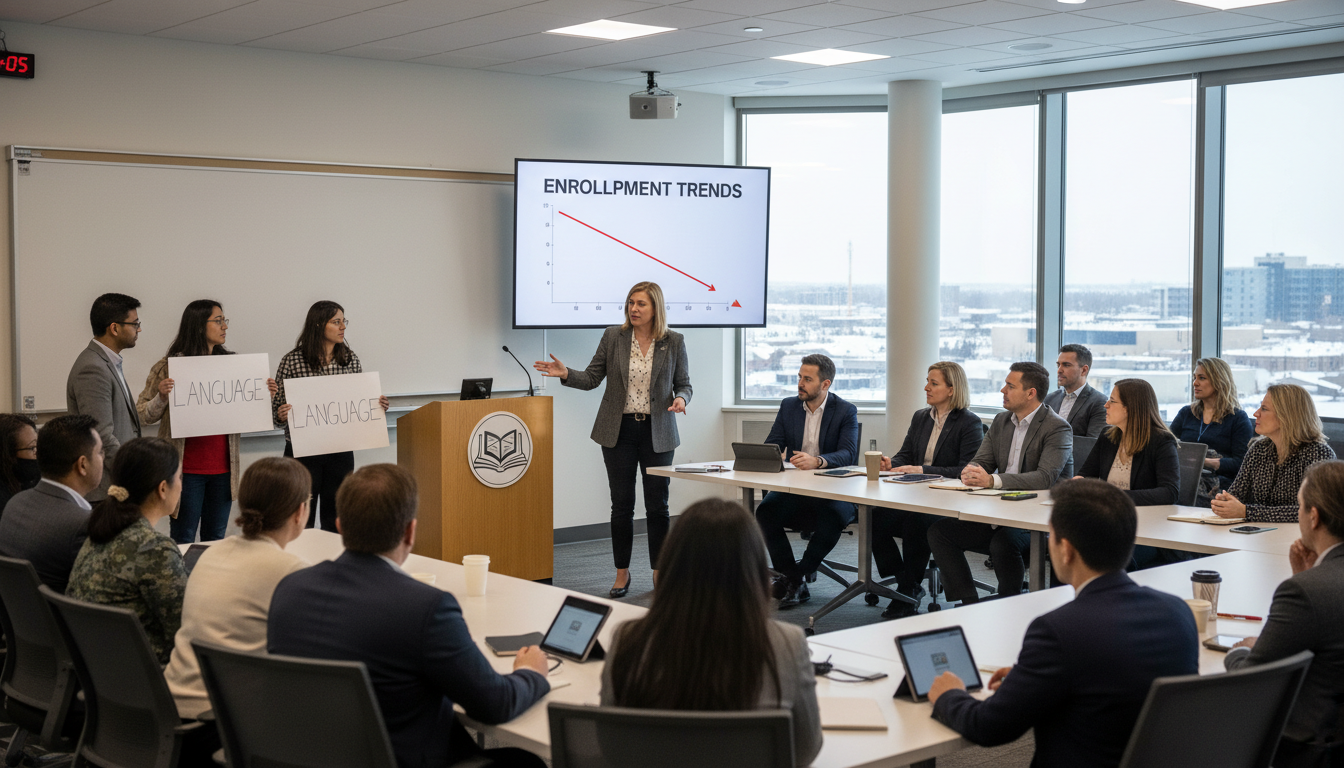
Edmonton Public Schools is reviewing its 20-year mandatory second language requirement as rising enrolment and an increase in English-language learners place new pressures on classroom space. The board voted this week to ask administration to develop engagement objectives that would guide a review of whether language instruction should remain compulsory. Superintendent Ron Thompson and trustees stressed that language learning options would remain available even if the mandate is altered.
Board asks administration to develop engagement objectives
Trustees voted Tuesday to direct administration to prepare a report outlining engagement objectives tied to the division’s language policy. The motion followed trustee questions about what meaningful consultation would require and who should be included in a review. The board did not set a timetable for a final decision but made clear it wants stakeholder input before any policy change.
Superintendent points to space constraints and ELL growth
Superintendent Ron Thompson told the board that reconsidering the second language requirement could create scheduling flexibility in schools facing capacity issues. He noted the division has taken on substantially more students who are English-language learners, and said adding a required additional language on top of English instruction may not fit current classroom realities. Thompson emphasized that the division values second language instruction and is not proposing to remove options for students to learn another language.
Policy dates back to provincial deliberations on French instruction
The language requirement was adopted about 20 years ago when the provincial government was contemplating a province-wide mandate for French instruction. At that time, Edmonton Public Schools proactively established its own rule requiring at least one second language to be taught from Grades 4 through 9, with encouragement for continuation to Grade 12. When the province chose not to proceed with a mandate, the division’s policy remained in place and has effectively gone beyond provincial minimums.
Trustees debate mandatory rule versus optional programming
Board chair Saadiq Sumar framed the discussion around whether second language study should be mandatory or remain an offered option for families. Trustees stressed the policy’s purpose is broader than promoting French specifically and cited the educational benefits of bilingual or multilingual instruction. Several trustees signalled openness to different outcomes, saying the review should consider equity, access, and program delivery across neighbourhood schools.
Engagement could run through the 2026/27 school year
Thompson told trustees that, if the board greenlights engagement, consultations would likely take place throughout the 2026/27 school year. The administration would then compile findings and return with a report and recommendations for trustees to consider. Trustees indicated that any consultation should include students, families, staff and community partners to capture perspectives from those most affected by potential change.
Options under consideration and potential impacts on programming
Officials said the review will explore a range of options, from maintaining the current mandatory requirement to making second language instruction an elective at the local school level. Any change would have implications for staffing, timetabling, and allocation of classroom space, particularly in schools already operating at or above capacity. Trustees and administrators also highlighted the need to ensure English-language learners receive sufficient support while preserving opportunities for students who wish to study a second language.
Edmonton Public Schools leaders are positioning the review as a chance to align the division’s language policy with its current demographics and operational realities, while seeking community input on how best to balance program quality with practical constraints. The outcome could reshape how and when students receive second language instruction across the division.
