
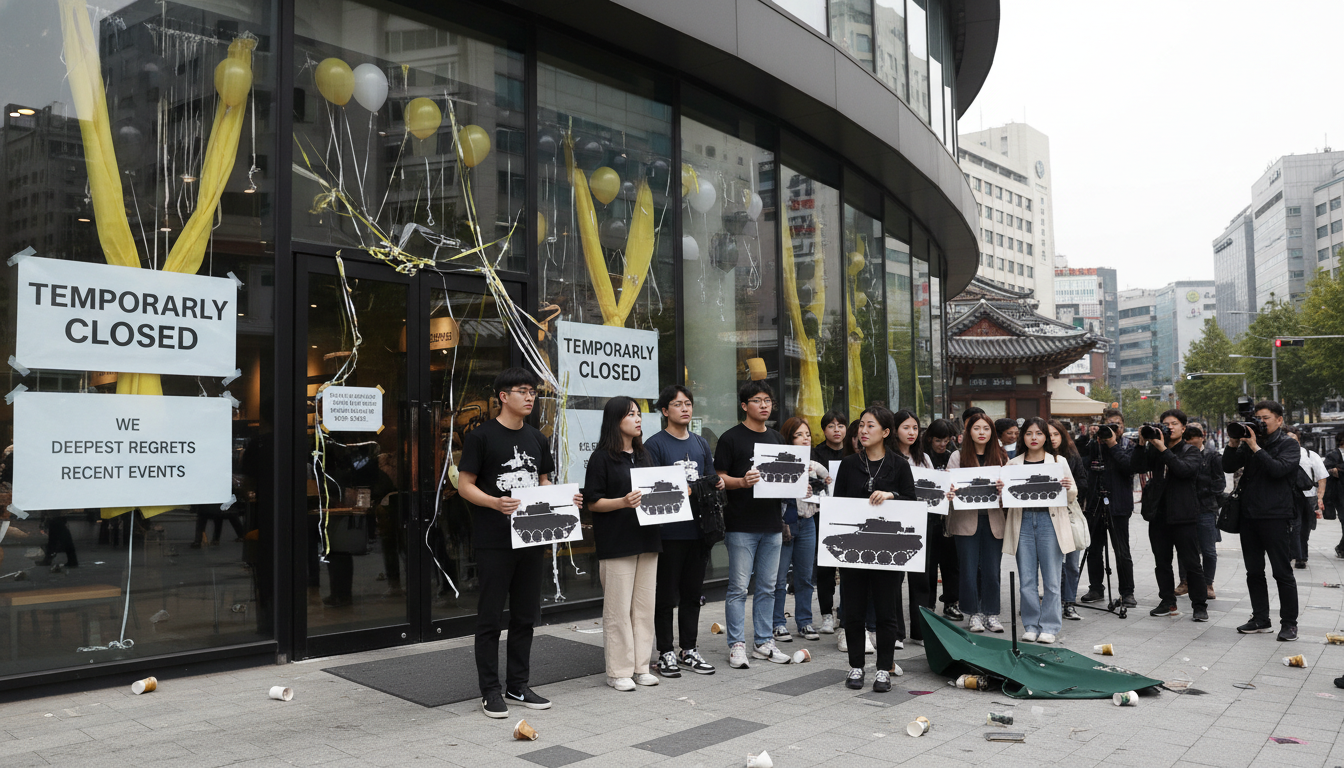
Starbucks Korea sales plunge after ‘Tank Day’ campaign sparks national outrage
Starbucks Korea sees sharp sales drop and nationwide backlash after a ‘Tank Day’ marketing campaign evoked the 1980 Gwangju crackdown; Shinsegae issues apology.
Starbucks Korea recorded a steep decline in sales after a controversial marketing campaign tied to the anniversary of the May 18 Gwangju Uprising provoked widespread public anger, the chain’s South Korean operator said on May 26, 2026. The campaign, dubbed “Tank Day” by critics, rekindled painful memories of the 1980 military crackdown and prompted corporate apologies, leadership changes and calls for boycotts across the country. Shinsegae Group, which owns Starbucks through its E-Mart subsidiary, described the sales drop as “very significant” while stressing that it is conducting an internal review.
Sales plunge after ‘Tank Day’ campaign
Shinsegae officials reported a marked fall in customer traffic and revenue at Starbucks Korea outlets following the release of the campaign, which coincided with the Gwangju commemoration date. A company representative emphasized that although sales are not the immediate priority, the commercial impact has been substantial and sudden.
Local operators and franchisees said the decline has affected front-line staff who were not involved in creating the marketing material. Company leaders have urged the public to refrain from directing anger at store employees, citing the separation between shop-level staff and corporate decision-making.
Apologies from Shinsegae and Starbucks Global
Shinsegae Group chairman Chung Yong-jin publicly apologized at a news conference, acknowledging the deep pain the campaign caused to victims, bereaved families and the wider public. Chung said he would accept responsibility for the incident and appealed for restraint toward Starbucks Korea employees.
Starbucks’ global management also issued an apology and confirmed it had launched an investigation into how the campaign was conceived and approved. Both the Korean operator and the international brand have said they regret the distress caused by the promotion.
Leadership changes and internal review
In the immediate fallout, Shinsegae fired the head of Starbucks Korea as part of its response to the controversy. The company announced a weeklong internal review to determine accountability and whether employees intended to ridicule the pro-democracy movement.
Jeon Sangjin, a senior Shinsegae executive, said investigators had not yet found conclusive proof that marketing staff set out to mock the Gwangju movement. Jeon added, however, that some employees had refused management requests to hand over their smartphones during the inquiry, a development company officials said would be closely examined.
Police probe and potential disciplinary actions
Shinsegae has indicated it will await the results of a police inquiry before finalizing personnel decisions, and warned that anyone proven to have intentionally ridiculed the protesters would be dismissed. The firm said it will cooperate with law enforcement to ensure a transparent outcome.
Starbucks Global’s investigation runs alongside the police probe, and the dual inquiries may determine whether disciplinary measures extend beyond the fired executive. Company statements have framed the investigations as necessary to restore public trust and clarify the decision-making chain that led to the campaign.
Government condemnation and boycott calls
The campaign prompted swift condemnation from government figures, who amplified calls for boycotts and restrictions on the chain. Interior and Safety Minister Yoon Ho-jung publicly said Starbucks products would not be used at government events, describing the marketing as “anti-historical behaviour.”
President Lee Jae Myung also weighed in on social media, calling the campaign an affront to democratic values and human rights. Those official condemnations added momentum to grassroots boycott movements and intensified scrutiny of corporate responsibility in commemorating traumatic national events.
Historical sensitivity tied to the Gwangju Uprising
The Gwangju Uprising of May 1980 remains one of South Korea’s most sensitive historical wounds, with estimates of hundreds dead or missing when troops were sent to suppress pro-democracy demonstrations. Memorials and anniversaries draw large public attention, and any perceived trivialization of that history has long provoked strong reactions.
Analysts and civil society groups noted that companies operating in South Korea must navigate a careful balance when referencing historical events in marketing. The episode has renewed debate about corporate awareness and the ethical limits of promotional themes tied to national trauma.
The controversy over the “Tank Day” promotion has placed Starbucks Korea and its parent, Shinsegae Group, at the centre of an unfolding crisis that touches on commercial accountability, historical memory and public trust. As police and corporate investigations proceed, the immediate priorities for company leaders include repairing relations with the public, addressing franchise-level economic impacts, and ensuring that any disciplinary steps are seen as fair and transparent. The longer-term consequences may include sustained boycotts, tighter oversight of marketing practices, and broader discussion about how businesses commemorate—or avoid—charged historical anniversaries.
