
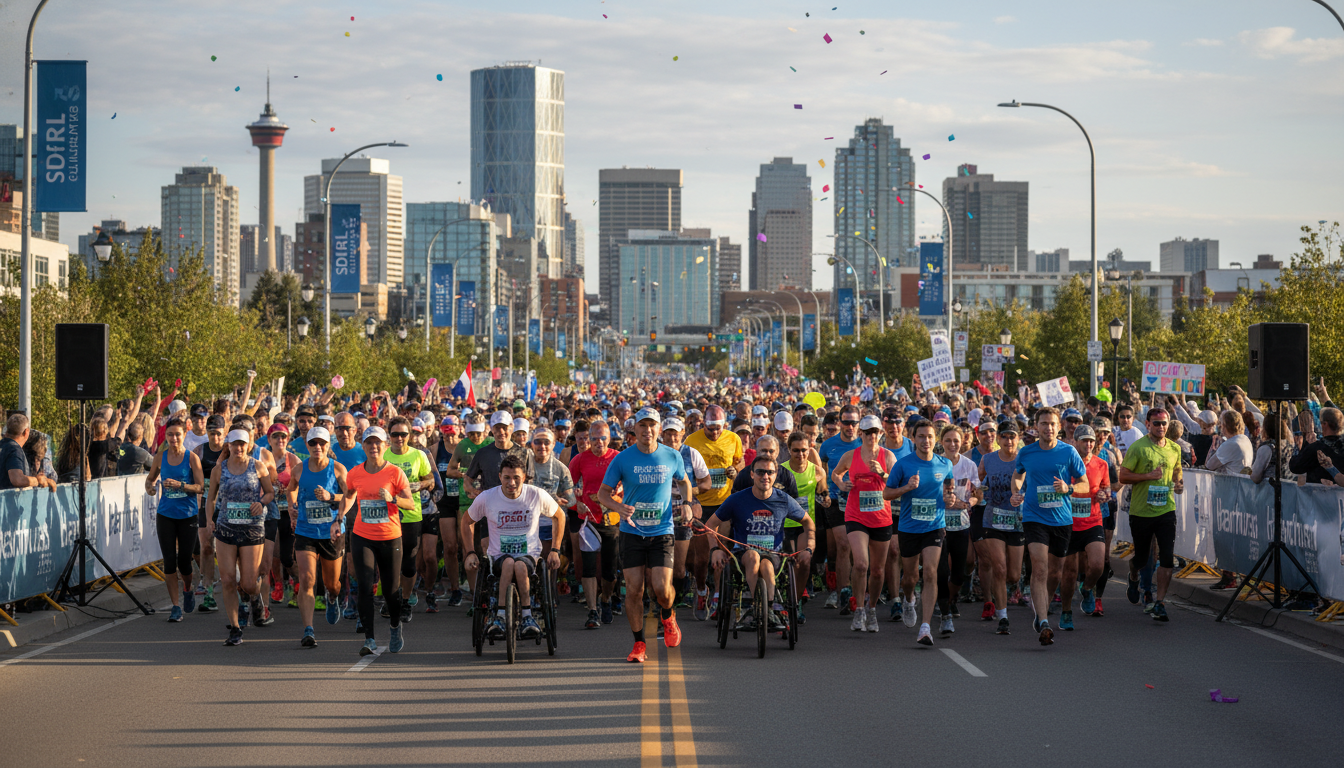
Servus Calgary Marathon draws 20,000 runners as locals chase firsts, comebacks and family milestones
Twenty thousand runners will take part in the Servus Calgary Marathon this weekend, featuring first-time runners, comeback athletes and inspiring families.
The Servus Calgary Marathon brought a mix of elite preparation and personal milestones to city streets as participants gathered for races spanning 5 km to the full 42.2 km distance. Runners, volunteers and spectators converged on the course for a weekend of races that showcase community spirit and endurance.
Race Schedule: Shorter Events Saturday, Long Distances Sunday
The event staged shorter distances on Saturday, with the 5-kilometre and 10-kilometre events giving casual runners and families a chance to compete. Sunday was reserved for the half marathon and the full marathon, drawing long-distance athletes and first-time marathoners alike.
Organizers managed staggered starts and corrals to ease congestion and keep runners moving through downtown and residential stretches. Medical, hydration and baggage stations were positioned along the course to support participants from start to finish.
Local Runners Chase Personal Milestones
For many Calgarians the Servus Calgary Marathon was as much about personal goals as podiums. Shikara Fahie, 27 and a speech pathologist, used the event to fulfill a promise to herself to complete a full marathon before turning 30. Fahie, who ran her first half-marathon last year, said running became a project of self-discovery and a social outlet after she moved to Calgary.
Fahie’s preparation involved running five days a week and joining a local club for group training runs. She planned to celebrate with friends after the race and joked about balancing a heels dance rehearsal the evening after the marathon with the physical demands of the day.
Return to Running: Training and Mental Health Benefits
Other participants spoke of running as a route back to confidence after difficult periods. Roch Pedida, 29, described the mental back-and-forth that accompanies race day and the focused training that brought him back to consistent racing after a break. Pedida emphasized structured workouts—speed sessions, weight training and long weekend runs—as central to his preparation.
He framed the race as the culmination of a training plan and a reminder to honour the effort required simply to arrive at the start line. For many competitors, that perspective reframes finishing as a validation of the months of work that preceded the event.
Family Story: Mother and Daughter Run With Purpose
The marathon also featured participants whose goals extended beyond personal fitness to family and advocacy. Kayleigh Williamson, who has Down syndrome, ran the course with her mother Sandy, continuing a multi-year tradition of racing together that has drawn national attention. The duo first captured headlines after completing the New York City Marathon and returned to Calgary to run their first out-of-state marathon together.
Sandy described how races became a way to connect across generations, bringing medals and stories back to a mother living with Alzheimer’s. Their approach to racing emphasizes celebration over competition, with moments of dancing and joy along the route that have inspired wider media attention and community support.
Community Support: Volunteers, Clubs and Spectators
Volunteers and local running clubs were visible along the route, handing out water, cheer signs and medical assistance where needed. Groups such as YYC Run Crew provided camaraderie and a familiar presence on training roads, helping newcomers find their pace and stay motivated.
Spectators lined neighbourhood blocks and downtown corridors, creating spurts of noise that lifted runners’ spirits. Race marshals, paramedics and aid stations worked together to keep logistics smooth and respond to needs quickly, reinforcing the event’s focus on safety and inclusion.
Finish-Line Scenes and Post-Race Recovery
The final kilometres sparked emotional surges as runners counted down to the finish and volunteers prepared medals and recovery zones. For many, the moment of crossing the line produced a quiet satisfaction—an acknowledgement of the work behind the race and the communal effort that carried them through.
Medical tents and recovery areas offered immediate care for those who needed it, while friends and family gathered at the finish to celebrate. Runners left the course with a mix of relief, fatigue and accomplishment, already sharing plans for future races or recovery routines.
As the city cleared barriers and volunteers packed up, the weekend’s stories—of first marathons, returns to fitness and family achievements—remained the lasting memory of Calgary’s streets.
