
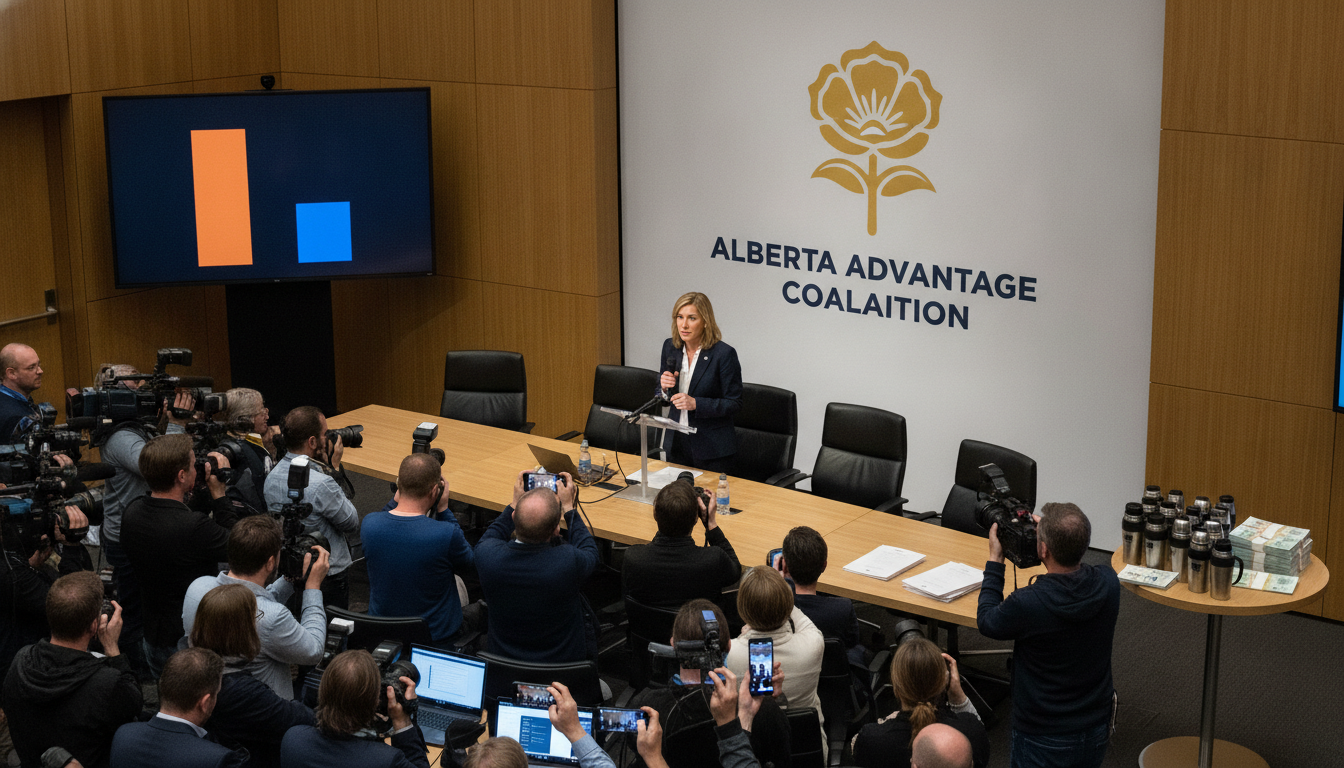
Alberta separatist advertisers raise over $458,000, outpacing federalist groups by roughly $365,000
Elections Alberta: 15 Alberta separatist advertisers raised more than $458,000 while six federalist groups reported just under $94,000; gap increased $40,000.
Elections Alberta’s latest contribution figures, updated late Friday, show Alberta separatist advertisers have amassed a significant fundraising lead over federalist third-party advertisers. The registry lists 15 separatist advertisers with total contributions exceeding $458,000, compared with six federalist groups that reported just under $94,000. That leaves a financial advantage for separatist advertisers of more than $365,000, a divergence that widened by about $40,000 from the week before.
Fundraising gap widens
The reported advantage for Alberta separatist advertisers represents a notable shift in the cash available to outside advertisers in the province’s political ecosystem. Elections Alberta’s weekly update, published late Friday, indicates the gap between the two camps increased by roughly $40,000 in seven days. Observers say such a widening can translate into greater ad volume and sustained outreach for better-funded groups.
Separatist advertisers outnumber federalist groups
The figures show there are more than double the number of separatist advertisers on the registry than federalist ones, with 15 groups listed versus six federalist advertisers. That numerical disparity compounds the funding advantage, because more registered advertisers can run concurrent campaigns and target varied audiences. The combination of higher totals and greater representation gives separatist-aligned advertising efforts broader capacity to shape messages across platforms.
Elections Alberta reporting and weekly movements
Elections Alberta’s disclosure framework requires third-party advertisers to report contributions and disbursements, and the office publishes regular updates. The most recent update captured the week-to-week change that pushed the fundraising gap higher by about $40,000. While the registry provides totals and the number of registered advertisers, it does not attribute specific spending to particular ad buys in real time, leaving gaps between raised funds and actual advertising deployment.
Where raised funds are likely directed
Money reported to Elections Alberta by third-party advertisers typically underwrites production and distribution of political messaging, including paid social media, broadcast and print ads, and on-the-ground outreach. Larger war chests allow for broader geographic reach and repeated messaging, which can increase the likelihood of cutting through the noise during high-profile policy debates. The current numbers suggest separatist advertisers have more immediate capacity to sustain visible campaigns across multiple channels.
Potential political consequences in Alberta politics
A sustained financial edge for Alberta separatist advertisers could reshape the public conversation by amplifying points of view favourable to separation or provincial autonomy. Advertising volume affects which issues gain prominence and how voters perceive competing narratives. Political parties, campaign strategists and media outlets will be watching whether the fundraising lead translates into measurable shifts in public opinion or media coverage.
Transparency and regulatory questions remain
The disparity in contributions also raises questions about transparency, donor sources and the timing of spending ahead of key political moments. While Elections Alberta’s registry provides a snapshot of contributions, critics of third-party advertising say more granular disclosure about donors and disbursements would improve public understanding. Regulatory officials have the authority to enforce reporting rules, but gaps in real-time disclosure can make it harder for voters and journalists to trace how money is being spent on specific messages.
The latest contribution figures from Elections Alberta underline a clear financial advantage for Alberta separatist advertisers at this point in the reporting cycle. Whether that advantage will translate into sustained campaign activity or influence on policy debates will depend on how the funds are deployed and how competing voices respond in the weeks and months ahead.
