
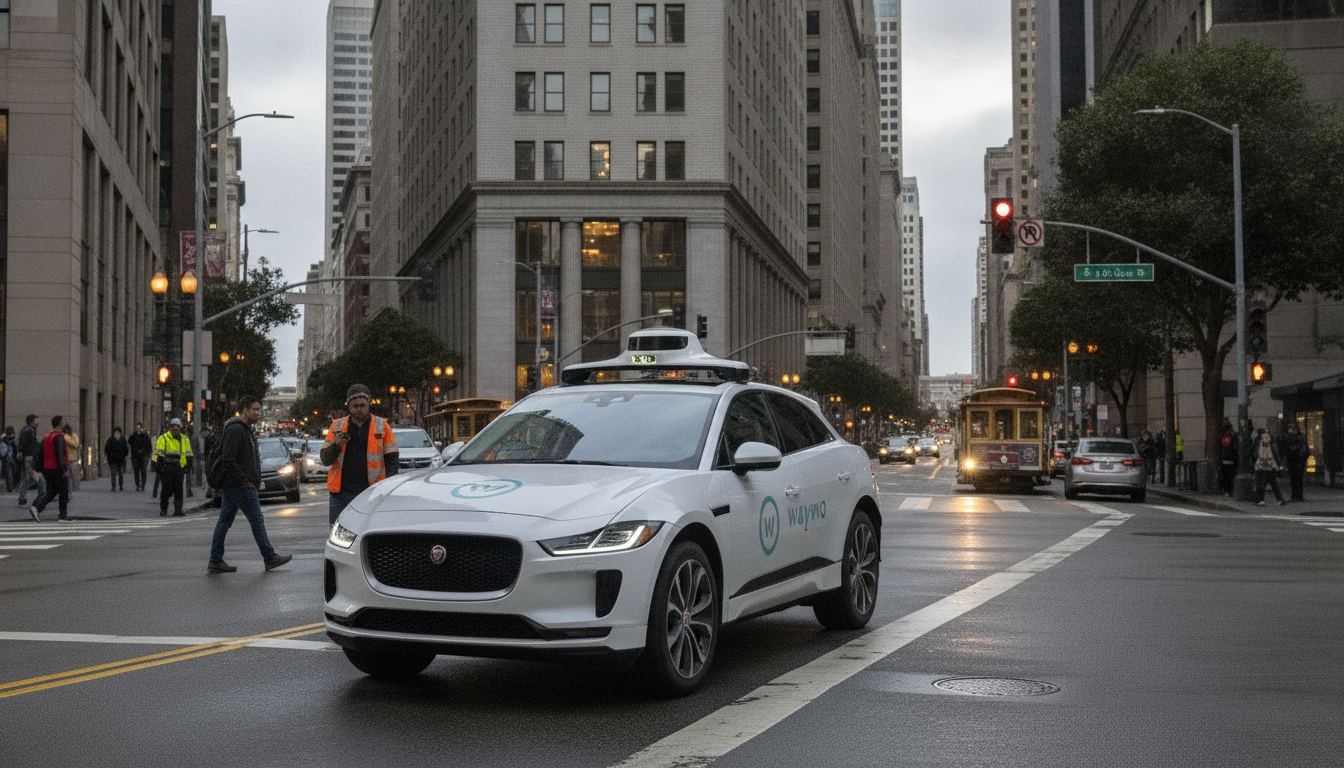
Waymo robotaxi service resumes after temporary pause amid San Francisco power outage
Waymo robotaxi service paused in San Francisco during a power outage affecting about 7,000 customers; operations resumed after an hour-long safety review.
Waymo robotaxi service briefly halted in San Francisco on Friday as the company adjusted operations in response to a city power outage that impacted roughly 7,000 PG&E customers. Riders in the city received notifications that freeway routes were unavailable while the company assessed local conditions. After coordinating with city officials and reviewing safety implications, Waymo restored service within about an hour. The incident revived discussion about how autonomous fleets should respond during major infrastructure failures.
Timeline of the pause and restart
A screenshot circulating on social media showed Waymo advising customers that service was “temporarily paused” and that freeway routing had been suspended. Company spokespeople confirmed the notice and said the pause was a deliberate measure to monitor unfolding conditions across the city. According to Waymo, operations were returned to normal after staff evaluated the extent of the outage and consulted with local authorities. The company framed the interruption as a short, precautionary step rather than a system malfunction.
Waymo later provided additional detail, saying it paused service for approximately one hour to determine the outage’s scale and to coordinate with municipal and emergency responders. The company emphasized that rider safety and dependable service were priorities during the disruption. Waymo’s statement reflected a protocol of narrowing operational scope—such as restricting freeway travel—until situational awareness is restored. Riders who experienced delays or rerouting were notified through the app, the company said.
Extent and impact of the power outage
The blackout affected an estimated 7,000 PG&E customers in San Francisco, including residential neighborhoods and some commercial areas. Local traffic signals and other infrastructure rely on steady electrical service, and outages can create cascading risks for vehicle navigation and traffic flow. Waymo’s decision to suspend certain routes responded directly to that changed environment, where signals, communications, and third-party services may operate differently or intermittently. City officials and utility crews mobilized to isolate the outage and restore power while monitoring public safety implications.
While the duration of the outage was relatively short, the event highlighted how concentrated utility failures can disrupt both human-driven and automated transportation systems. Emergency services and municipal traffic teams coordinated to manage intersections and essential arterials until power was restored. Transportation agencies in San Francisco said they were tracking the situation and sharing information with private mobility operators to minimize confusion on major corridors.
Waymo’s operational safeguards and decision-making
Waymo described the pause as a proactive safety measure and said its systems include clear thresholds for modifying service when local conditions deteriorate. The company pointed to built-in procedures that limit vehicle behavior—such as avoiding freeway segments—when external factors reduce the reliability of maps, signals, or communications. Those safeguards are intended to prevent scenarios in which vehicles face unusual traffic patterns, disabled signals, or other hazards that could complicate remote monitoring and routing algorithms.
Company representatives stressed that crewed monitoring centers and local teams play a central role in adjudicating service changes during anomalies. Waymo said it maintains lines of communication with city emergency managers to exchange real-time information and align responses. The brief pause reflects a calculus between maintaining availability for riders and ensuring vehicles operate within safe, predictable parameters amid uncertainty.
Historical incidents and operational lessons
Waymo’s temporary suspension in San Francisco is part of a pattern in which power failures and similar events have posed problems for autonomous fleets. In December, a blackout in the city left a number of Waymo vehicles stalled on streets, prompting scrutiny of how self-driving vehicles handle sudden infrastructure loss. A separate incident during a major holiday event also produced disruptions that impeded traffic flow and drew attention to contingency planning for large public gatherings.
These prior events have pushed both companies and regulators to examine fail-safes, fallback procedures, and communications with municipal authorities. Engineers and transportation planners note that layered redundancies—backup power, enhanced local sensing, and tighter integration with traffic management centers—can reduce the likelihood of stalled vehicles or gridlock when public utilities fail. The incidents underscore the challenge of integrating autonomous services into urban systems that remain vulnerable to sporadic infrastructure outages.
Regulatory response and municipal concerns
San Francisco Mayor Daniel Lurie publicly urged stronger state-level rules to govern autonomous vehicle operations during major incidents, saying current regulations do not adequately address outages or large-scale disruptions. The mayor’s office argued for clearer requirements on how and when operators must scale back services, coordinate with emergency officials, and provide timely information to the public. City leaders have cited repeated disruptions as evidence that more prescriptive oversight is needed to protect traffic flow and public safety.
State regulators and lawmakers are watching the debate, balancing the potential benefits of AV services against concerns about system resilience and accountability. Municipal officials have sought input from mobility companies on incident protocols and have explored policy options that could mandate reporting, coordination, and contingency measures for autonomous fleets. The exchange signals a growing focus on aligning private technology deployments with the public sector’s emergency management routines.
Waymo’s resumption of service after a short, precautionary pause highlights both the operational complexities of running autonomous fleets in dense urban areas and the evolving expectations of municipal partners. The company’s response underscores a tension between maintaining continuous mobility services and ensuring vehicles operate only when conditions meet defined safety thresholds. As cities and AV operators continue to confront outages and other infrastructure risks, officials and companies are likely to pursue clearer rules and closer coordination to reduce the chance of repeat disruptions.
