
Schalke quantifies its identity with wearable sensors as Münster sits deep
Schalke DNA tracked through chest-worn sensors to measure intensity, sprints and running output, revealing how data shapes tactics and training.
Schalke deploys chest sensors to quantify ‘Schalke DNA’
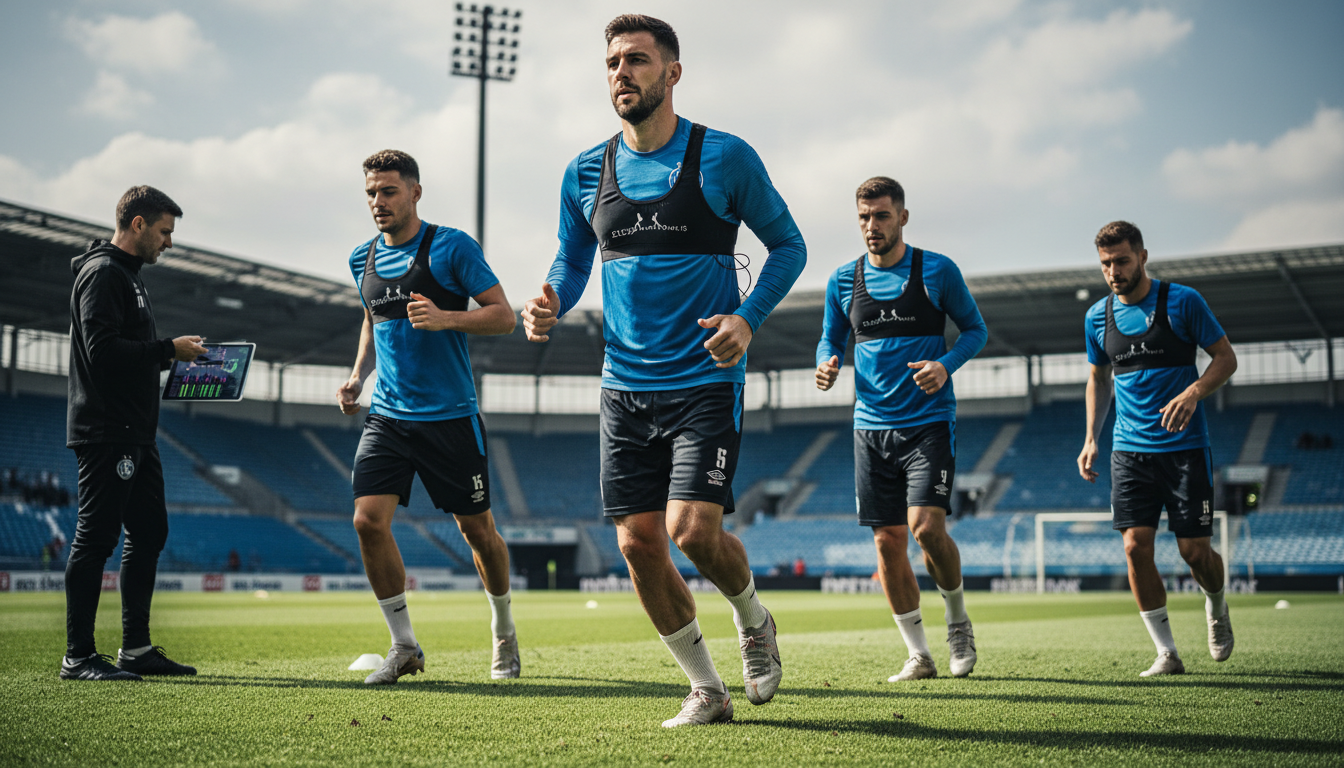
Schalke has begun routinely measuring what the club calls the "Schalke DNA" — the on-field playing criteria the team defines as intensive, aggressive and courageous. Players wear chest-strap sensors that capture intensity, sprint counts and total running distance to map how closely match performance aligns with that identity. On the afternoon against Münster those metrics were largely academic, as the opponent retreated and allowed Schalke freer possession and creative latitude.
The club’s framing positions the data as an objective yardstick for behavior rather than a narrow fitness test. Coaches and analysts use the output to check whether the squad meets the stylistic standards the club has set for itself. That linkage between identity and measurement is part of a wider push in professional football to tie analytics directly to team philosophy.
What the sensors record and why it matters
The chest-worn devices record a range of physical metrics, including high-intensity efforts, top-speed sprints and total distance covered by each player. These indicators provide granular insight into work rate, recovery needs and the physical contribution of individual players across phases of play. Aggregating those figures into team-level profiles lets staff assess whether the side is executing its preferred style in measurable terms.
Beyond raw numbers, the sensors feed into training periodization and substitution strategy. Data showing declining intensity late in matches can prompt rotation decisions or targeted conditioning work. When used alongside video analysis, the metrics help translate abstract tactical principles — like "be aggressive" — into specific, actionable targets for players.
Match snapshot: Münster’s defensive posture limited metric demands
In the game described, Münster adopted a compact, low-block formation that blunted the need for Schalke to sprint repeatedly or sustain high-intensity duels. With space largely in front of them, Schalke could play with possession and craft patterns without triggering the full battery of biometric alarms. As a result, some of the intensity-related figures that usually define the Schalke DNA were less prominent.
That tactical reality highlights a limitation of pure numbers: context matters. A low-opponent block can suppress sprint counts even while possession, chance creation and pass sequences improve. Coaches must therefore interpret sensor output in light of tactical objectives and opponent behavior rather than treating every deviation from a benchmark as a deficit.
Coaching staff translate data into tactical and training changes
Schalke’s backroom team integrates sensor feedback into daily coaching conversations and longer-term planning. Analysts generate reports that compare individual performance against the club’s targeted intensity bands and flag outliers or declining trends. These insights inform everything from individualized conditioning plans to tactical reinforcement in training sessions.
Decision-makers also use the data to manage load and reduce injury risk. When a player’s sprint count or high-intensity meters fall outside expected ranges, staff can adjust recovery protocols, modify session intensity or alter selection to protect the athlete. The loop from measurement to intervention is intended to sustain the club’s identity across a long season.
Player response and the balance between metrics and instinct
Players generally accept wearables when they see direct benefits in recovery, fitness and selection clarity, but there is sometimes tension between numbers and on-field intuition. Some coaches worry about over-reliance on metrics that may not capture spatial intelligence, timing of runs or the psychological elements of aggression. The challenge for Schalke is to blend empirical feedback with the coach’s read of form and the player’s feel for the game.
Open communication about what is being measured and why helps build buy-in. When players understand that data supports rather than replaces coaching judgment, the technology becomes a tool for improvement. Clubs that successfully embed analytics create an environment where metrics and instinct reinforce each other.
Privacy, regulation and the ethics of biometric tracking
The proliferation of wearable sensors raises questions about data ownership, consent and competitive use of biometric information. Clubs must navigate league regulations and collective agreements that govern the collection and retention of player data. Clear policies on who can access the information and how long it is stored are necessary to protect athletes’ rights.
Transparency with players about the scope and purpose of tracking reduces suspicion and legal risk. Equally important is ensuring that data-driven decisions are defensible and tied to performance or health outcomes, not punitive measures. As more teams adopt similar systems, standards around privacy and best practice are likely to tighten.
Final paragraph
Schalke’s use of chest-worn sensors to quantify the "Schalke DNA" illustrates how modern football blends identity with measurable benchmarks, but the Münster match underlined that numbers tell only part of the story.
