
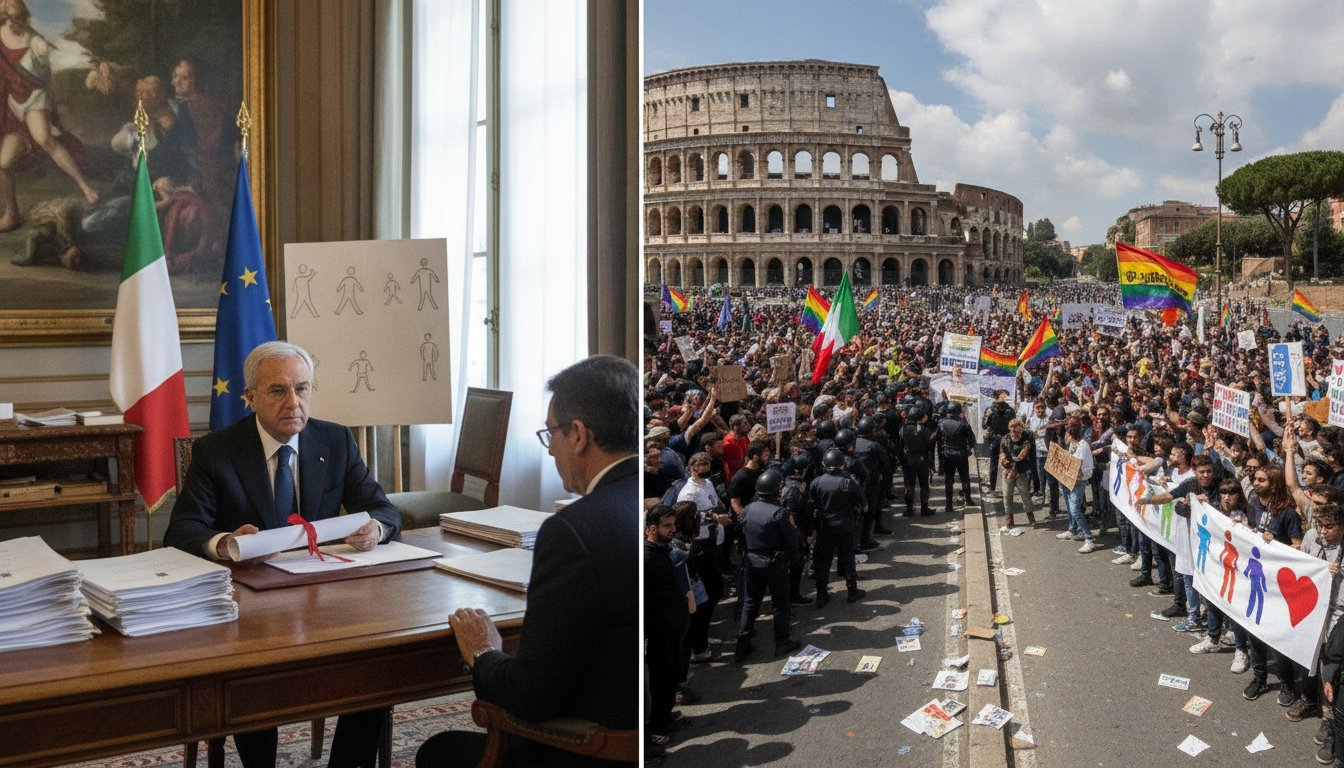
Remigration drives tens of thousands into Rome streets as petition heads to parliament
A far-right "remigration" petition has propelled tens of thousands into rival demonstrations across Rome, with the controversial initiative now set for parliamentary discussion after reaching the required 50,000 signatures.
Tens of thousands of people filled separate parts of Rome on Saturday in competing demonstrations over migration policy, a sign the remigration debate has moved from the fringes into mainstream politics. Authorities said large numbers of police were deployed to keep the crowds apart and limit the risk of clashes. The petition behind the movement, known as “Remigration and Reconquest,” secured the signatures needed to force debate in parliament.
Mass rallies in Rome split over remigration
An anti-migration march convened in the Prati neighbourhood, drawing several thousand participants who voiced support for hardline measures targeting migrants and foreigners. In a different area of the capital, a much larger pro-migration demonstration mobilized tens of thousands, with participants carrying banners and denouncing deportation plans. Organizers on both sides described the gatherings as peaceful, though tensions remained high as the city hosted parallel protests.
The visual contrast between the two crowds underscored how polarising the remigration issue has become in Italy, with activists on each side framing the debate as fundamental to the country’s social and cultural future. The pro-migration march included signs emphasizing shared humanity and opposition to forced returns, while opponents framed their demonstration as a demand for stricter border and integration controls.
Petition clears threshold, triggers parliamentary debate
The “Remigration and Reconquest” petition gathered the 50,000 signatures required under Italian rules to obligate parliamentary consideration, a procedural milestone that guarantees the measure a place on the legislative agenda. The text calls for a range of assertive steps, including measures aimed at returning non-citizens to their countries of origin and incentives tied to repatriation. Supporters argue the package addresses perceived security and social-order concerns, while detractors warn it would institutionalize exclusion.
Parliamentary debate does not mean immediate passage; the measure must still navigate committee scrutiny, legal review and votes in both chambers. Lawmakers across the spectrum have signalled that the coming discussions will be contentious, with potential for amendments or legal challenges if the draft is advanced.
Extremist gestures and public reaction at demonstrations
Observers at the anti-migration march reported episodes of extremist symbolism and chants that prompted alarm among many attendees and commentators. Some demonstrators used historical fascist salutes and shouted references to Italy’s dictator of the 20th century, actions that civil society groups said highlighted the movement’s ties to neo-fascist elements. Photographs and banners from the pro-migration counter-demonstration portrayed inclusive slogans rejecting deportation and racism, aiming to shift public attention to human-rights concerns.
Civil libertarians and immigrant advocacy groups expressed outrage at both the rhetoric and the possibility that such ideas could be debated in parliament without clear safeguards. For many Italians watching events unfold, the visceral imagery of Saturday’s marches crystallized long-running anxieties over identity, immigration policy and the boundaries of acceptable political discourse.
Split inside Meloni’s coalition over remigration
The remigration proposal has created friction within Prime Minister Giorgia Meloni’s governing coalition as parties weigh political opportunity against legal and reputational risk. The League, a coalition partner, backed moving the petition into parliamentary discussion, viewing it as consonant with its hardline stance on migration. Meloni’s own Brothers of Italy and several centrist allies have been more cautious, wary of endorsing a measure with explicit links to extremist groups and potential constitutional pitfalls.
Government sources note that Meloni faces a delicate calculation: balance the demands of right-wing supporters without alienating moderate allies or exposing the administration to judicial rebukes. The internal debate signals that while migration remains a potent electoral issue, translating protest momentum into coherent, coalition-backed legislation is politically fraught.
Legal scholars and opposition cite constitutional concerns
Legal experts and opposition figures argue the remigration initiative raises serious constitutional and international-law questions by singling out people on the basis of ethnicity, national origin or perceived lack of assimilation. Critics say provisions that target groups for coercive return could run afoul of anti-discrimination guarantees and Italy’s obligations under human-rights treaties. Opposition politicians have characterized elements of the proposal as incompatible with the principles of equal protection and respect for citizenship rights.
Prominent voices on the left have called for judicial oversight and parliamentary safeguards should the measure proceed, arguing that democratic debate must not erode foundational legal protections. Constitutional scholars caution that even if elements of the petition survive initial political screening, courts could ultimately strike down provisions deemed to endorse ethnic-based exclusion.
Police operation emphasised separation and order
Authorities deployed thousands of officers across Rome to police the rival demonstrations and maintain a buffer between the gatherings, with an emphasis on preventing direct confrontations. Police commanders described the deployment as proportionate to the scale of the events and said units were positioned to protect both demonstrators and the city’s public spaces. Officials reported isolated incidents of disorder but no immediate large-scale violence during the main demonstrations.
Municipal and law-enforcement sources said contingency plans remained in place as parliament prepares to schedule debate, with officials monitoring intelligence around potential follow-up rallies. Local leaders also urged participants on both sides to respect public order and the right of others to demonstrate.
The remigration debate now moves into formal political channels, where legal review and parliamentary bargaining will determine whether protesters’ demands translate into law or remain a provocation on the margins of Italian politics. Observers warn that the discussions in Rome could have broader implications for migration policy across Europe, testing how democracies balance security, labour needs and human-rights commitments in an era of heightened polarisation.
