
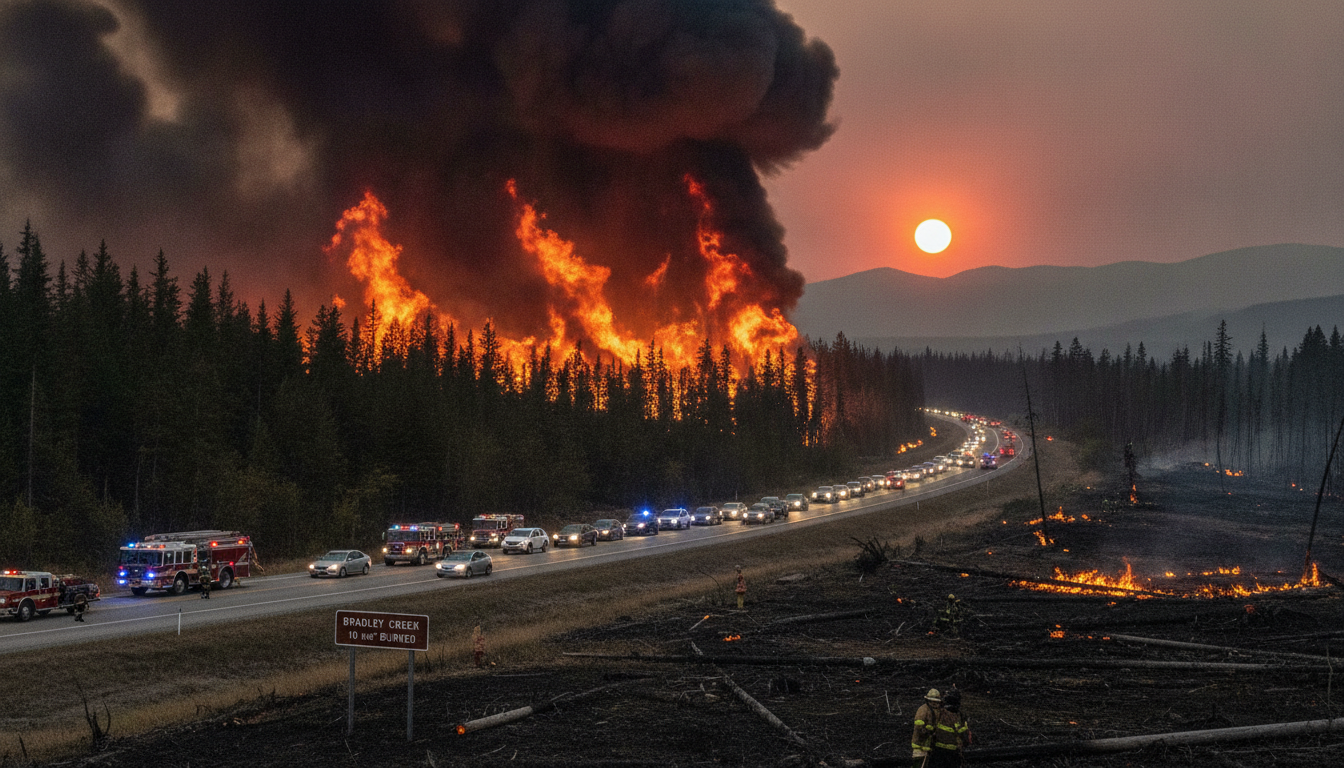
B.C. wildfires expand as Bradley Creek blaze forces evacuations near Kelowna
Bradley Creek fire north of Kelowna joins nearly 30 new blazes as B.C. wildfires surge; residents urged to prepare for rapid evacuation amid gusty winds.
The Bradley Creek fire north of Kelowna has escalated into a significant threat as B.C. wildfires multiply across the province, prompting evacuation orders and readiness warnings. The B.C. Wildfire Service said nearly 30 new fires were added to roughly 100 active incidents in the previous 24 hours, intensifying risk to communities. Authorities are urging residents to prepare for quick evacuation as crews contend with challenging conditions and expanding flames.
Bradley Creek blaze prompts evacuation orders
Central Okanagan emergency management issued evacuation orders and alerts for areas near Bradley Creek after the fire strengthened overnight. The blaze is located north of Kelowna on the west shore of Okanagan Lake and has directly threatened nearby properties and infrastructure. Local officials told residents to follow evacuation notices and to remain ready to leave at short notice if conditions worsen.
The B.C. Wildfire Service has classified the Bradley Creek fire as uncontained and reported its footprint at about 10 square kilometres. Initial investigations by provincial crews attribute the ignition to human activity, and the fire remains under active suppression efforts. Fire managers have highlighted the difficulty of establishing containment lines while the perimeter continues to shift under variable winds.
Nearly 30 new starts add to more than 100 active wildfires
Provincial reports indicate that nearly 30 new fire starts appeared within a 24‑hour period, bringing the active incident count to about 100 across British Columbia. The surge in ignitions has expanded the geographic scope of threat and placed additional strain on firefighting resources. Communities across multiple regions have been advised to monitor local emergency bulletins as new alerts are issued.
Officials say the rapidly changing situation complicates resource allocation and evacuation planning, with managers prioritizing life safety and infrastructure protection. The B.C. Wildfire Service reiterated its recommendation that residents prepare evacuation plans, keep essential items ready and heed orders from municipal and regional emergency authorities.
Weather conditions aggravate fire behaviour and hinder crews
Thunderstorms and gusty winds this weekend played a significant role in elevating fire risk and in hampering suppression work, according to provincial fire officials. Downbursts and shifting wind patterns have accelerated fire spread in multiple areas, complicating aerial and ground attack operations. Intermittent lightning has also been linked to some new ignitions, adding to the challenges faced by crews.
Fire managers warned that erratic weather can rapidly change the direction and intensity of active blazes, reducing the effectiveness of containment strategies. As a result, incident commanders are adapting tactics in real time and prioritizing opportunities where weather windows permit safer, more effective operations.
Quebec crews and SOPFEU representatives dispatched to assist
In response to the rising demand for personnel, Quebec dispatched reinforcements to assist B.C. suppression efforts. Sixty wildland firefighters and two representatives from the Société de protection des forêts contre le feu (SOPFEU) departed Quebec bound for Prince George to support provincial crews. The interprovincial deployment is part of a reciprocal arrangement to move trained personnel to areas experiencing heightened fire activity.
Provincial officials said the incoming crews will be integrated into existing incident management teams where needed and will bolster both direct attack and support roles. The arrival of additional firefighters is expected to provide critical manpower as crews work to secure perimeters and protect at‑risk communities.
Local preparedness measures and community impacts
Municipalities in the Central Okanagan and surrounding regions have activated local emergency plans and standby protocols for evacuation centres and reception services. Residents in affected zones were advised to gather essential documents, medications and supplies and to have transportation plans in place. Road closures and alert systems have been used to inform the public of shifting evacuation requirements.
Community leaders emphasized the importance of following official guidance and avoiding routes that could be compromised by fire or emergency operations. Local utilities and services are coordinating with emergency management agencies to support vulnerable residents, including those requiring special assistance during evacuations.
Containment outlook and ongoing priorities for crews
Incident commanders continue to evaluate containment prospects for Bradley Creek and other active blazes as crews assess fire behaviour and resource needs. Short‑term priorities include protecting life and property, establishing control lines where feasible, and maintaining situational awareness as weather evolves. Restoration of service corridors and infrastructure assessments will follow once fires are stabilized.
Authorities cautioned that conditions remain volatile and that containment timelines are uncertain, underscoring the need for residents to stay informed and prepared. Provincial and municipal agencies said they will provide updated advisories as new information becomes available and as reinforcements arrive to support firefighting efforts.
Residents in affected areas should monitor official channels for evacuation notices and safety instructions and prepare to act quickly if ordered.
