
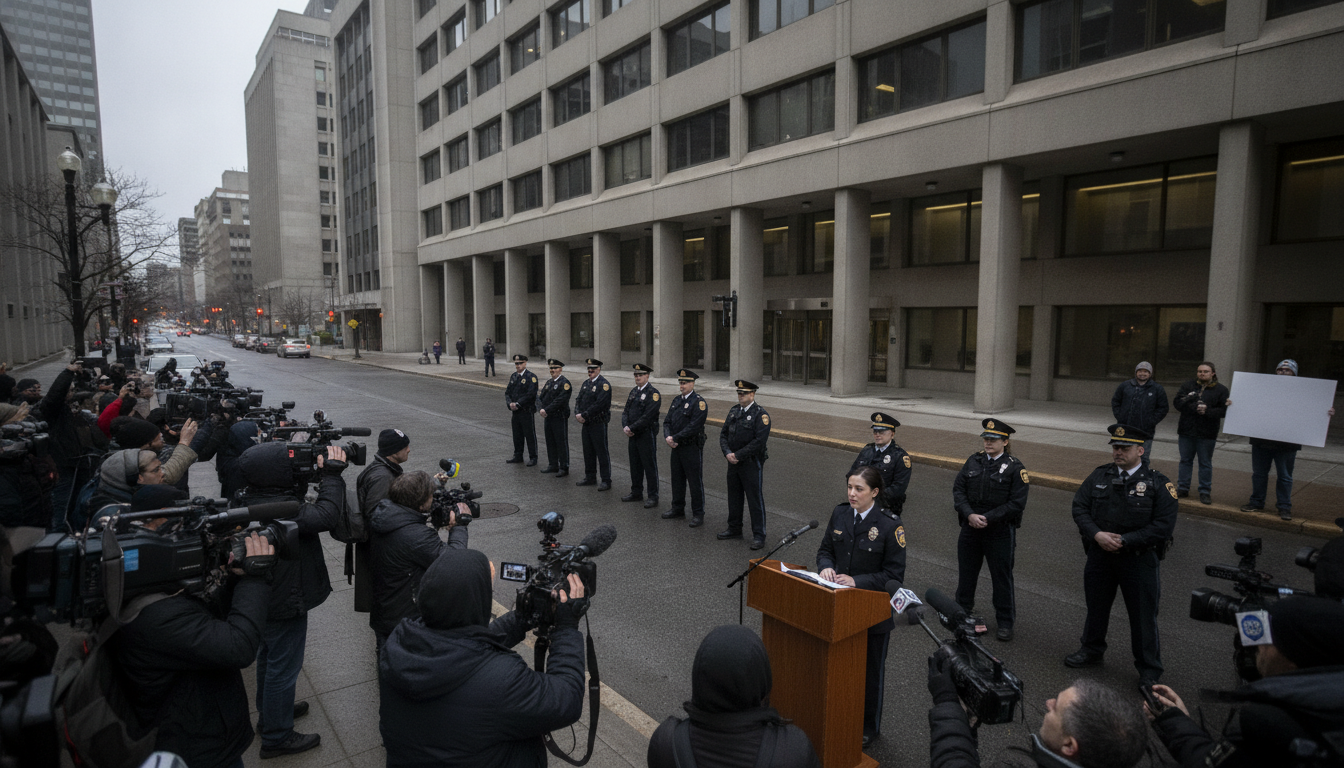
SPVM racism investigation: Montreal police chief says internal whistleblowers triggered probe
SPVM racism investigation opens after internal complaints about alleged racist conduct; Chief Fady Dagher vows a full probe and asks witnesses to contact professional standards at 514-280-0200.
The Montreal police service has launched a formal SPVM racism investigation after officers filed internal complaints alleging discriminatory and hateful conduct during arrests. Chief Fady Dagher confirmed the inquiry and said the complaints were brought forward by members of the force, not social media or external actors, signaling a shift in how such incidents are reported. He described the decision to investigate as both a professional duty and a cause he intends to pursue to its conclusion.
Internal complaints led to SPVM racism investigation
Less than 24 hours after announcing the inquiry, Dagher told reporters that evidence compiled by officers in secret prompted immediate action. He framed the complaints as proof that a cultural change is underway inside the Service de police de la Ville de Montréal.
Dagher emphasized that the reports were made through internal channels and that the organization had acted proactively, instituting measures as soon as the allegations surfaced. He called the ability of investigators to build the case in confidentiality “the clearest proof” of the service’s capacity to police its own members.
Allegations involve officers attached to Montreal‑North station
Sources within the service say the officers accused of misconduct were assigned to Station 39 in Montreal‑North, a neighbourhood that has long been central to discussions about policing and community relations. Dagher did not disclose the number of officers implicated but confirmed the alignment of the allegations with patterns of concern raised by both community groups and members of the force.
Photographs and media reports have identified the patrol post, and Dagher urged anyone with information about the incidents to contact the SPVM professional standards unit at 514‑280‑0200. He also stressed that the matter will be handled through the service’s internal processes while cooperating with any external oversight as required.
Chief Dagher says investigation shows changing culture
Dagher, who has led the SPVM since his appointment, described the wave of internal reporting as a “movement of denunciation” that reflects sustained efforts to change attitudes within the force. He said his pride in the officers who came forward stems from their willingness to expose unacceptable conduct by colleagues rather than hide it.
“Pride in the uniform,” Dagher told an interview audience, should compel members to report wrongdoing and to protect the reputation of the majority who serve lawfully, he added. He framed the inquiry not merely as an administrative file but as a moral cause for the service.
Former leaders and policing experts welcome action but urge follow‑through
Former SPVM director Marc Parent and ex‑GRC officer Alain Babineau publicly praised Dagher’s leadership and the concrete steps taken to address racism within the police service. Both said the move signals a break from previous eras when such complaints rarely triggered immediate internal action.
At the same time, they cautioned that this development is the start of a longer process and warned against complacency. Parent noted that training institutions may provide a strong foundation, but accountability on the street depends on supervision and a culture willing to call out deviations when they are small and when they grow.
Calls for transparency, supervision and systemic review
Civil‑society stakeholders and policing commentators argue that internal reporting must be paired with transparent outcomes, independent oversight and strengthened frontline supervision. Experts say disciplinary processes and public reporting on findings are necessary to rebuild trust with communities who have long complained of racial profiling.
Dagher has said the SPVM will “put everything in” to see the probe through, while former colleagues insist that rhetoric must be matched by measurable change. Observers note that similar problems exist in other services across the country, underscoring the need for systemic reforms rather than isolated interventions.
Public engagement will be a test of the inquiry’s credibility.
Dagher invited anyone with relevant information to contact the SPVM professional standards unit at 514‑280‑0200, reinforcing that the service welcomes tips from both inside and outside the organization. He and other leaders say internal whistleblowing is vital to detect misconduct early and prevent harm to residents and to the institution’s legitimacy.
How the SPVM documents its investigative steps, protects complainants, and shares results will shape public perception in the weeks ahead. Community groups and oversight bodies will be watching for evidence that the service’s procedures are applied impartially, consistently and with appropriate sanctions where warranted.
The unfolding SPVM racism investigation marks a consequential moment for policing in Montreal, as the service seeks to reconcile internal accountability with public trust while navigating calls for broader systemic reform.
