
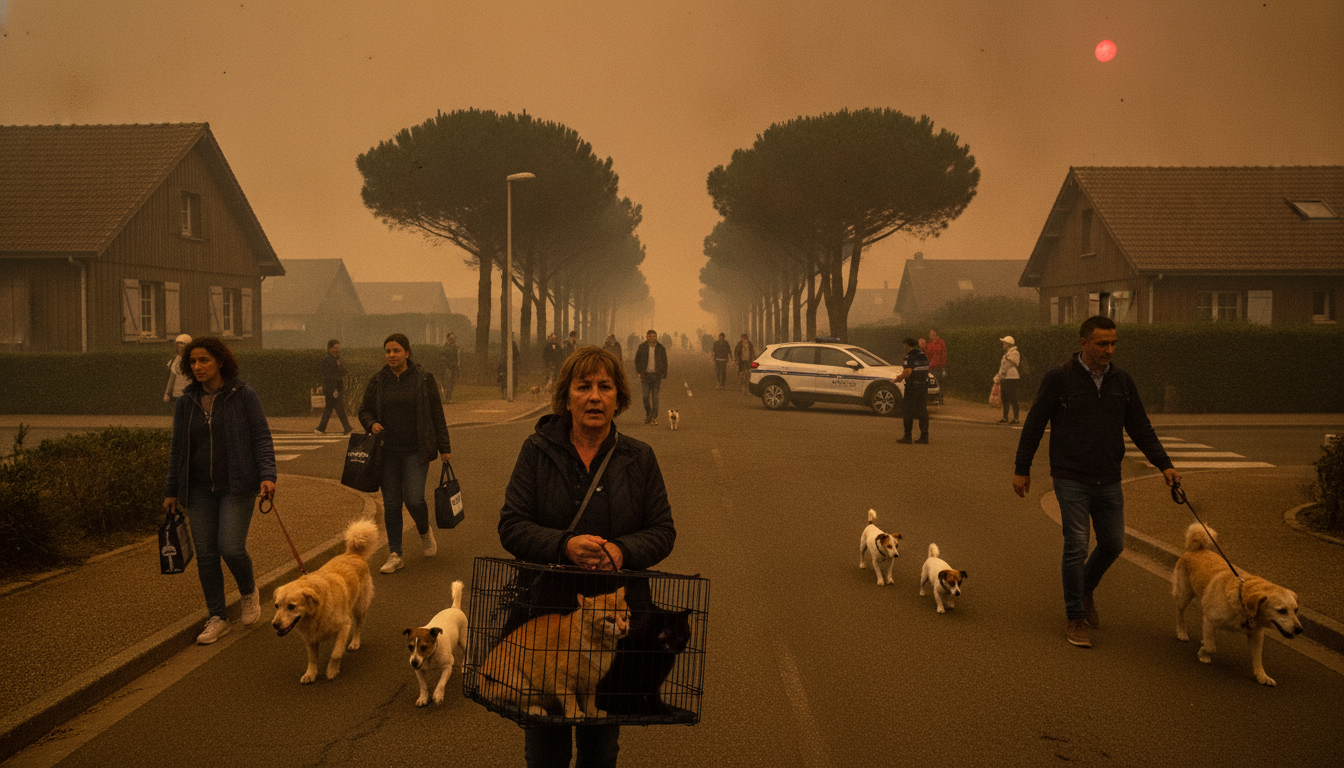
Wildfires in France Empty Coastal Towns as a Volunteer Stays to Care for Pets
Wildfires in France have forced tens of thousands from their homes along the southwest coast, leaving beach towns deserted and emergency services stretched. The evacuation has emptied streets and shuttered businesses in seaside communities while firefighters battle fast-moving blazes. A visit to Claouey found the village largely abandoned, with a few residents remaining — including one man who has taken on the care of the town’s animals.
Towns Emptied as Evacuations Spread
Authorities ordered wide-ranging evacuations after fires advanced through forested areas and reached coastal communities, displacing residents and tourists alike. Tens of thousands have left coastal zones amid smoke and falling ash, and many towns now resemble ghost towns as people move to safety inland.
Local officials say the evacuations were precautionary in many places but mandatory in zones assessed as high risk. Roads out of affected areas have seen heavy traffic, and municipal services have focused on clearing vulnerable neighborhoods.
Claouey Left Largely Deserted
Claouey, a small seaside village popular for its beaches and oyster farms, was among the communities largely emptied by the evacuations. On arrival, most houses were locked and shutters were drawn, while playgrounds and cafes sat silent beneath a hazy sky.
Only a handful of people remained in the village, choosing to stay either to protect property or because they had limited options to leave with animals. The absence of tourists and day visitors was stark, turning normally busy promenades into quiet lanes.
Resident Staying Behind Cares for Pets
Among the few who stayed was a man who has made it his mission to care for the village’s pets and strays during the emergency. He has been visiting yards and empty houses to feed animals, check on water supplies and provide shelter for pets left behind by hurried evacuations.
His efforts underline a common dilemma in wildfire zones: many residents say they delayed leaving because they could not safely transport animals or feared abandoning them. Volunteer caretakers have stepped in where possible, coordinating with neighbours and local associations to track and care for animals.
Firefighters and Emergency Crews Engage on Multiple Fronts
Fire crews from regional brigades and national services have been mobilized to tackle multiple fires along the coast, working to contain flames and protect populated areas. Aerial support and ground crews have focused on establishing containment lines and protecting critical infrastructure.
Officials emphasize that conditions remain volatile because high temperatures, low humidity and wind shifts can rapidly change a fire’s behavior. Fire managers are prioritizing life safety and evacuations while trying to hold lines around towns and key natural barriers.
Evacuations, Shelters and Community Response
Municipalities set up temporary reception centres and shelters to house evacuees and their pets where possible, and social services have been activated to coordinate food, medical aid and information. Local governments urged residents to follow evacuation orders and to avoid returning until authorities declare areas safe.
Community groups and volunteers have also organized to support displaced residents, offering transport, donations and help with animal care. The swift local response has been crucial in providing immediate relief while longer-term plans for recovery are discussed.
Environmental Pressures Heighten Fire Risk on the Coast
Experts point to a combination of dry weather and accumulated vegetation as factors that amplify wildfire risk in coastal regions. Coastal forests and dune systems can become extremely flammable in prolonged dry spells, allowing flames to spread from inland areas toward settled zones.
This event highlights the broader challenge of managing natural landscapes near populated coasts, as communities weigh tourism, conservation and fire prevention. Authorities say investments in prevention, early warning and land-management strategies will be key to reducing future evacuations and damage.
A visit to the emptied streets and quiet beach of Claouey reveals the human and animal consequences of the fires: shuttered homes, empty sand, and the small acts of care by those who stayed behind. The coming days will depend on firefighting success, weather changes and coordinated support for displaced communities and the animals left in their wake.
