
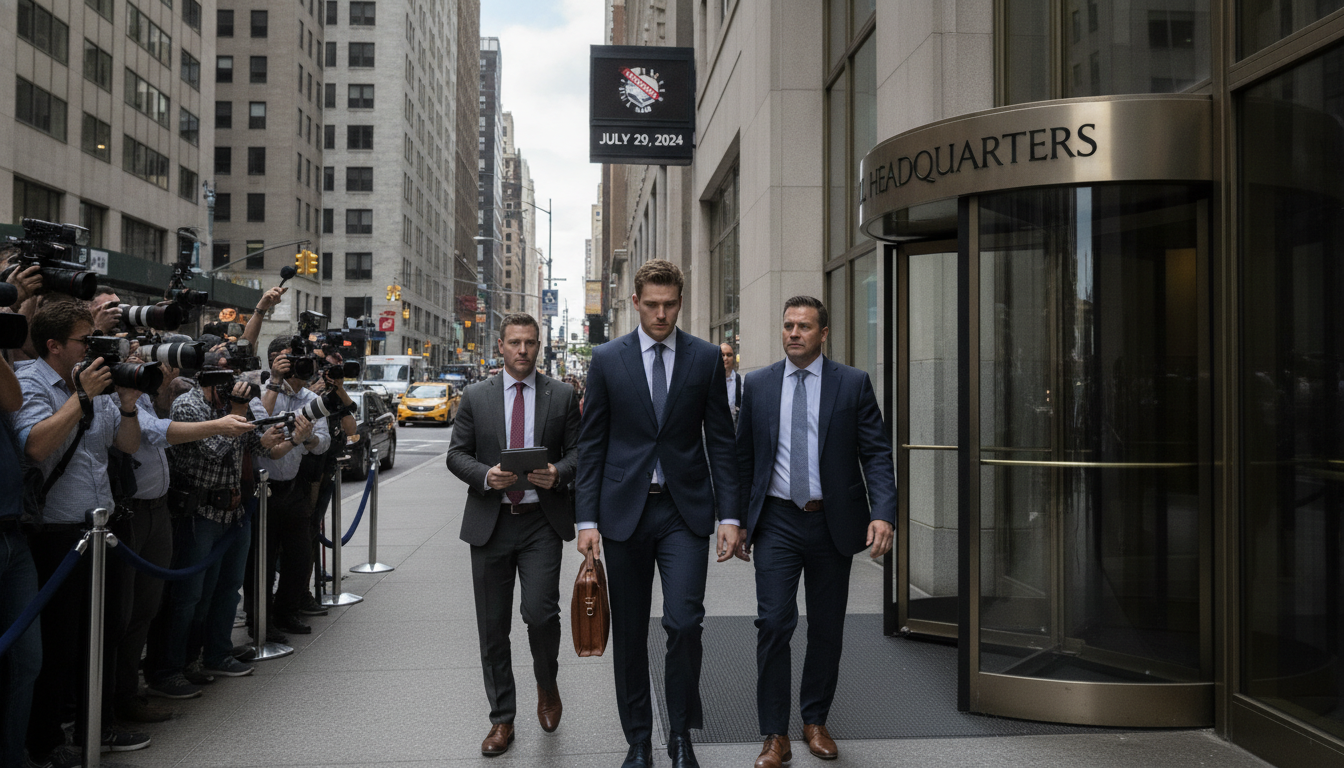
Braden Schneider arbitration hearing set for July 29 as Rangers and defenceman head to salary resolution
Braden Schneider arbitration hearing scheduled July 29 after the Rangers defenceman filed for salary arbitration; the hearing will determine his 2026–27 contract.
Braden Schneider arbitration hearing scheduled for July 29 marks a pivotal moment in the New York Rangers offseason as the 24‑year‑old blueliner and the team prepare for a salary arbitration process that will set his pay for the coming season. Schneider filed for arbitration after electing to pursue a formal hearing rather than reach an immediate agreement with the Rangers, which means an independent arbitrator will set or recommend his salary if the sides do not settle beforehand. (puckpedia.com)
Hearing date and procedural timeline
The arbitration hearing is scheduled for Wednesday, July 29, according to PuckPedia, placing a firm deadline on negotiations between Schneider and New York. Arbitration hearings are private, capped in length by the NHL Collective Bargaining Agreement, and can be resolved at any time if both parties agree to a contract before the arbitrator issues an award. (puckpedia.com)
A player who elects salary arbitration generally forfeits the option to be offer‑sheeted by other clubs, narrowing the negotiating field to the current club and the neutral arbiter. The hearing timetable creates a compressed window for the Rangers to finalize their roster decisions and cap planning ahead of training camp. (nhl.com)
Schneider’s recent on‑ice production
Last season Schneider appeared in all 82 regular‑season games for the Rangers and recorded two goals and 16 assists, a total that underscored his emergence as a regular top‑four option on the blue line. He has become a steady presence in New York’s defensive rotation, contributing physical play and occasional offensive support from the right side. (puckpedia.com)
Across his NHL career — all with the Rangers — Schneider has played 368 games, accumulating 20 goals and 67 assists, figures that frame his arbitration case in statistical terms. Those cumulative numbers will be weighed against comparables around the league and will form part of the evidence presented at the hearing. (hockey-reference.com)
Draft background and developmental arc
Schneider was a first‑round selection by the Rangers in the 2020 NHL Entry Draft, taken 19th overall after New York traded up to secure his rights. The Saskatoon native came to the organization with size, mobility and a reputation as a two‑way defenseman, traits Rangers management cited when making the pick. (nhl.com)
Since his draft year Schneider has progressed from WHL standout to full‑time NHL defenseman, moving through the Rangers’ development pipeline and establishing himself as a regular contributor. That developmental arc will be part of the narrative in arbitration, where experience, role and trajectory can influence an arbitrator’s view of a fair salary. (puckpedia.com)
Cap context and Rangers roster moves
The arbitration date places Schneider’s case in the wider context of the Rangers’ offseason roster construction, which has included at least one high‑profile acquisition on the right side of the defence. New signings and trades this summer will shape the Rangers’ available cap space and determine the financial flexibility they have to meet any arbitration award or negotiated settlement. (foreverblueshirts.com)
Teams commonly evaluate arbitration filings against comparable players — similar age, position, ice‑time and statistical production — when formulating offers. New York’s front office must balance the arbitration risk with broader roster needs, including ice time distribution and long‑term contract commitments on the blue line. (nhl.com)
Possible outcomes and implications
Arbitration can produce several outcomes: a negotiated deal before the hearing; an arbitrator‑issued salary for a one‑ or two‑year period (depending on eligibility); or, in rare cases, a side’s decision to trade or otherwise alter roster construction to manage cap consequences. Any final resolution for Schneider will influence the Rangers’ defensive depth chart heading into the 2026–27 season. (puckpedia.com)
For Schneider personally, the hearing represents both a financial juncture and an opportunity to solidify his role. A favorable ruling or negotiated contract could provide term and predictability, while an adverse outcome could prompt further roster moves from the team as it seeks cap relief or reallocation. (puckpedia.com)
Reaction and next steps
Team officials and Schneider’s representatives can continue negotiating up to the start of the hearing and sometimes reach an agreement in the days immediately preceding the arbitration date. If no settlement is reached, the case will proceed to the scheduled hearing and an arbitrator will review submitted evidence from both sides. (puckpedia.com)
The Rangers enter the arbitration window with roster priorities and salary cap considerations that will influence their approach to Schneider’s case. Observers will watch whether New York opts to settle before July 29 or allow the hearing to determine the outcome, a choice that will be shaping talking points throughout training camp and early season projections. (foreverblueshirts.com)
The arbitration hearing on July 29 will resolve Schneider’s immediate contract status and provide clarity for the Rangers’ defensive group as they finalize their roster for the coming season.
