
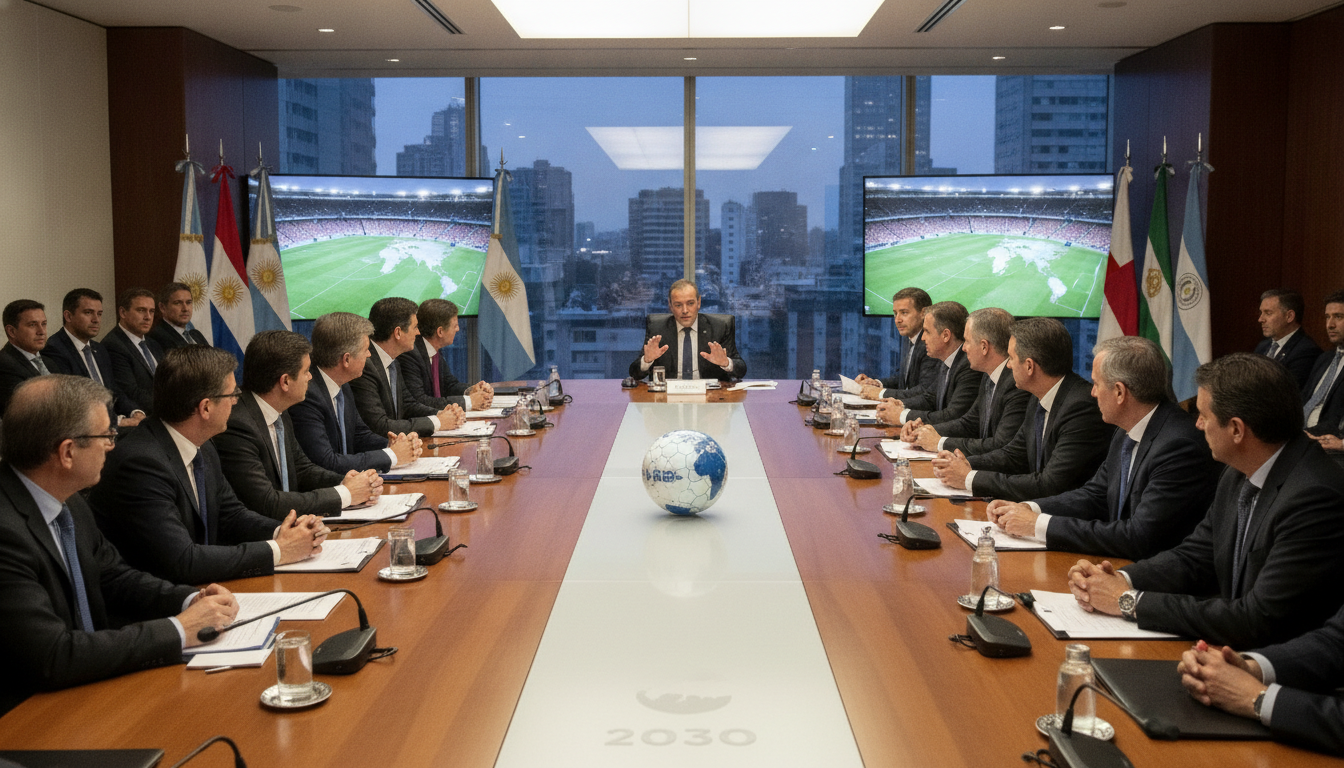
64-team World Cup expansion under consideration for 2030, FIFA says
FIFA is exploring a 64-team World Cup for 2030, a move that would expand the tournament and reshape global qualification and scheduling.
Infantino Confirms 64-Team Proposal Will Be Examined
Gianni Infantino said FIFA will examine a potential 64-team World Cup in committee discussions following the current World Cup cycle.
He made the remarks to Swiss broadcaster Blue Sport, framing the proposal as part of a broader review of future tournament formats.
Infantino emphasized that the idea will be considered by the relevant FIFA bodies before any formal decision is made.
He argued the discussion is intended to weigh the interests of all member associations and the long-term development of the game worldwide.
Rationale Behind Expanding to 64 Teams
FIFA has presented the expansion as a way to give more countries the opportunity to compete on football’s biggest stage.
Supporters say a 64-team World Cup would offer smaller federations stronger incentives to invest in infrastructure, coaching and youth development.
Advocates also point to rising competitive standards in regions outside Europe and South America as justification for broader representation.
Those proponents argue that widening access could increase global engagement, sponsorship and television audiences in emerging markets.
Format and Match-Count Consequences
A 64-team format would increase the total number of matches to 128, up from 104 in the 48-team structure introduced for 2026.
That rise of 24 matches presents immediate questions about tournament length, rest days, and the international match calendar.
Organizers would need to reconcile a larger schedule with player welfare concerns and domestic league commitments.
Broadcasters and commercial partners would also factor into decisions, as more matches create both additional revenue potential and logistical complexity.
Logistical and Stadium Implications
Hosting a 64-team World Cup would require a larger number of match-ready venues and expanded training and accommodation capacity.
National associations and local organizing committees would face steeper demands for transport, security and fan services.
The distribution of fixtures would be central to planning, particularly in co-host situations where travel times between venues can affect recovery and spectator access.
Infrastructure investment and phased planning would likely be prerequisites for any host bidding to accommodate a larger tournament.
Impacts on Qualification and Confederation Representation
Increasing the field to 64 teams would almost certainly change how continental slots are allocated across the six confederations.
That redistribution could benefit Confederation of African Football, Asian Football Confederation and CONCACAF members seeking more direct berths.
More automatic places would alter qualification dynamics and might reduce the number of intercontinental playoffs.
Such a shift would be welcomed by some federations and scrutinized by others concerned about maintaining competitive quality and balance.
2030 Hosts, Centennial Context and Political Dimensions
The 2030 World Cup is set to mark the centenary of the first tournament and is scheduled to be hosted by Morocco, Portugal and Spain.
The symbolic significance of the centennial makes 2030 a particularly visible moment to debate format changes and global inclusivity.
Host capacities and regional logistics for the Morocco–Portugal–Spain bid will be assessed against any new format requirements.
Political considerations, diplomatic relations among hosts and confederation lobbying are also likely to influence discussions as FIFA evaluates the proposal.
Decision Process and Expected Timeline
Any move to a 64-team World Cup would require deliberation within FIFA’s technical and organizational committees and approval by the FIFA Council.
Further stages could involve a formal proposal to the FIFA Congress and consultation with member associations before ratification.
FIFA officials have signaled that detailed studies on competitive integrity, commercial impact and operational feasibility will precede a final decision.
Stakeholders including national federations, clubs, players’ unions and broadcasters can be expected to press their positions during the review.
The football world will watch closely as FIFA balances expansion ambitions with calendar realities and hosting practicalities.
