
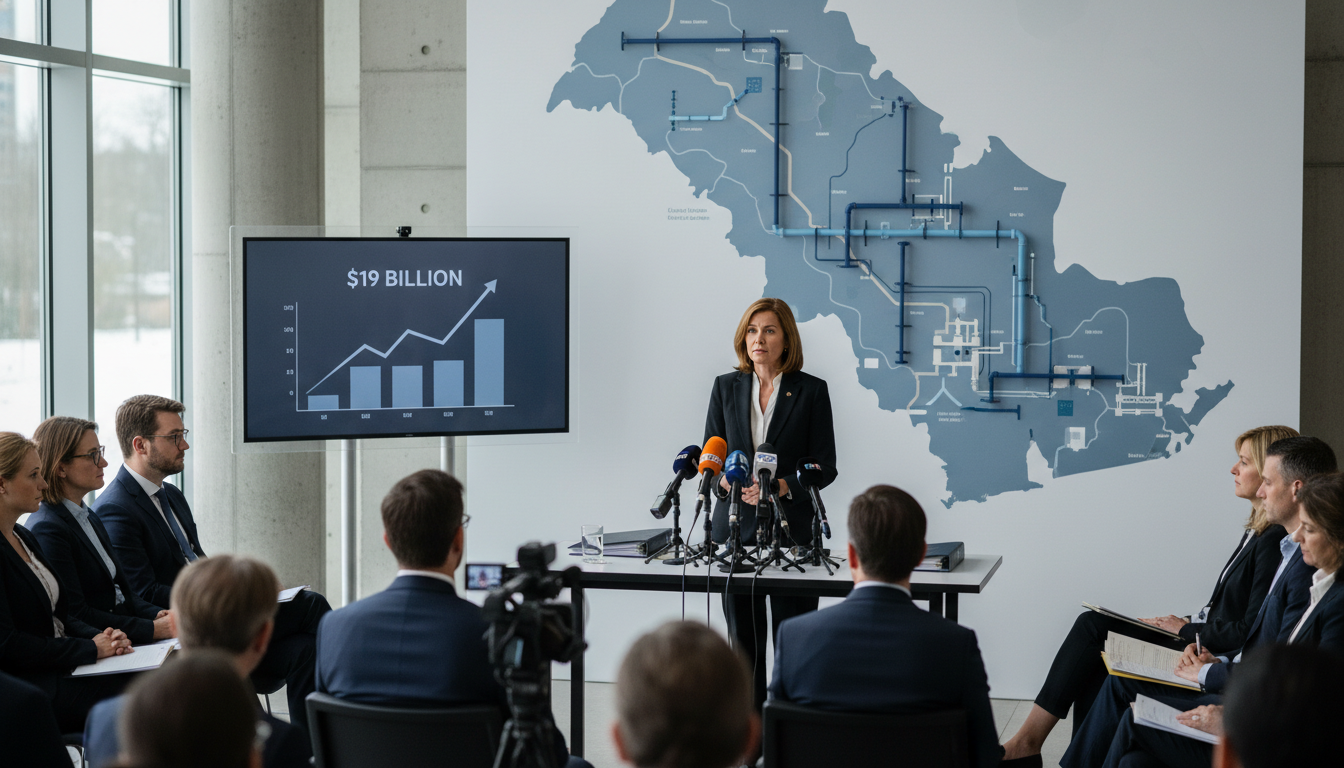
Report: Quebec municipal water infrastructure at high risk, over $19 billion needed for replacements
Quebec sustainability commissioner warns municipalities face deteriorating municipal water infrastructure; report finds more than 10% of assets at high failure risk and replacement costs above $19 billion.
Commissioner issues stark assessment of water assets
Quebec’s sustainability commissioner, Janique Lambert, delivered a report Thursday that paints a worrying picture for municipal water systems across the province. The report says municipal water infrastructure is aging and that government support and guidance are inadequate to meet maintenance and replacement needs.
Lambert’s findings emphasize that municipalities are on the front line of preserving drinking water, sewer and stormwater systems while also dealing with rising climate pressures and service demands. The report was filed under the obligations of the province’s legislation on sustainable development and sets out a series of shortcomings in planning, financing and oversight.
Scope of the problem: pipelines, facilities and replacement value
Municipalities were responsible in 2024 for roughly 100,000 kilometres of underground pipes and about 10,400 water-related facilities, the report says. More than 10 percent of those linear and point assets are assessed as having a high or very high risk of failure, creating an urgent need for intervention.
The financial scale is large: the replacement value of affected infrastructure exceeds $19 billion, and the cost to address assets classified as high or very high risk was estimated at $19.3 billion in 2024. That figure represents a 5.7 percent increase from the prior year, signalling rising pressures on municipal balance sheets.
Provincial guidance and municipal funding gaps
While municipalities carry responsibility for building, maintaining and financing local water services, the commissioner found the provincial role under-delivered. The Ministry of Municipal Affairs and Housing (MAMH) is criticised for not adequately steering municipalities on setting service fees or on establishing investment levels needed to preserve assets.
The report also flags that revenues collected by municipalities for water services are often insufficient and that the rollout of water meters — a tool to reinforce user-pay funding — has been delayed. Those gaps leave many municipalities with limited options other than deferred maintenance or increased borrowing.
Concerns about PRIMEAU selection and climate considerations
The report raises questions about the administration of PRIMEAU, the provincial municipal water infrastructure program launched in 2023. It notes the absence of clear selection criteria, which hinders municipal planning and raises doubts about whether funded projects represent the best allocation of limited resources.
For the 2025–2026 and 2027–2028 funding cycles, MAMH identified 74 projects as priorities, but the commissioner says no documented rationale was provided for the choices, preventing external assessment. The ministry also does not require municipalities to include climate-risk assessments when submitting major projects to PRIMEAU, a gap the report says is inconsistent with long-term resilience planning.
Municipal leaders and a new study call water infrastructure the priority
A separate study by Aviseo, commissioned by the Union des municipalités du Québec, published the same day, supports the commissioner’s urgency. Aviseo’s analysis finds water infrastructure accounted for nearly 30 percent of municipal capital assets between 2014 and 2023, while annual investment levels allocated to those assets averaged just over 20 percent.
Municipal leaders say the mismatch between asset importance and investment levels forces difficult trade-offs at the local level. When councils must choose between repairing a water main and maintaining other essential services, officials warn the province’s financing and regulatory model is not delivering sustainable outcomes.
Delayed investments raise costs and magnify climate risks
The commissioner warns that continued underinvestment will allow the condition of municipal water systems to deteriorate further, increasing maintenance costs and the likelihood of service disruptions. The report stresses that deferring work today often multiplies future expenditures and erodes service reliability for residents.
The accumulation of deferred maintenance coincides with more frequent extreme weather and heavier precipitation, which compounds the vulnerability of linear assets such as pipelines. While treatment plants and wastewater facilities are generally in better shape, the report finds that ageing buried pipes are a persistent and increasingly costly liability.
Municipalities, stakeholders and the provincial government now face a narrowing window to align funding, selection criteria and climate resilience measures with the scale of the problem. Clearer provincial direction on financing models, stronger requirements for climate risk assessment, and transparent program criteria are among the changes Lambert recommends to slow deterioration and protect services for communities.
