
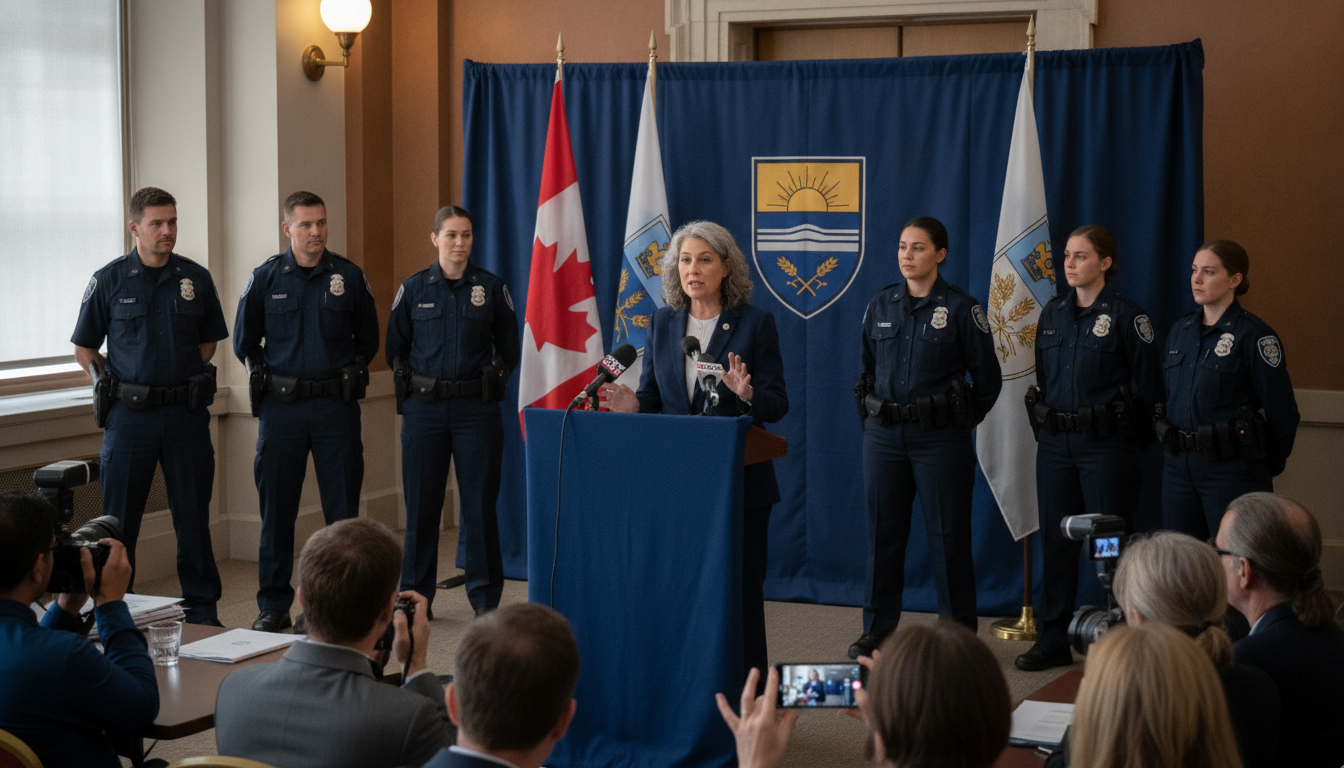
Province Defends Expanded Role for Peace Officers in Tiered Policing Model
Province defends use of peace officers as community-facing, tiered policing solution for bylaw calls and public-space safety while oversight questions persist.
Provincial officials on Tuesday defended the role of peace officers, saying the program is intended to handle bylaw calls and bolster public safety in shared spaces. Peace officers, they said, form part of a “tiered policing” approach designed to free police resources for serious crime while delivering visible, community-focused enforcement. A provincial official described the program as “community-focused, forward-facing,” emphasizing its focus on public spaces and everyday municipal issues. The official added that the province helped establish peace officers to create a layered law enforcement model across the jurisdiction.
Province frames peace officers as tiered policing solution
Government statements portray peace officers as a middle tier between municipal bylaw staff and sworn police officers. Officials argue the arrangement allows police services to prioritize violent crime, major investigations and complex emergency responses. The provincial messaging highlights public-space safety and the management of lower-risk incidents as core responsibilities. This framing is aimed at reassuring municipalities and residents that public safety needs will be met without overextending traditional police resources.
Duties centered on bylaw enforcement and public spaces
Provincial descriptions list bylaw calls, park and transit safety, and disorderly conduct in public places among typical peace officer duties. Supporters note that these officers can respond to noise complaints, property disputes and routine public-safety concerns that do not require sworn police intervention. The intent is to provide a visible presence in parks, downtown areas and transit hubs to deter nuisance behaviours and provide assistance. Officials say this hands-on approach is meant to strengthen day-to-day community wellbeing.
Officials describe program as community-focused enforcement
Advocates within government emphasize that peace officers are meant to be community-facing and proactive rather than punitive. “We address bylaw calls, we help with public safety issues, especially in public spaces, and you know it’s a community-focused, forward-facing enforcement program,” a provincial official said, arguing the role supports local needs. The province has presented the model as collaborative, working with municipalities, health services and social agencies to de-escalate issues and connect residents with supports. Proponents believe that a community-oriented posture will improve relationships between residents and those who enforce local rules.
Supporters point to faster response for low-level calls
Municipal leaders who back the expansion say peace officers can deliver faster responses to low-level incidents and reduce backlog for police detachments. Faster resolution of noise, property standards and traffic infractions can lower frustration for citizens and business owners. Proponents also argue cost efficiencies arise when lower-risk calls are handled by personnel with narrower mandates and less expensive training pipelines. They say reassigning these tasks allows uniformed police to concentrate on investigations that require sworn authority and specialized skills.
Calls for training standards and oversight mechanisms
Civil liberties groups and some municipal officials warn that expanded duties should be matched by clear training, accountability and complaint processes. Critics ask for transparent standards on use of force, reporting requirements, and how peace officers coordinate with police on incidents that escalate. There are calls for independent oversight and data collection to track stops, complaints and outcomes to ensure equitable enforcement. Advocates for oversight stress that public trust depends on predictable rules, robust training and timely review when problems arise.
Municipal partnerships and operational questions remain
Many municipalities are weighing how to integrate peace officers into existing local enforcement frameworks and budgets. Decisions about uniforms, vehicles, communication systems and dispatch protocols are already shaping pilot programs and signed agreements. Some councils have raised questions about liability, insurance and the division of legal authority between municipal and provincial actors. Officials acknowledge these operational details will determine whether the tiered model achieves the intended balance of visibility, service and safety.
Next steps for provincial implementation
The province says further rollouts will be guided by consultations with municipalities, policing bodies and community stakeholders. Officials indicate training curricula, reporting rules and role descriptions are under review to align operational practice with public expectations. Policy-makers have pledged to publish guidelines that clarify when peace officers should act alone and when incidents must be elevated to sworn police. The timeline for broader expansion will depend on finalizing those frameworks and addressing concerns raised during consultations.
Public debate is likely to continue as municipalities adopt or adapt the provincial model, with scrutiny focused on training, oversight and the boundaries of authority. Observers say the program’s success will hinge on clear rules, transparent reporting and measurable outcomes that demonstrate improved public-space safety without eroding safeguards.
