
CBSA Dismantles Calgary Student Camp Amid Post-Graduation Work Permit Dispute
CBSA agents cleared a multi-week protest camp in Calgary as international students contested refusals of their post-graduation work permit applications, prompting status checks that found several individuals inadmissible.
Immediate removal at Genesis Centre
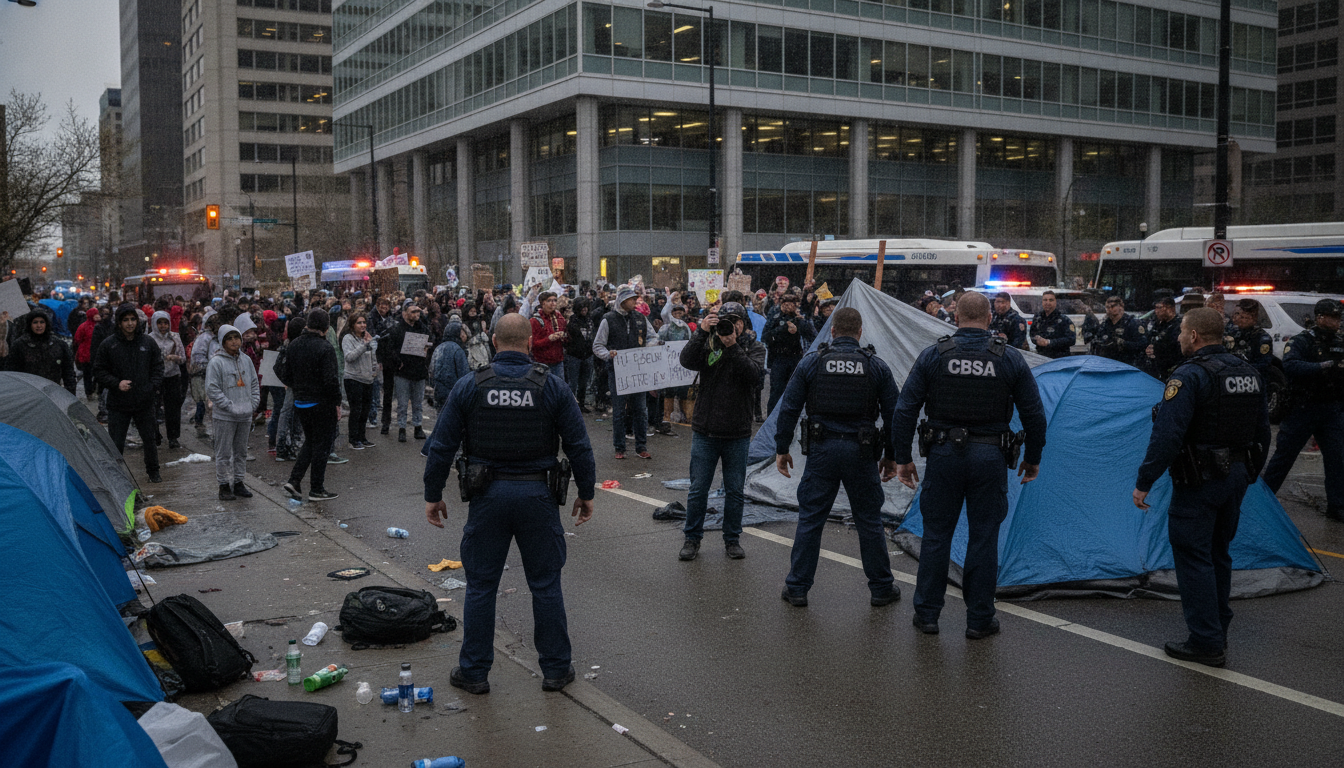
Canada Border Services Agency officers and Calgary police moved on a protest encampment near the Genesis Centre on Wednesday after demonstrators occupied the site for three weeks.
Officers were called following complaints that tents and structures were blocking a public sidewalk, and police asked occupants to produce identification during the interaction.
Calgary Police Service said no criminal offences were identified, but they remained on scene to assist Border Services and city community standards while verification took place.
The camp had included a hunger strike begun about the 10th day of the demonstration and drew sustained local attention during its 22-day presence.
Status verifications lead to inadmissibility findings
Border agents checked the status of 20 people at the site, confirming that 12 were inadmissible under the Immigration and Refugee Protection Act, with two specifically out of compliance with their immigration status.
Those individuals were asked to attend secondary interviews later the same day as part of the CBSA’s inland investigation procedures.
A CBSA statement described inland investigations as a routine enforcement tool used when officers become aware of foreign nationals who may be inadmissible to Canada.
The agency said officers will investigate and take appropriate action to ensure compliance with immigration law.
Students say PGWP eligibility changed without timely notice
Protest organizers and affected students say many were told by overseas student visa consultants that completion of certain non-credit programs would make them eligible for a post-graduation work permit, but federal rules changed before some students graduated.
Federal immigration legislation was amended on May 15 to restrict PGWP eligibility for non-credit programs, a change students and advocates say was not communicated effectively to those already enrolled.
Immigration, Refugees and Citizenship Canada later updated its online eligibility guidance on June 24 to reflect the revised criteria, according to immigration consultants who reviewed the timeline.
Consultants and organizers argue the lag between the legislative change and the public-facing website update left many students unaware they no longer qualified.
Community organizers and misinformation concerns
Organizers, including event coordinator Jaskirat Kaur, maintained the camp to draw attention to the scale of permit rejections and to seek clarity for those affected.
The Calgary demonstration was one of twin actions in Alberta, with protesters in Edmonton joining a wider group alleged to number roughly 480 of about 1,500 students reported as impacted nationwide.
Immigration consultant Mandeep Lidher produced a public video after seeing social media posts that overstated enforcement outcomes, saying some clips wrongly claimed protesters had been issued exclusion or removal orders.
Lidher said the notices given were to appear for further questions, and he urged students and the public to rely on verified information rather than speculation.
Police, CBSA roles and public order considerations
City authorities intervened after sidewalks were blocked and public complaints mounted, prompting Calgary police to request identification from tent occupants and to call the CBSA for status verification.
Police emphasized that their role was to address public-safety and municipal concerns while federal officers handle immigration matters.
The coordinated response underscores the sometimes fraught intersection between municipal bylaws, public demonstrations and federal immigration enforcement.
Officials noted the operation concluded without reported use of force and the site was officially cleared Thursday.
Political reaction and broader policy implications
Alberta Premier Danielle Smith addressed the controversy at a late‑July news conference in Red Deer, telling reporters that international students whose visas have expired and who do not have permanent residency are expected to leave Canada.
Her comments reflected a tougher provincial tone on compliance that has dovetailed with enforcement activity in both Calgary and Edmonton.
The dispute has prompted calls from advocates and some service providers for clearer federal communication and transitional arrangements when eligibility rules change.
Universities, colleges and immigration consultants say consistent public guidance is critical to avoid future cohorts being misinformed by third-party agents overseas.
The Calgary encampment’s removal leaves many questions for the students involved and for policymakers about how changes to post-graduation work permit rules are implemented and communicated.
CBSA and provincial officials say status verifications and any necessary proceedings will continue while students and advocacy groups press for clarity and potential recourse through legal or administrative channels.
