
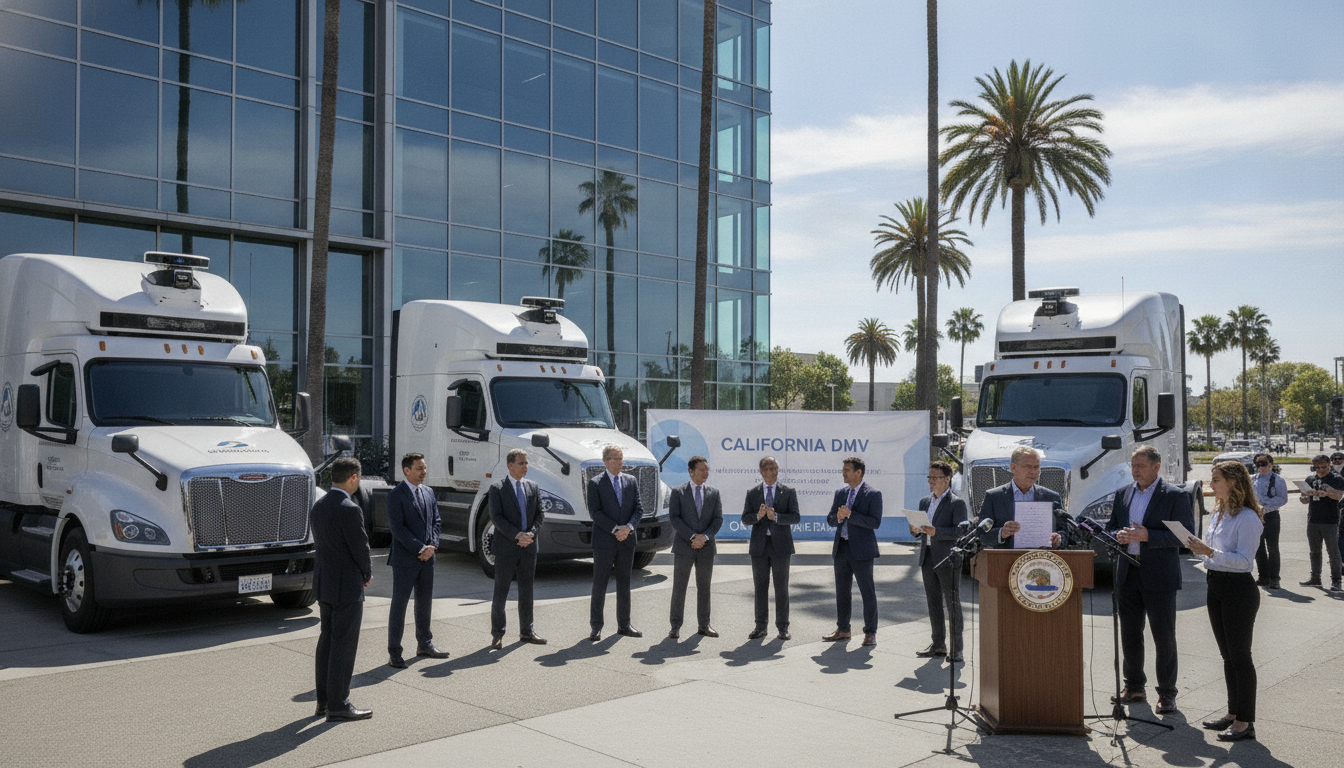
California DMV grants testing permits to Aurora Innovation and Kodiak AI for self-driving trucks
California DMV issues permits to Aurora and Kodiak, allowing self-driving trucks on public roads under new rules while Kodiak begins trials this month.
Aurora Innovation and Kodiak AI have been granted permits by the California Department of Motor Vehicles to test self-driving trucks on public roads, and Kodiak has already begun running a small fleet in the state. The permits come under a recently revised regulatory framework that lifts a previous weight cap and creates a path for autonomous heavy-duty vehicle testing. Both companies must meet a set of safety and operational conditions before they can continue road trials.
California DMV Issues Permits to Aurora, Kodiak
The DMV said both firms satisfied requirements covering safety programs, insurance, vehicle registration and the qualifications of safety operators. Permitted testing requires a human safety operator to be seated behind the wheel and limits operations on roads with posted speeds at or below 25 miles per hour except when traveling on a direct route between destinations. The agency also imposed other conditions intended to manage risk while allowing heavy-duty autonomous systems to gather roadway experience.
Kodiak Begins California Testing Around Mountain View
Kodiak confirmed it has started testing with a handful of trucks primarily near its Mountain View office, deploying the permitted prototype vehicles on local routes. Company officials described the initial effort as targeted and incremental, focused on data collection and system validation in a familiar geography. The early tests will emphasize interactions with other road users and operational reliability in typical California traffic conditions.
New State Rules Lift Heavy-Truck Ban and Open a Path
The permits follow an April 28 revision to California’s autonomous vehicle rules that removed a ban on driverless vehicles weighing more than 10,000 pounds. That change was designed to bring heavy-duty vehicles into the state’s regulatory fold and to set standards for eventual deployment of autonomous freight services. Regulators framed the update as balancing innovation with public safety by requiring demonstrable safety measures before on-road testing begins.
Teamsters File Suit Challenging DMV Process
Labor leaders have responded forcefully to the DMV’s action, with Teamsters California filing a lawsuit in Alameda County Superior Court alleging procedural and safety shortcomings. The complaint contends the DMV failed to perform required economic impact analyses and did not adequately assess risks to motorists before enabling heavy-duty autonomous testing. The litigation seeks to pause or unwind the approvals and could delay broader rollout if courts find regulatory missteps.
Aurora and Kodiak Built Operations in Texas Before Returning Home
Both Aurora and Kodiak previously concentrated much of their heavy-truck activity in Texas, where regulatory conditions allowed earlier commercial and testing programs. Aurora launched a commercial self-driving truck service on Texas routes in mid-2025 and has since expanded to additional interstate corridors. Kodiak began commercial operations in an off-road setting in early 2025 and later moved into on-highway routes between major Texas cities, building operational experience before shifting testing back to California.
Permits Aim to Balance Testing Needs and Public Safety
The DMV’s permit conditions reflect a compromise intended to let companies mature their systems while retaining oversight controls that address safety and insurance concerns. Requiring a human safety operator in the cab is a central safeguard, and the speed-related restrictions are meant to limit tests to higher-speed corridors where engineers can evaluate interaction with highway traffic. Regulators will monitor incident reports, operator qualifications and other metrics as part of ongoing oversight.
Economic and Operational Stakes for Freight Industry
The arrival of self-driving trucks in California carries economic questions for carriers, shippers and labor groups as well as potential efficiency gains for long-haul logistics. Proponents point to reduced operating costs and continuous driving capability as benefits that could reshape freight networks, while opponents warn of displaced driving jobs and unquantified risks on mixed-traffic roads. The outcome of the Teamsters’ lawsuit and subsequent regulatory reviews will influence how quickly companies move from testing to paid commercial services.
California’s updated rules and these initial permits mark a turning point for autonomous freight testing in the state, but the path to wide deployment remains contingent on technical performance, regulatory scrutiny and legal challenges. For now, Aurora and Kodiak will proceed under a closely watched testing regime that requires them to demonstrate safety improvements while the broader debate over economic and roadway impacts continues.
