
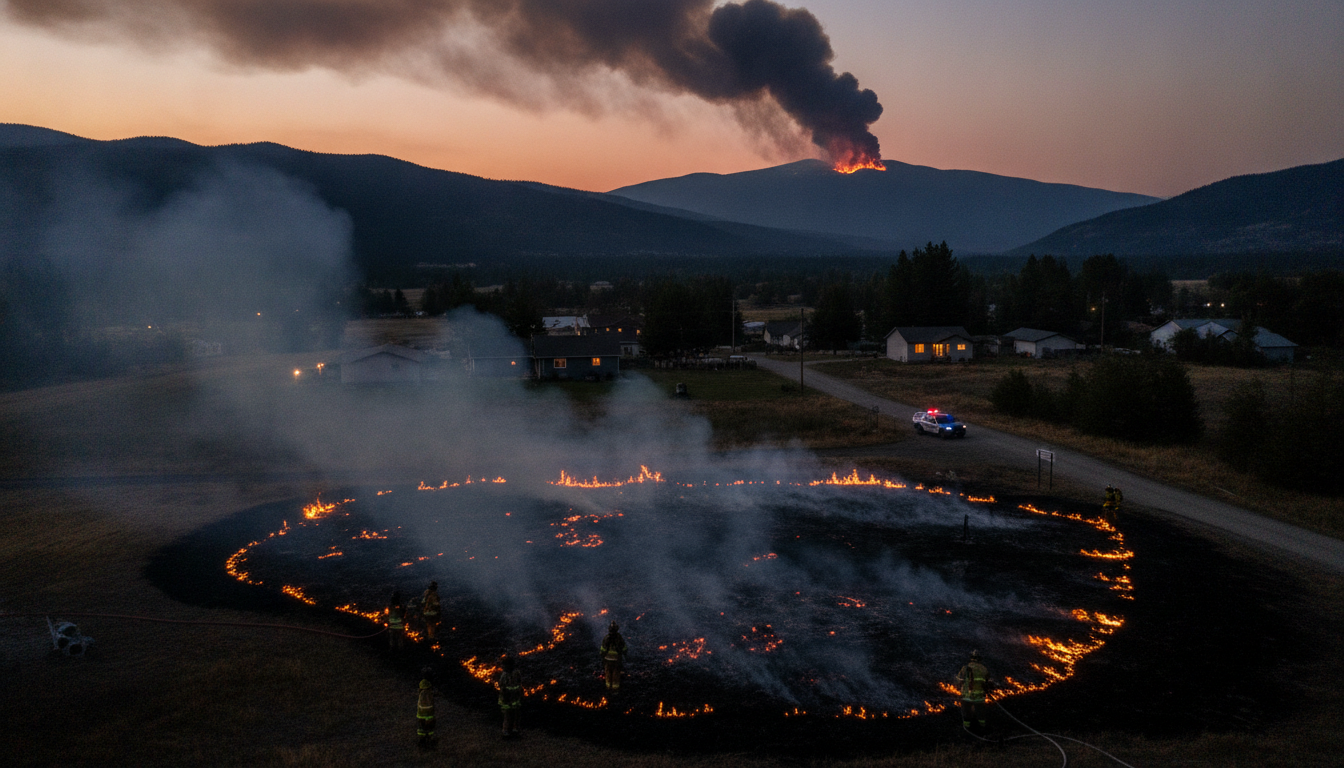
Quilpituk Creek wildfire: Evacuation orders downgraded as residents north of Kelowna allowed to return
Quilpituk Creek wildfire containment leads to evacuation orders downgraded; residents north of Kelowna may return sector-by-sector beginning August 14, 2026.
Containment prompts downgrade of orders
On Friday, August 14, 2026, officials announced that evacuation orders tied to the Quilpituk Creek wildfire north of Kelowna were downgraded to evacuation alerts. The Central Okanagan Emergency Operations Centre said the change follows improved containment and calmer fire behaviour in that area.
Authorities said residents displaced by the Quilpituk Creek wildfire will be allowed to return to their properties in a phased, sector-by-sector process. Access will be tightly controlled and limited to routes from the south, via West Kelowna, to reduce traffic and ensure safety.
Phased returns will begin at 9 a.m. sector by sector
Officials advised that re-entry will start at 9 a.m. on August 14, 2026, with neighbourhoods reopened in a prioritized sequence based on safety assessments. Each sector will be cleared only after firefighters and emergency personnel confirm road access, air quality, and infrastructure safety.
Residents will be required to follow direction from emergency personnel and may face temporary restrictions on services as crews continue suppression and assessment work. The phased approach is intended to balance residents’ needs to return home with ongoing public safety and firefighter operations.
Scope of displacements and prior evacuations
Earlier in August, the Quilpituk Creek wildfire forced the evacuation of more than 2,200 properties, with an additional evacuation order issued near Fintry the previous week. The initial wave of displacements included homes and seasonal properties across rural and lakeshore portions north of Kelowna.
Emergency shelters and community supports were stood up to assist those displaced, and local officials encouraged evacuees to register with reception centres so authorities could provide updates on re-entry and recovery services. The phased re-entry aims to reduce confusion for families returning to properties after several days away.
Bradley Creek improvements eased nearby returns
Fire managers said calmer conditions at the neighbouring Bradley Creek fire this week helped free up resources to support Quilpituk Creek operations and allowed earlier returns for some evacuated residents. Reduced activity at Bradley Creek also eased pressure on regional airspace and enabled more sustained aerial suppression where needed.
Crews have combined ground attack, aerial water drops and containment line building to stabilize hot spots along the Quilpituk Creek perimeter. Helicopter water-bombing and night-time operations were reported during the first week of August as suppression efforts focused on protecting structures and critical access routes.
Bald Range fire remains uncontrolled near Summerland
South of Kelowna, the Bald Range fire continues to burn without full containment and is keeping a large portion of the Summerland area and surrounding communities under evacuation orders. The District of Summerland reported that more than 12,000 residents from Summerland, Faulder and Meadow Valley were forced to leave their homes when the blaze escalated last week.
Summerland officials said they have identified priority zones for potential early returns but stopped short of announcing a firm timeline for re-entry. Fire behaviour around Bald Range remains volatile, and authorities cautioned that conditions could change rapidly with shifts in wind and temperature.
Provincial wildfire picture and provincial response
Across British Columbia, officials reported more than 110 active wildfires on Friday, with four incidents designated as fires of provincial interest. Provincial wildfire crews, local fire services and mutual aid partners have been deployed to support containment and structure protection across multiple regions.
The province has continued to allocate aerial resources, heavy equipment and personnel to the Okanagan and adjacent districts, while urging residents to heed evacuation orders and prepare for potential changes in access. Fire authorities also emphasized the importance of keeping roads clear for emergency vehicles and maintaining situational awareness through official channels.
Residents returning to properties after the Quilpituk Creek downgrade should expect checks for utilities, structural damage and lingering hotspots, officials warned. Local governments and emergency services urged homeowners to document any damage for insurance and recovery planning, and to follow public health guidance on air quality and smoke exposure.
Emergency personnel reminded the public that being downgraded to an evacuation alert does not necessarily mean all hazards are removed. The Central Okanagan Emergency Operations Centre said it will issue further updates as conditions evolve and additional sectors are cleared for safe re-entry.
Community volunteers, Indigenous partners and non-profit organizations have continued to provide relief and information to affected households. Recovery planning at the local level will focus first on restoring safe access, assessing infrastructure and supporting vulnerable residents as re-entry proceeds.
Preparations remain in place should fire activity increase again in the region, with crews on standby to respond quickly to flare-ups. Residents are advised to monitor official bulletins and follow directions from emergency personnel as operations move from response toward longer-term recovery.
