
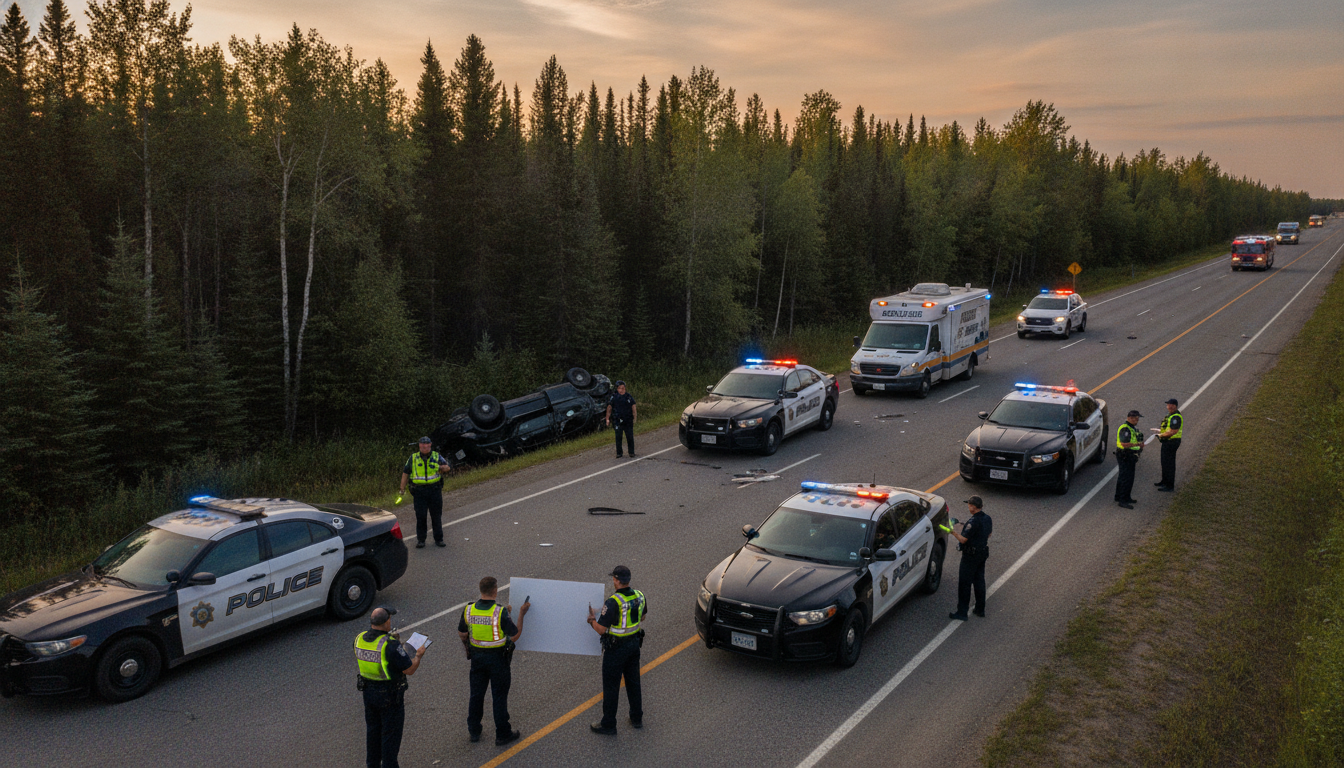
Police ask witnesses after overnight incident near Calling Lake on Highway 813
Police ask anyone near Highway 813 and Range Road 213A by Calling Lake on Aug. 6 (12:00–4:30 a.m.) to report suspicious activity or submit dash-cam footage.
Local police are appealing for witnesses and video after an incident near Calling Lake in northern Alberta on Thursday, Aug. 6. Authorities say anyone who was in the vicinity of Highway 813, the hamlet of Calling Lake, or Range Road 213A — locally known as the “C‑Road” — between 12:00 a.m. and 4:30 a.m. may have information that could assist investigators. Residents and motorists who captured dash-cam or surveillance footage during that window are being asked to come forward. Officials have not released further details about the nature of the incident while inquiries remain ongoing.
Police appeal for witnesses near Calling Lake
Local police issued a public notice seeking anyone in the area during the early hours of Aug. 6 to report suspicious activity. The appeal specifically names Highway 813 and Range Road 213A as locations of interest for investigators. Law enforcement emphasized the value of civilian observations and camera recordings to help piece together events that unfolded overnight.
The request for information reflects an investigative priority to identify vehicles, movements, or interactions occurring along those corridors. Police said they are gathering tips and reviewing any footage that residents or passing motorists can provide to build a clearer timeline. No arrests or charges have been announced in connection with the public appeal at this time.
Incident timeframe and specific locations cited
Authorities narrowed the timeframe for the appeal to a 4½-hour period from midnight until 4:30 a.m. on Aug. 6. The area under scrutiny includes the stretch of Highway 813 near the small hamlet and the adjacent Range Road 213A, often referred to by locals as the C‑Road. Investigators are asking people who travelled, walked, or were otherwise present along these routes during that period to check for dash-cam or home surveillance recordings.
The precise hours supplied by police suggest investigators have a defined window to examine, which can make civilian video and eyewitness accounts particularly valuable. Even short clips or brief recollections may help authorities confirm vehicle movements or identify persons of interest. Police say even seemingly minor observations could prove significant in reconstructing what occurred.
Calling Lake community context and geography
Calling Lake is a hamlet of a few hundred residents situated roughly 211 kilometres north of Edmonton. The community is set amid a network of regional highways and rural roads that see both local and through traffic, especially on summer nights. Its small size can mean residents are familiar with unusual activity and may notice vehicles or people who do not belong in the area.
Geography and limited lighting along rural routes can complicate investigations, which is why police are urging local residents and drivers to review any media they captured. The area’s road layout — with Highway 813 linking to smaller range roads like the C‑Road — creates multiple points where activity might be recorded. Officials are asking for help from both residents of Calling Lake and travellers who passed through the corridor overnight.
Evidence sought: dash-cam and other recordings
Police specifically asked the public to provide dash‑cam footage, surveillance video, or any photographs taken between midnight and 4:30 a.m. on Aug. 6. Such recordings can provide timestamps, licence plate information, and vehicle descriptions that are otherwise hard to reconstruct from memory alone. Investigators noted that even partial clips or low-resolution images could offer leads when combined with other evidence.
Investigators encourage individuals to preserve original files rather than sending compressed or edited copies, as metadata and timestamps can be important during analysis. Those with footage were asked to make note of the exact location and time it was recorded and to share that information when contacting police. The appeal underscores how common in-car recording devices and home cameras have become essential tools for rural policing.
Why community cooperation matters in rural investigations
In sparsely populated regions, community tips often prove decisive when formal surveillance infrastructure is limited. Police said public cooperation can accelerate investigations and narrow search areas for follow-up inquiries. Residents’ willingness to review footage and recount observations is especially helpful in establishing movements along long stretches of road.
Officials also reminded the public that reporting suspicious behaviour is a civic responsibility that can prevent harm and assist in solving crimes. Authorities typically evaluate incoming tips and footage for relevance, and they encouraged witnesses to be precise about times and locations to aid investigators. Confidentiality and safety concerns are factors police consider when handling information from the public.
How people can provide information to police
Anyone who was on Highway 813, in Calling Lake, or on Range Road 213A during the stated hours and who has relevant video or observations is asked to contact local law enforcement. Police recommend keeping original files intact and preparing any contextual details, such as exact times or descriptions of vehicles, before making a report. Those with immediate information about an ongoing threat should use emergency contact channels rather than the general tip line.
Authorities did not provide additional particulars about the incident while inquiries continue, but they reiterated the importance of community assistance. Individuals with information are urged to contact the nearest police detachment or the non‑emergency number for their jurisdiction to ensure tips are routed to investigators. Public cooperation remains a central element of the probe.
Police continue to review incoming information as they work to establish a fuller picture of events that unfolded near Calling Lake on Aug. 6, and they encourage anyone with relevant footage or observations to come forward.
