
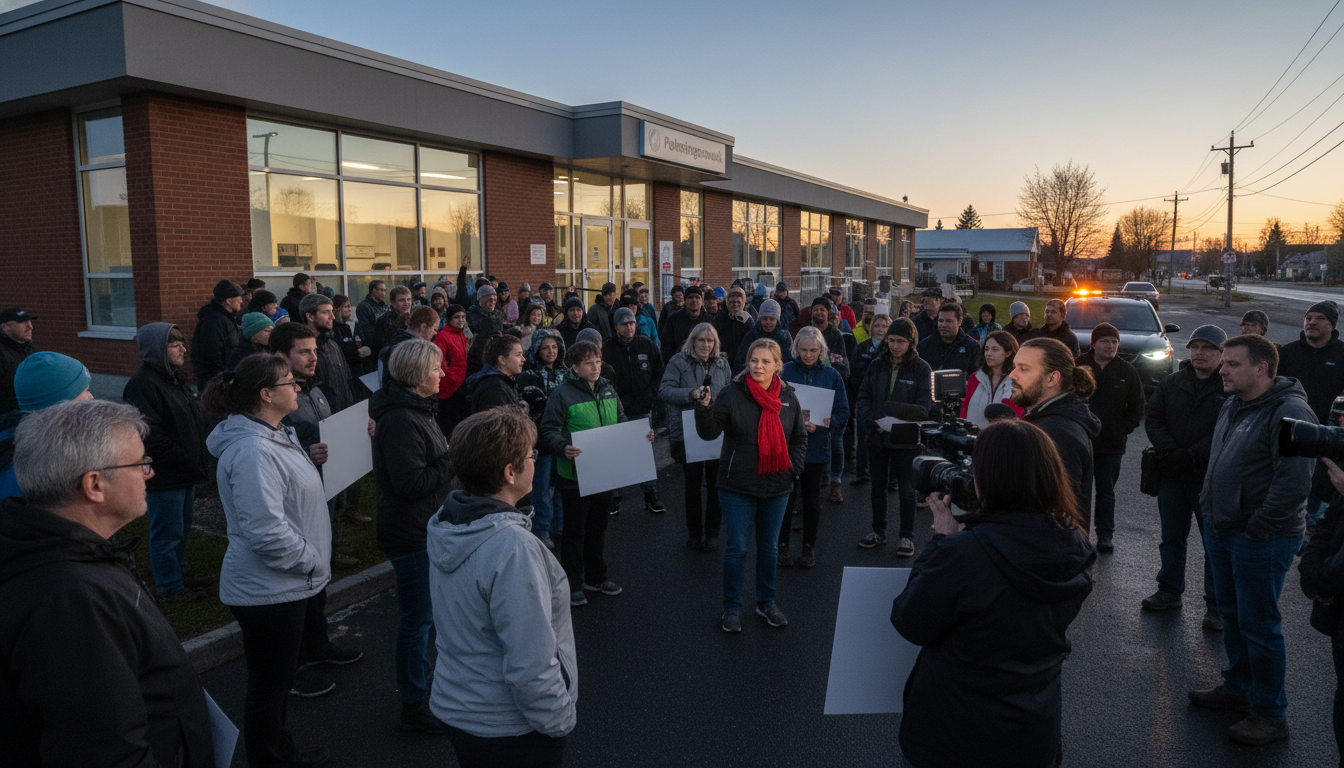
Pohénégamook emergency under threat as community fights to preserve 24/7 urgent care
Pohenegamook emergency under threat as residents mobilize to save 24/7 urgent care after life-saving cases; officials weigh staffing, transfers, telemedicine.
A mother’s dash to the Pohénégamook emergency in the middle of a winter night and a local man’s collapse on the CLSC steps have become central examples in a growing fight to keep the Pohénégamook emergency open around the clock.
Residents, medical staff and municipal leaders warn that any reduction in hours would erode access to urgent care for a village of about 2,500 and could have grave consequences for time‑sensitive cases.
Toddler’s midnight rescue highlights value of local care
In 2022 Chrystine Nadeau rushed her two‑year‑old daughter to the Pohénégamook emergency after the child became unresponsive following a routine cold.
Because the local CLSC emergency is five minutes away, staff were able to stabilize the toddler before she was transferred three hours later to a regional hospital; her mother and clinicians say the nearby service made the difference between recovery and lasting harm.
The episode is repeatedly invoked by neighbours as proof that proximity matters in rural health.
Local officials stress that immediate assessment, medication adjustments and rapid decision‑making at small emergency units can prevent complications and reduce downstream costs.
Residents and patients tell similar life‑saving stories
Francis Fournier, a lifelong resident, credits the Pohénégamook emergency with saving his life after he collapsed while driving to the CLSC in 2025 believing he was having a heart attack.
Staff performed prolonged resuscitation on site and stabilized him before transfer to a tertiary hospital where he underwent open‑heart surgery and later received bypass grafts.
Those accounts have galvanized the community.
Organizers point to dozens of cases each year where initial care at the local emergency unit prevents catastrophic outcomes or buys critical time for transfers.
Physicians warn closures would increase long‑term harm
Local clinicians and rural health researchers argue closures are often justified by short‑term budget calculations that ignore downstream costs.
Dr. Pierre‑Olivier Dufresne, an emergency physician serving the Témiscouata area, cautions that reducing hours or shuttering satellite urgencies shifts risk onto patients and can increase pressures on ambulance services and larger hospitals.
He and other physicians say emergency teams at CLSCs play a preventive role, from medication reconciliation to mental‑health triage, that cannot be measured solely in overnight staffing costs.
Removing that layer, they contend, will not only delay care but could magnify chronic and acute health burdens in rural populations.
Decades of erosion in local services, residents say
Community leaders recall a gradual decline in local hospital services over decades, as diagnostic and specialty services moved to regional centres.
Danielle Bouchard, who worked at the regional CISSS for decades and now leads a local users’ committee, says the former hospital once had multiple physicians and comprehensive diagnostics; today the CLSC emergency is one of the few remaining front‑line services.
Mayor Benoit Morin frames the debate as existential for the village’s future.
He argues that loss of 24/7 emergency care would deter young families and professionals from settling in Pohénégamook and accelerate out‑migration among seniors who require local access.
Proposed fixes include telemedicine, training and ambulance changes
Rural‑medicine experts call for innovation rather than retrenchment, pointing to telehealth support, regional medical training pipelines and flexible staffing solutions used elsewhere.
Dr. Richard Fleet, who has studied rural emergency care for years, recommends bolstering telemedicine links and developing medical faculty positions in regional communities to attract and retain practitioners.
The regional health authority, the CISSS du Bas‑Saint‑Laurent, has suggested enhancing ambulance coverage to account for transfers to referral hospitals.
Physicians warn, however, that increased transports can create gaps in coverage when ambulances are away for extended periods, producing an “ambulance vacuum” that leaves the territory exposed to subsequent emergencies.
Public mobilization and municipal vigilance continue
Thousands of residents have attended consultations and rallies in recent months to press the provincial health ministry and CISSS leaders for guarantees that Pohénégamook’s emergency will remain open 24/7.
Local organizers and the mayor say repeated promises are not enough; they are calling for concrete commitments on staffing, staffing models and regional supports.
Community sentiment is clear: the Pohénégamook emergency is not merely a service line but a cornerstone of safety and local resilience.
As officials weigh staffing and budget options, residents and clinicians say any decision should factor in real‑world risks, transfer times and the human cost of reduced access.
The debate over the Pohénégamook emergency is now both technical and deeply personal for the village, where life‑saving interventions in the local CLSC have become part of the community’s shared story.
For residents, preserving round‑the‑clock urgent care is about maintaining a basic standard of safety and sustaining the social and economic life of a rural town that relies on immediate access to medical help.
