
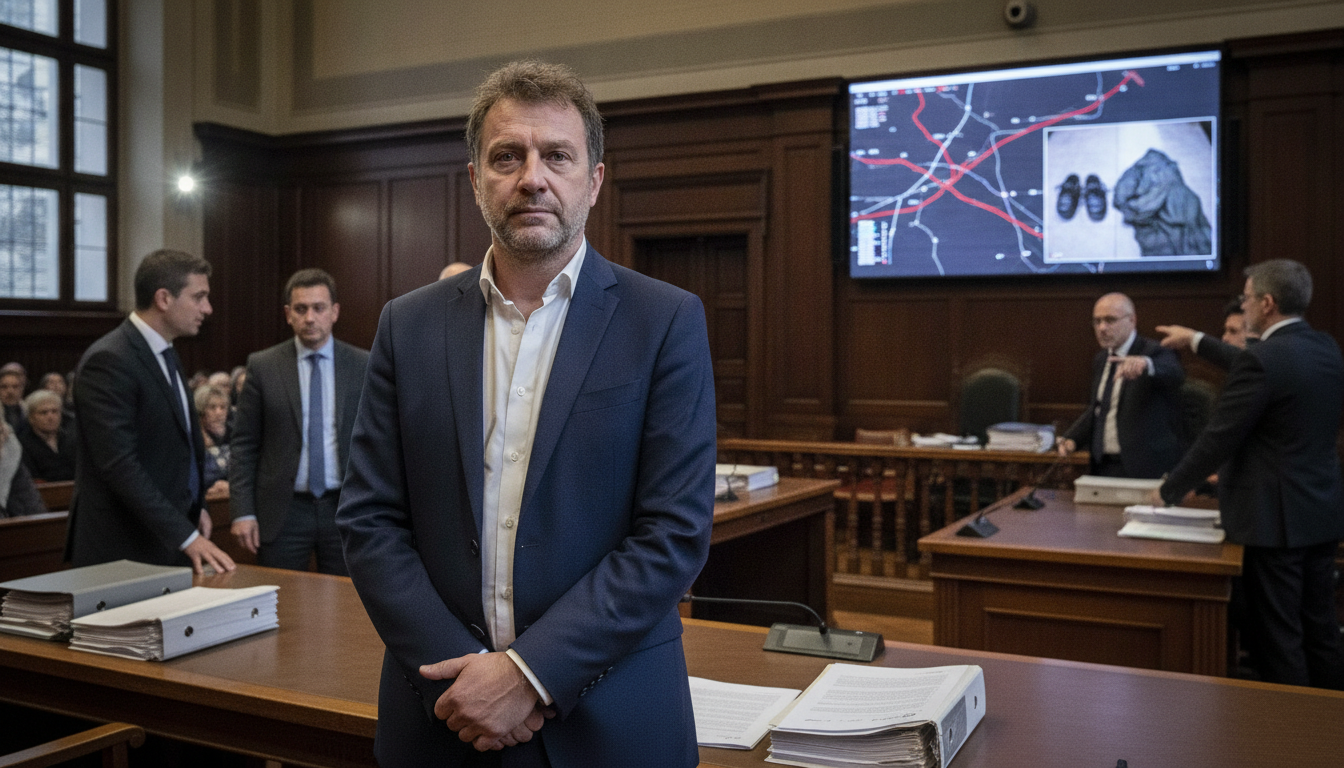
Luciano Frattolin trial: Opening statements clash over kidnapping claim and circumstantial evidence
At the Luciano Frattolin trial in New York, the defence told jurors he was a victim of a kidnapping while prosecutors presented GPS, wet clothing and writings that they say tie him to his daughter’s death.
Courtroom opening: defence frames Frattolin as a victim
Luciano Frattolin told police and repeated in court that his nine-year-old daughter, Melina, was taken from a rest area as they drove back toward Montreal on July 19, 2025. Defence lawyer Brian Pilatzke told the jury his client has always loved showing the world to his daughter and that the evening’s events were a nightmare, not a confession.
Pilatzke argued investigators treated Frattolin as a suspect from the start and focused on confirming a theory instead of seeking alternate leads. He also said his client’s inconsistent statements were the result of a past head injury that affects his memory.
Prosecution’s theory: circumstantial evidence places him at the scene
On the other side, prosecutor Carrie Daly told jurors there is no single eyewitness to the death but that a body was discovered the day after the disappearance. Daly said both the cellphone and vehicle GPS data place Frattolin at the trailhead that leads to the pond where Melina’s body was found.
The crown described a chain of physical evidence it plans to develop during the three-week trial and said the circumstantial record will show Frattolin was at the location where the child was later located. Prosecutors told the jury they will weave those elements into a coherent account of his presence and actions that night.
Forensic links: clothing, mud and digital traces
Prosecutors said investigators recovered a bag in a trash receptacle containing Frattolin’s wet clothes and shoes, which contradicted his statements about changing during the evening. Experts will testify that the mud on the shoes could not be distinguished from the sediment at the pond, the crown told the jury.
Daly also flagged digital traces, including GPS coordinates from the vehicle and phone, as a crucial piece of the case. The prosecution emphasized that while no single piece of evidence proves guilt, the combined forensic, physical and electronic indicators amount to strong circumstantial proof.
Writings and motive: custody dispute and troubling notes
The crown told the jury it would introduce writings attributed to Frattolin in which he allegedly referenced “the end of this madness” and “the end of Melina,” and hinted at a forthcoming transformation he called “Luciano 2.0.” Prosecutors say those passages are relevant both to motive and state of mind in the hours and days before the killing.
Daly outlined a potential motive rooted in a long-running dispute over custody and parenting, and she said Frattolin had expressed concerns that his daughter was developing the same mental-health problems he attributed to her mother. The prosecution presented that background as part of a picture explaining why, they contend, he would have harmed the child.
Witnesses scheduled and trial timeline
Courtroom testimony is expected to include family members and investigators, and the mother of the child has been listed to testify, though media outlets have not identified her at her family’s request. Both sides indicated they will call witnesses to explain the GPS data, the condition of the recovered clothing and the provenance of the writings.
The trial is set to run for roughly three weeks in Elizabethtown, New York, with jurors to weigh the competing narratives: a defence account of a father who was victimized by an abduction, and a prosecution account built on electronic location data and forensics. Each side told the jury it will present evidence to support its version of events.
The courtroom exchanges on opening day underscored the gulf between the defence’s insistence that Frattolin was targeted and the prosecution’s contention that the physical and digital evidence points to his responsibility for the death of his daughter.
