
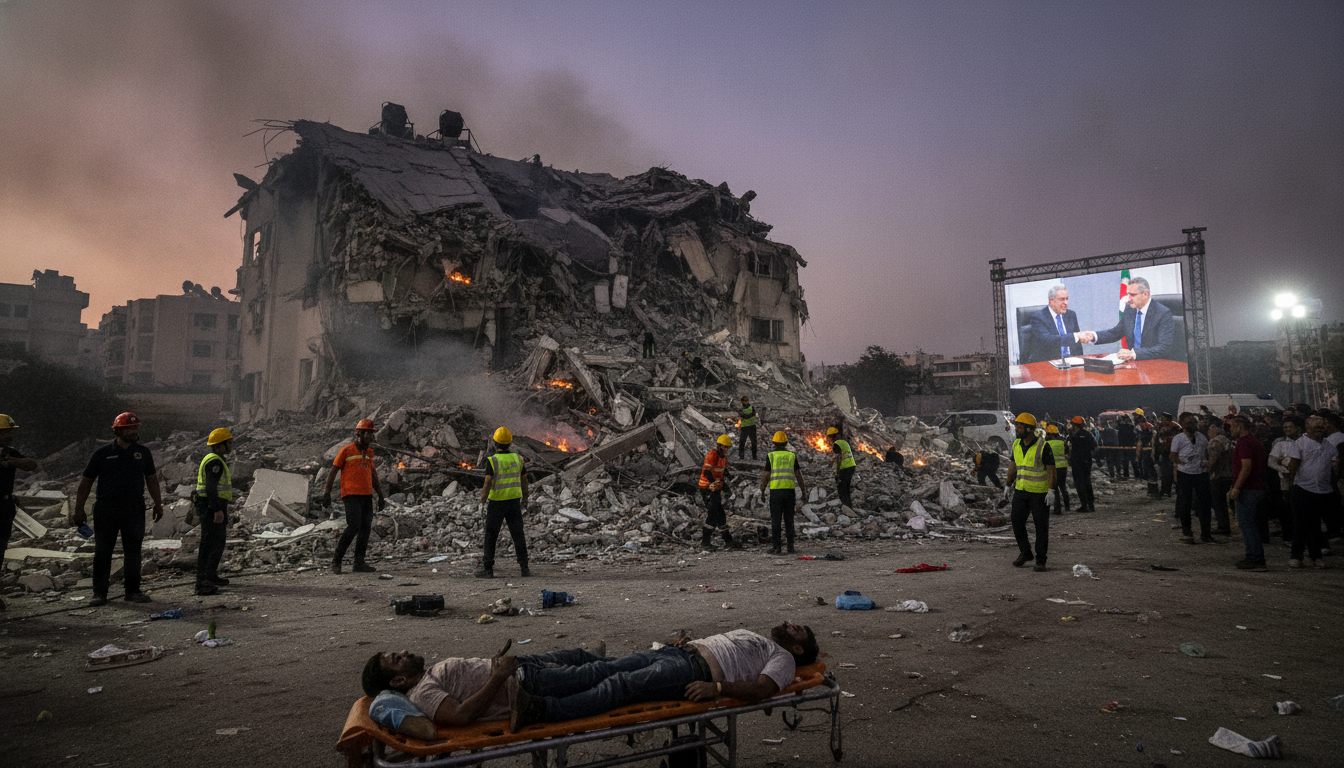
Israeli strikes in Nabatieh kill at least four amid drone attacks and fragile US‑Iran ceasefire talks
Israeli strikes in Nabatieh kill at least four as drone attacks targeted vehicles in Mayfadoun and Shoukin amid fragile US‑Iran ceasefire negotiations, raising new concerns over Lebanon’s civilian toll.
Multiple Israeli strikes struck southern Lebanon’s Nabatieh governorate on Tuesday, killing at least four people, Lebanon’s National News Agency reported, even as diplomats work on a memorandum aimed at ending the war on all fronts. The incidents included separate drone attacks that struck two vehicles in the village of Mayfadoun and a third vehicle in nearby Shoukin, according to local authorities.
At least four killed in Nabatieh
Local officials and emergency services said the strikes caused immediate fatalities and further damaged property in the affected villages, underscoring the vulnerability of civilians in the frontier region. The National News Agency identified the locations and described the strikes as part of a broader pattern of cross‑border violence that has persisted despite intermittent pauses. Authorities have not released a full breakdown of the victims’ identities or the scale of infrastructural damage.
Drone strikes on vehicles in Mayfadoun and Shoukin
Security sources reported the drone attacks hit moving vehicles, raising concerns about targeting practices in populated rural areas. Witnesses in Mayfadoun described scenes of smoke and shattered windows, and ambulances were seen transporting the wounded to nearby medical facilities. The exact origin of the drones and the identities of those targeted have not been independently verified by international monitors.
Ceasefire memorandum being negotiated between US and Iran
Diplomats from the United States and Iran have been negotiating a broader understanding intended to halt military operations “on all fronts,” a draft arrangement that mediators say would include Lebanon. Pakistan’s prime minister, acting as one of the mediators, said the agreement as envisaged would call for an immediate halt to hostilities across the region, though full text has not been published. Negotiators have yet to disclose the detailed mechanisms for enforcement or timelines for implementation.
Iranian officials say occupation of south Lebanon would violate deal
Iran’s foreign ministry leadership has warned that any continued Israeli presence in southern Lebanon would amount to a breach of the emerging understanding, officials said, arguing that withdrawal of occupying forces must be part of a complete ceasefire. Iran’s lead negotiator also urged Washington to press Israel to end its operations in Lebanese territory and to stop demolition of homes, framing those steps as essential to concluding the conflict. Tehran’s public statements reflect a persistent demand that arrangements address not only cross‑border attacks but also territorial occupation.
Israel signals it will maintain presence in southern Lebanon
Israel’s leadership responded to the diplomatic process by indicating it would continue to occupy parts of southern Lebanon, a stance that complicates prospects for a comprehensive ceasefire that meets Iranian demands. Israeli officials have framed the continued presence as a security measure, but the declaration risks prolonging tensions at the frontier and undermines confidence among regional actors pushing for a wider halt. The disagreement over the status of Israeli forces in Lebanon has emerged as a central sticking point in mediation efforts.
Hezbollah says Iran has pledged to press for withdrawal
Lebanese Hezbollah said it had received assurances from Tehran that Iran would seek an Israeli withdrawal in the next phase of talks with the United States, a development reported by international news agencies and cited by group spokespeople. The statement signals coordinated pressure from Iran and its allies to link any regional ceasefire to concrete steps on the ground in Lebanon. Whether the U.S. will be able or willing to secure such concessions from Israel remains unresolved in current diplomacy.
Human toll in Lebanon since fighting resumed on March 2
Lebanon’s health ministry reports that since fighting resumed on March 2, Israeli strikes have killed at least 3,826 people and wounded 11,851, figures that reflect a heavy civilian burden and strain on medical services. Hospitals and aid agencies in southern Lebanon report shortages of supplies and an increasing need for trauma care as frontline incidents continue. Humanitarian organizations warn that continued hostilities will deepen displacement and complicate relief efforts across affected governorates.
The new violence in Nabatieh highlights the fragility of negotiated pauses and the difficulty of translating diplomatic understandings into immediate protection for civilians. As mediators pursue a broader ceasefire, regional leaders and local communities will be watching whether commitments on paper produce a tangible end to cross‑border attacks and withdrawals on the ground.
