
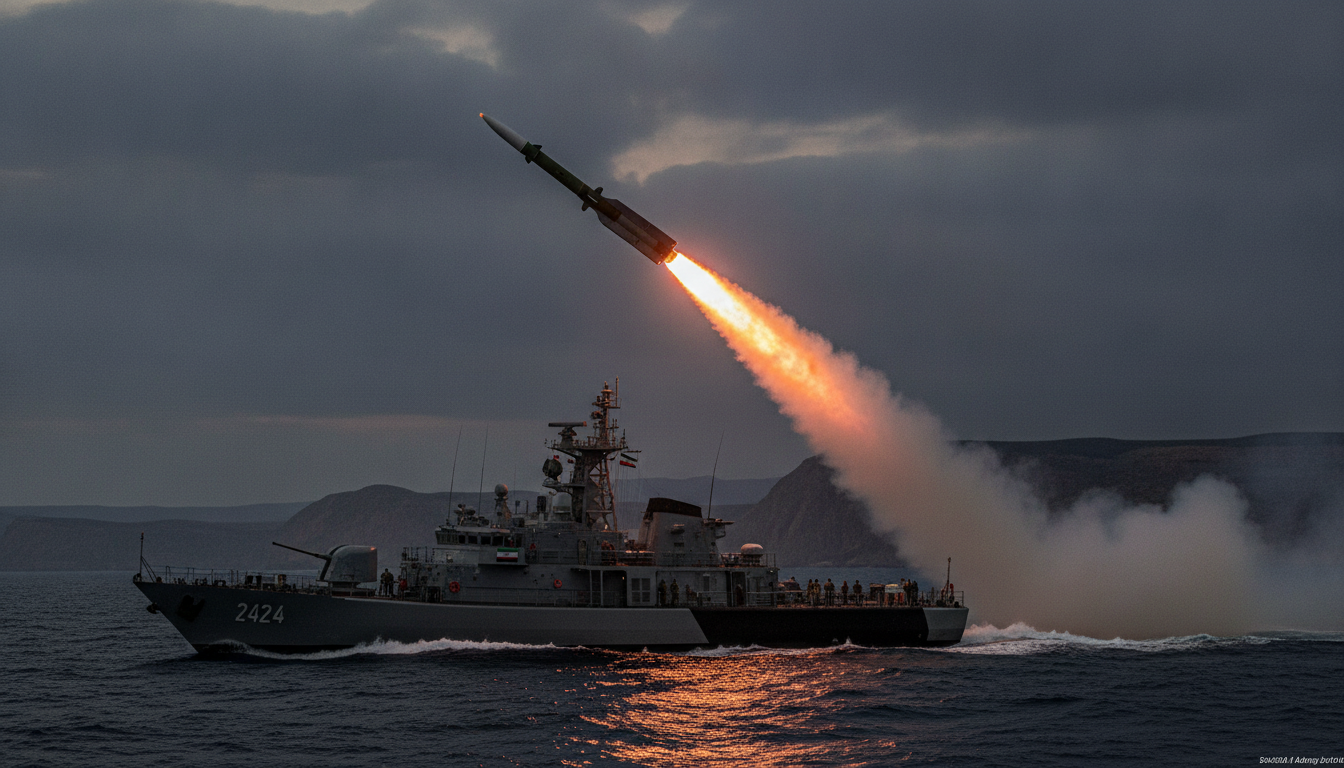
IRGC Releases Video of Missile Launches as Strait of Hormuz Closure Sparks New U.S.-Iran Strikes
IRGC released video showing naval missile launches after U.S. strikes as Tehran declared the Strait of Hormuz closed, triggering fresh U.S. retaliatory strikes.
Iran’s Islamic Revolutionary Guard Corps (IRGC) published video it said shows missiles launched by its naval forces in retaliation for U.S. strikes, as Tehran again announced the Strait of Hormuz would remain closed. The footage, released on July 12, 2026, was described by Iranian state outlets as a direct response to American attacks on Iranian sites earlier this week. (apnews.com)
IRGC Releases Video of Naval Missile Launches
The IRGC said the footage displays ballistic and anti-ship missiles being fired from vessels and coastal batteries, with on-screen text aimed at U.S. leadership. Iranian state media and military channels framed the launches as punitive measures following what Tehran called unlawful U.S. strikes on Iranian territory. (aljazeera.com)
The presentation of the video follows days of escalating exchanges between U.S. and Iranian forces in and around the Gulf, where both sides have targeted ships, shore installations and military infrastructure. Analysts said such visual releases are intended both to reassure domestic audiences and to signal capability to regional and global actors. (aljazeera.com)
Tehran Declares Strait of Hormuz Closed
Iran announced the Strait of Hormuz was closed to international shipping on July 12, a move that government spokesmen said would remain in force "until further notice." The declaration came after Tehran accused an unidentified vessel of violating its warned routes and following a series of maritime incidents that have damaged merchant ships. (apnews.com)
The waterway is a strategic chokepoint through which a significant share of the world’s oil and liquefied natural gas transits, and Iran’s control measures have repeatedly unnerved global markets. Shipping firms and insurers warned of sharp cost increases and rerouting if the closure persists, compounding economic impacts from earlier supply disruptions. (aljazeera.com)
U.S. Conducts Additional Strikes on Iranian Targets
U.S. Central Command confirmed a new round of strikes early on July 12 aimed at degrading Iran’s maritime and missile capabilities, saying the operations were in response to attacks on commercial vessels. U.S. officials described the strikes as focused on radar, missile and drone infrastructure to limit Iran’s ability to threaten international shipping. (rferl.org)
American military statements stressed precision and limited objectives, but Iranian officials reported strikes across southern provinces and warned of further retaliation. The back-and-forth has raised concerns among allies and partners about an uncontrolled escalation that could draw in regional states. (investing.com)
Impact on Shipping and Global Energy Markets
The renewed closure of the Strait of Hormuz has immediate implications for global energy flows, with traders responding to the prospect of prolonged disruptions. Shipping operators have already been advised to alter routes, increase security measures and accept higher insurance premiums for Gulf transits. (aljazeera.com)
Fuel markets reacted to the latest developments with price volatility, as analysts weighed the likelihood of a sustained interruption to crude and LNG shipments. Energy-importing nations are monitoring the situation closely, and some have begun contingency planning to secure alternative supplies. (cfr.org)
Regional Military and Diplomatic Responses
Neighboring Gulf states have reported being targeted in related strikes and warned of spillover risks, prompting emergency consultations among regional capitals. Bahrain and Kuwait were cited in Iranian statements as having experienced attacks tied to the exchanges, complicating already tense relations. (investing.com)
Diplomatic efforts to de-escalate, including recent mediation attempts tied to a June memorandum of understanding, now appear jeopardized as both sides report continued kinetic actions. Western diplomats expressed alarm and urged restraint, while Tehran reiterated that decisions over the Strait’s status rest with Iranian authorities. (aljazeera.com)
Uncertainty Over Next Steps and International Reaction
Officials in Washington insisted their actions were defensive and aimed at keeping the waterway open to commerce, but also warned Iran that further attacks would draw additional responses. International organizations and maritime agencies are seeking to coordinate safe corridors and provide guidance for ships in the region. (rferl.org)
Analysts said the release of the IRGC video and Tehran’s renewed closure declaration are as much about signaling resolve as they are about operational capability. The path forward will depend on political choices in Tehran and Washington and on the reactions of regional powers and maritime stakeholders. (aljazeera.com)
The near-term outlook remains volatile, with commercial operators rerouting vessels and governments urgently weighing diplomatic and military options to prevent wider conflict.
