
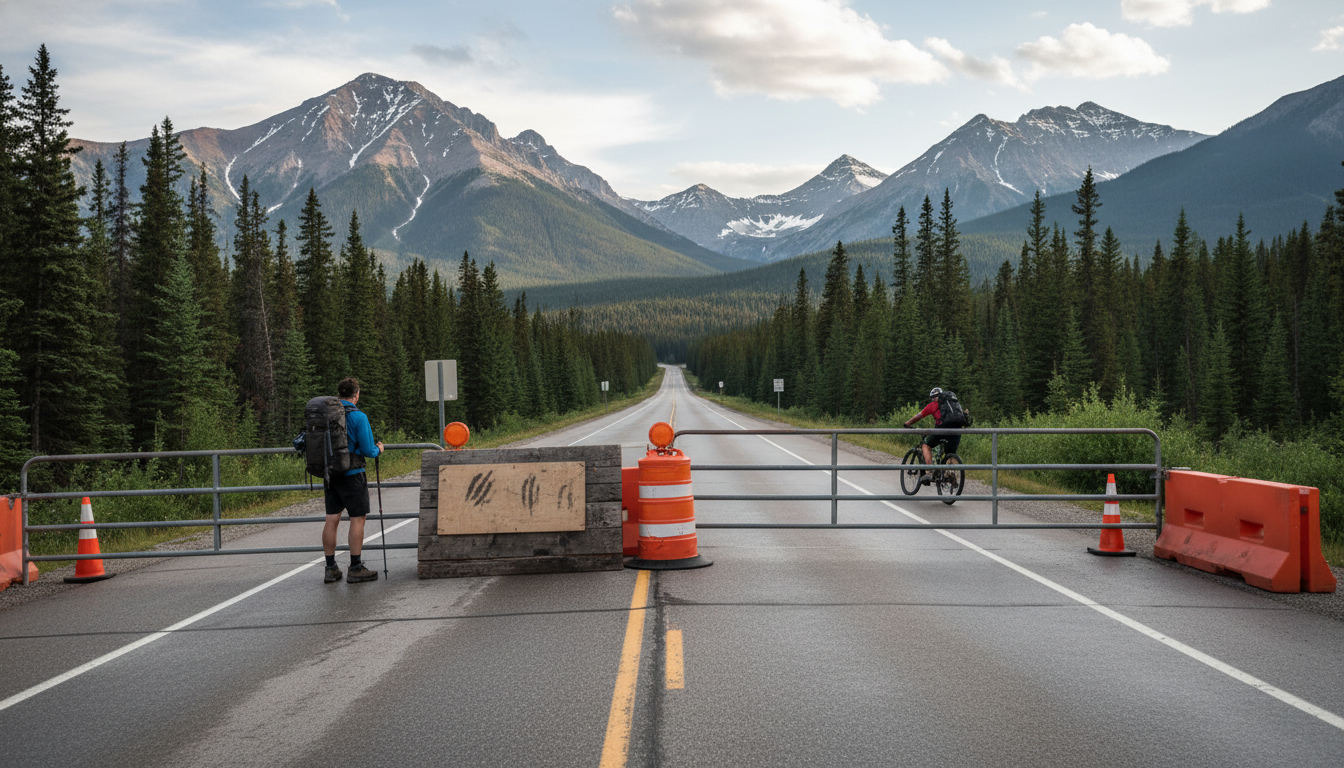
Highway 40 bear ban imposed in southern Kananaskis after grizzly bluff charge
Alberta Parks has closed a 35‑km stretch of Highway 40 to foot and bike traffic in southern Kananaskis after multiple grizzly encounters, prompting a Highway 40 bear ban until further notice.
Alberta Parks and conservation officers announced a temporary Highway 40 bear ban on Thursday, restricting hikers and cyclists along the corridor between Kananaskis Lakes Trail and Highwood Pass. The move follows a recent grizzly bluff charge against a Forestry and Parks vehicle and reports of several bears, including breeding pairs, using the valley bottom while snowpack remains. Officials said the closure affects day‑use areas and will remain in place until it is safe for the public to return.
Highway 40 closed to hikers and cyclists
The provincial restriction blocks a 35‑kilometre section of Highway 40 to non‑vehicular traffic, a decision intended to reduce the risk of human–bear encounters. The closure runs from the Kananaskis Lakes Trailhead south to Highwood Pass and covers popular recreational access points used by hikers and cyclists. While vehicles are normally restricted on that stretch until June 15, the new measure specifically bars people on foot and on bicycles in response to current wildlife activity.
Officials with Alberta Forestry and Parks described the decision as precautionary and focused on public safety, noting that staff and conservation officers are monitoring the area. The province stressed that bear activity can occur anywhere and at any time, even outside the closed corridor, and urged people to avoid the valley bottom until the closure is lifted.
Grizzly bluff charge prompts immediate action
Authorities said the closure was prompted in part by an incident in which a grizzly associated with a mating pair bluff‑charged a Forestry and Parks staff vehicle. There were no injuries reported in that encounter, according to a province spokesperson. The bluff charge reinforced concerns about bears remaining in lower elevations, where lingering snowpack has concentrated wildlife in valleys with limited forage.
Provincial statements indicate that once snow melts and vegetation becomes available at higher elevations, wildlife is expected to disperse uphill. Until those seasonal shifts occur, however, the presence of multiple bears — including breeding pairs — has elevated the risk to recreational users.
Scope of closure and affected areas
The ban encompasses established day‑use areas and trailheads along the highway corridor commonly used by residents and tourists. Highwood Pass, a well‑visited section of Peter Lougheed Provincial Park, falls within the affected zone, and public messaging warns that usual summer access patterns may be disrupted. Park signage and online advisories have been updated to reflect the temporary restrictions.
Visitors planning trips in the region are advised to check provincial park notices before travelling and to alter plans accordingly. The province reiterated that the vehicle restrictions that customarily remain in place until mid‑June do not replace the new prohibition on foot and bike traffic, which will remain until conservation officers deem conditions safe.
Safety guidance for visitors
Alberta Parks urged outdoor users to travel in groups, make noise while moving through bear country, and keep dogs leashed at all times. The agency recommends carrying bear spray and being familiar with its use, as well as watching for fresh tracks, scat, digging or other signs of nearby bears. Hikers who encounter aggressive or unusual bear behaviour are instructed to retreat slowly and report the incident to authorities.
Conservation officials remind the public that bluff charges often stem from bears defending cubs or food sources, and that reactions can be unpredictable. People are encouraged to maintain situational awareness in all backcountry areas, even outside the closed section of Highway 40, because bears have been sighted across the broader Kananaskis region.
Provincial response and bear removals under new program
In 2024 the province launched the Wildland Management Responder Network, a program that allows qualified citizen hunters to remove problem bears with government approval. Alberta reports that two grizzly bears have been killed under the program — one in 2025 and another in 2026 — both in areas south of Calgary. Conservation officers said removals are carried out only after assessment and as a last resort when public safety concerns cannot be otherwise mitigated.
Officials also recalled that four people have been fatally mauled by grizzlies in Alberta over the past five years, all in locations northwest of Calgary, underscoring the risks posed by close encounters. The province continues to balance public access, wildlife conservation and safety as it manages increasing human activity in bear habitat.
Conservation officers and park staff are maintaining heightened surveillance of the closed corridor and will reassess conditions as snowpack recedes and vegetation shifts. The province has provided a dedicated reporting line for grizzly sightings and incidents at 403‑591‑7755, and members of the public are asked to report encounters promptly to aid monitoring and response efforts.
The Highway 40 bear ban reflects a precautionary approach as authorities work to reduce conflict between people and large carnivores in southern Kananaskis. Visitors should expect ongoing updates from Alberta Parks and plan alternative outdoor activities until the closure is lifted.
