
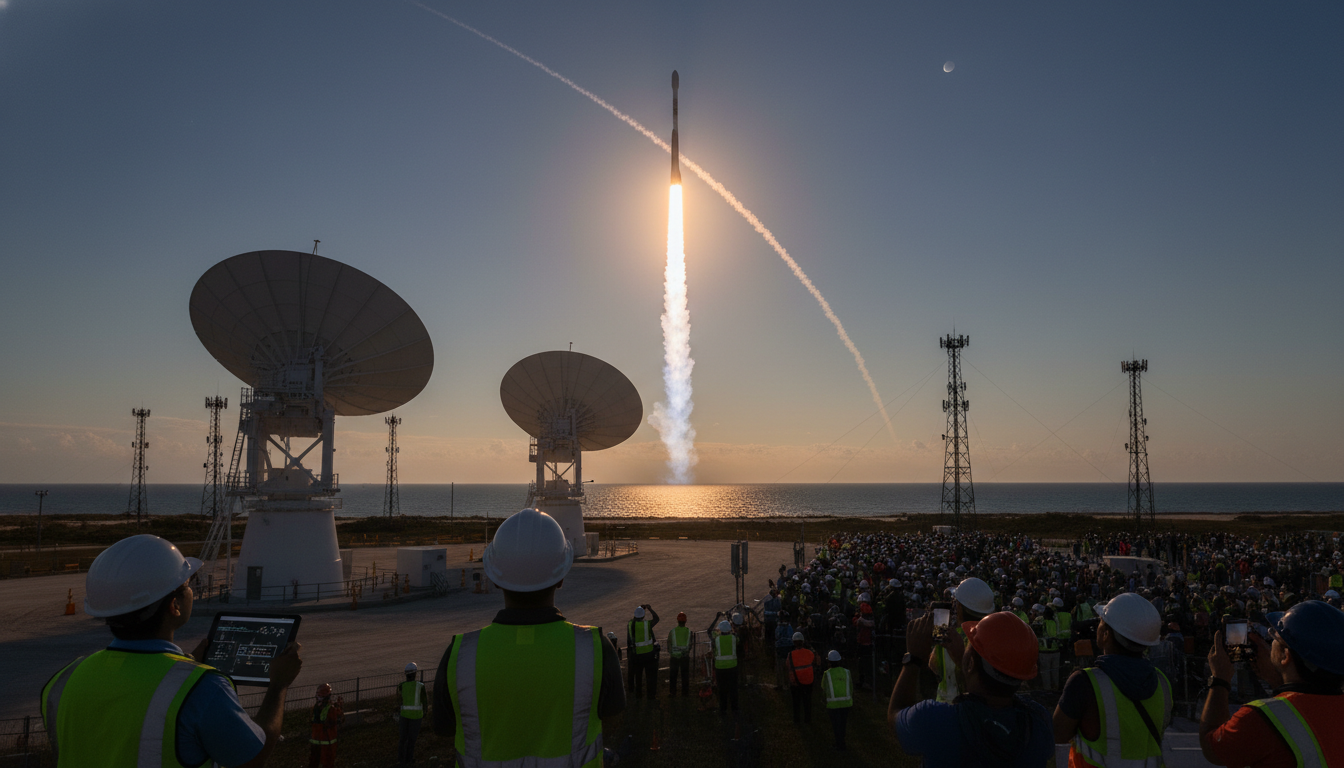
SpaceX Accelerates Starlink Mobile Push to Bring Satellite Service to Smartphones
SpaceX’s Starlink Mobile plans to deliver satellite connectivity directly to smartphones, bypassing towers and reshaping mobile coverage and carrier costs.
SpaceX is accelerating development of Starlink Mobile, a satellite-based service intended to connect ordinary smartphones without relying on traditional cellular towers. The move represents a strategic shift that levers SpaceX’s existing Starlink constellation and rocket infrastructure to enter the mobile market. Industry observers say the proposal could alter how coverage is provisioned, particularly in rural areas and along underserved routes.
SpaceX’s Orbital Strategy
SpaceX has pursued an atypical path into telecommunications by building launch capability before network assets. The company initially invested heavily in rockets, enabling repeated, lower-cost access to low Earth orbit and rapid deployment of thousands of Starlink satellites. That vertical integration allowed SpaceX to avoid the upfront land-based investments—towers, fiber, and nationwide spectrum licenses—that historically bar new entrants.
SpaceX’s orbital-first approach also reduces some fixed costs carriers face on the ground, while concentrating engineering resources in space-based infrastructure. By coupling launch, satellite manufacture, and network operations, the company can iterate hardware and software more quickly than traditional carriers. This strategy underpins the technical and economic case for a service branded as Starlink Mobile.
How Starlink Mobile Would Work
Starlink Mobile aims to use Starlink satellites to deliver two-way links directly to smartphones or to specialized handsets that require minimal additional hardware. The envisioned system would hand off traffic to terrestrial networks where satellite signals weaken, such as inside dense urban canyons and large buildings. That hybrid model relies on satellites for broad-area coverage and on existing carrier infrastructure for fill-in capacity.
Achieving this requires integration at multiple layers: device radio firmware, carrier roaming agreements, and network coordination to manage capacity and latency. SpaceX has already demonstrated low-latency broadband from its constellation, but bridging to mobile-phone form factors and consumer billing systems will be a crucial next step. The company’s ability to negotiate spectrum access and commercial partnerships will determine how seamless the user experience becomes.
Pressure on Traditional Carriers
A functioning Starlink Mobile service could compress some of the value carriers extract from tower ownership and spectrum exclusivity. If satellites can reliably serve large swathes of territory, mobile network operators may face pricing pressure on wholesale access and retail plans. Rural and remote connectivity markets in particular could see increased competition as satellite coverage reduces the need for additional ground infrastructure.
Carriers will likely respond by emphasizing their strengths: dense urban capacity, indoor coverage, and integrated services like enterprise networking. Some operators may seek commercial partnerships with SpaceX to combine strengths, while others could lobby regulators to limit direct-to-handset satellite links or to condition market access. The net effect on prices and investment incentives will depend on how readily customers and enterprises adopt satellite-backed services.
Technical and Spectrum Challenges
Delivering mobile service from low Earth orbit to millions of handheld devices presents technical hurdles that extend beyond satellite count. Antenna design, power constraints, and the ability of small, moving devices to maintain links with fast-moving satellites require specialized radio engineering. Managing handovers between satellite beams and terrestrial cells without interrupting voice or data sessions adds another sizable engineering challenge.
Spectrum access also presents a major constraint, as terrestrial carriers and satellite services compete for bands that work well for small radios. Regulatory approvals and coordinated sharing arrangements will be necessary to avoid interference and to guarantee quality of service. Success will depend on both technological innovation and negotiated spectrum frameworks that accommodate hybrid satellite-terrestrial operation.
Regulatory and Market Response
Regulators around the world will play a central role in determining how Starlink Mobile can scale, since many decisions hinge on spectrum licensing and coordination with incumbent operators. Governments interested in expanding rural connectivity may view a satellite-backed mobile service favorably, but regulators must balance consumer protection, national security, and industry competition. Licensing regimes that historically benefited local carriers will be tested by a global satellite operator with a different cost structure.
Market actors will also shape the rollout: handset manufacturers must support satellite links, carriers may sign wholesale deals, and large enterprises could adopt hybrid solutions for resilience. The pace of adoption will vary by region, with remote areas and countries with limited ground infrastructure likely to see earlier traction. Urban markets, where terrestrial capacity is dense, will present the toughest tests for satellite-only delivery.
SpaceX’s effort to make satellites a mainstream component of mobile phone service marks a potential turning point for the industry. If Starlink Mobile meets performance and regulatory hurdles, consumers could gain broader coverage options while carriers face new competitive pressures. The outcome will depend on engineering success, commercial deals, and how regulators update rules to govern a more orbital-centric mobile landscape.
