
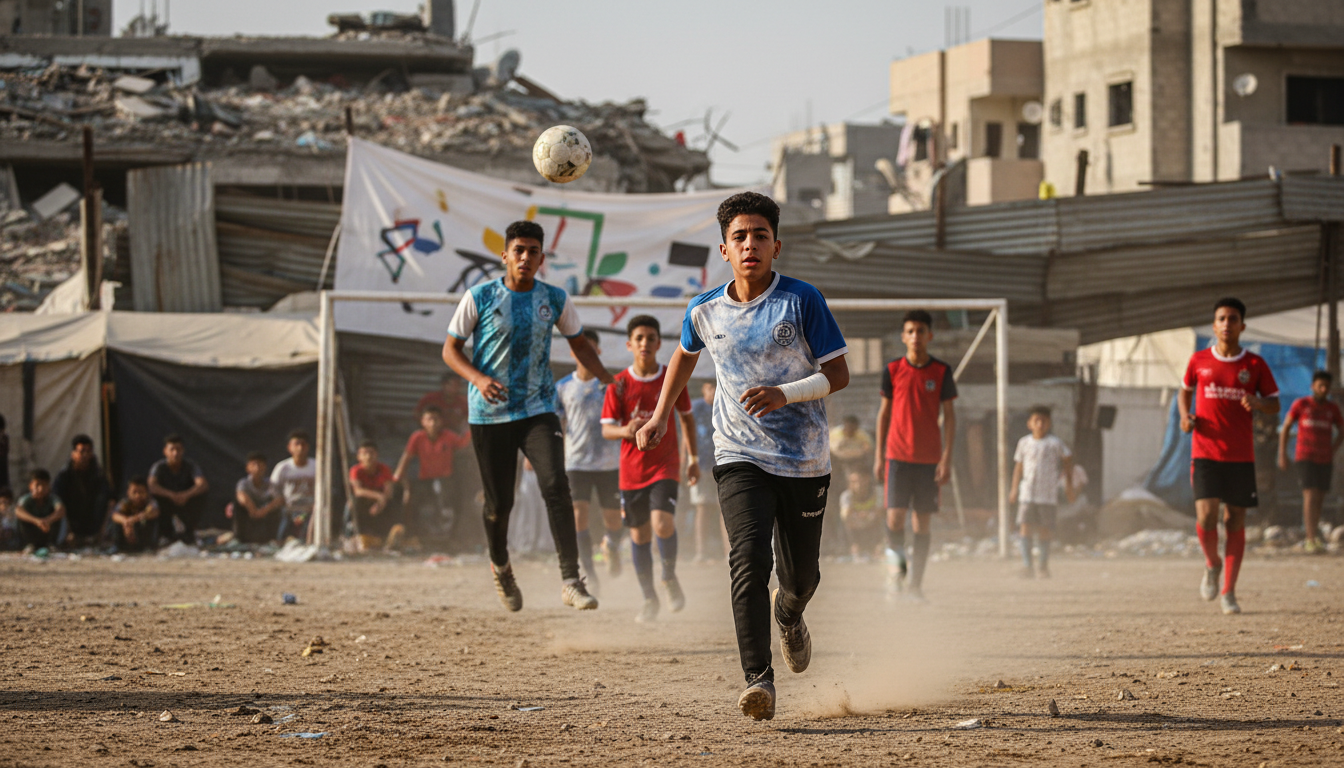
Gaza teen clings to football after October 11, 2024 strike killed his family
After an October 11, 2024 airstrike killed his parents and brothers, 16-year-old Mohammed Eyad Azzam relies on Gaza football to cope and pursue a professional dream.
Sixteen‑year‑old Mohammed Eyad Azzam was at home in Jabalia refugee camp on October 11, 2024, when an Israeli air attack collapsed his family’s building, killing his parents and two older brothers. He was pulled from the rubble by his grandmother and later woke up on a ventilator at a neighbour’s house, Al Jazeera reported, and has since become the sole caregiver for his elderly relative. Football has become Mohammed’s primary refuge amid displacement and the wider destruction of Gaza’s sporting life.
Teenager Loses Family in October 11, 2024 Airstrike
Mohammed describes being buried under concrete for about 10 minutes before his grandmother dug him out, an episode that marked a sudden and permanent end to his childhood. He and other survivors were unable to hold a formal funeral because ongoing strikes made cemeteries inaccessible, so they buried their loved ones in a small makeshift plot nearby. The attack forced him and thousands of others into camps such as Shati, where the daily demands of caring for an elderly relative have replaced school and organised sport.
Football Becomes a Psychological Lifeline
Before the conflict escalated in October 2023, Mohammed was a promising player for Khadamat Jabalia, one of Gaza’s long‑standing youth clubs. Playing in a recent Palestinian Football Association (PFA) tournament for players born in 2009 gave him a rare sense of normalcy and a way to release grief, he said. On the pitch Mohammed finds brief relief from the daily grind of fetching water and lighting fires, and he insists the game keeps his parents’ ambitions for him alive.
Destruction of Gaza’s Sporting Infrastructure
The PFA says the offensive has devastated sports in Gaza, with hundreds of facilities damaged or destroyed and many professionals killed. According to association figures, more than 1,100 people linked to the sports sector have died, including players, coaches and administrators, and roughly 265 venues have been rendered unusable. All 56 football clubs across the Gaza Strip have been severely affected, officials say, with some ground once used for training converted to other purposes during military operations.
Deadly Journeys to Remaining Pitches
Organisers are now holding youth matches on just a handful of playable surfaces at sites such as Palestine Stadium in Gaza City and two smaller grounds elsewhere. For many players, reaching those fields requires walking several kilometres through rubble and tented displacement sites, a journey that carries the risk of renewed strikes. Players and officials stress that the physical toll of the commute compounds trauma, but organisers continue to stage matches to preserve routine and offer youngsters an outlet.
Calls for Action From International Football Bodies
Palestinian sports officials have voiced frustration with global football authorities for what they describe as an uneven response to conflict‑related disruptions. Mustafa Siyam, head of the PFA media department for Gaza’s southern provinces, contrasted FIFA’s swift measures against other nations with what he described as a lack of decisive action on issues affecting Palestinian football. With sanctions absent, the PFA says it is pursuing remedies through international sports tribunals and pressing for greater solidarity and practical support.
Clubs, Academies and Futures Hanging in the Balance
Beyond damage to stadiums and equipment, club officials warn that the pipeline of young talent has been shattered by deaths, displacement and interrupted schooling. Many academies that once developed players have ceased to function, and former teammates of Mohammed were among those killed or scattered across the enclave. Despite these setbacks, association staff and volunteers are trying to keep age‑group competitions alive to maintain skills and hope for future selection to national teams once borders reopen and rebuilding is possible.
Mohammed speaks quietly about his dream to become a professional player, a goal his parents once nurtured; his father registered him in the club and his mother cheered from the sidelines. He says each time he steps onto a dirt pitch he feels he is honouring their memory, and he pins his hope on a future in which Gaza football can again provide training, education and a pathway out of the camp.
