
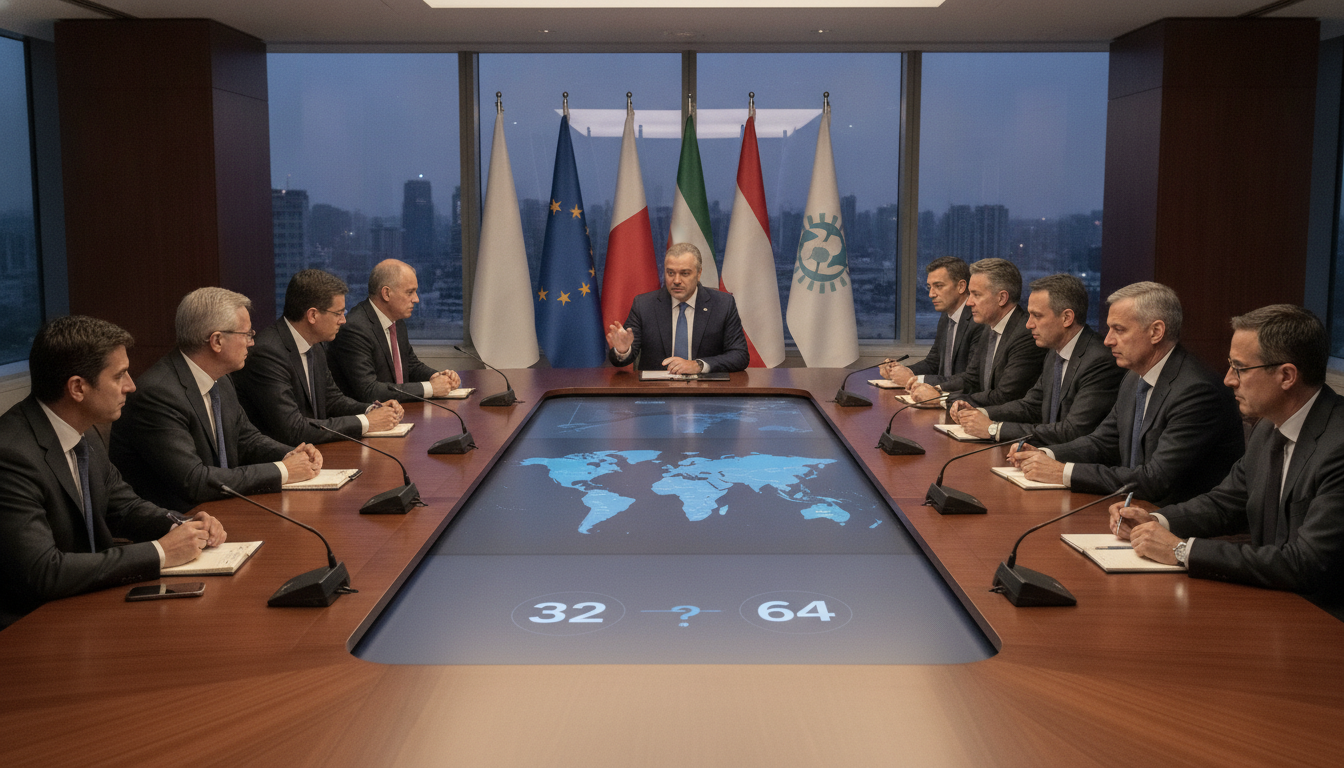
FIFA weighs World Cup expansion to 64 teams ahead of 2030 tournament
FIFA president Gianni Infantino said on July 12, 2026 that the governing body is examining the possibility of expanding the World Cup to 64 teams, a proposal that could reshape qualification and hosting for 2030.
FIFA president raises prospect of 64-team tournament
On July 12, 2026, Gianni Infantino told Swiss outlet Bluewin that expanding the tournament from 48 to 64 teams is “definitely an issue” FIFA committees will study after the 2026 World Cup concludes. The proposal, he said, is driven by a desire to give more nations the opportunity to compete on football’s biggest stage and to spur development in regions outside Europe and South America.
Infantino described the current 48-team format as a “huge success” but argued that further enlargement could be justified by rising standards worldwide. His comments come as the 2026 World Cup in Canada, Mexico and the United States moves into its final rounds, with Argentina, England, France and Spain among the last teams remaining.
Broadening representation cited as main rationale
Infantino framed the push for a World Cup expansion to 64 teams as a step to make the competition truly global and to reward improving football programs in Africa, Asia and other regions. He highlighted the recent tournament’s results as evidence, noting a sharp increase in competitive performances and knockout appearances by teams from outside the traditional power centres.
The president said that if smaller nations are not given realistic pathways to the finals, incentives to invest in coaching, infrastructure and youth development could weaken. Underpinning that argument, he noted the larger tournament gave a platform for underdog stories and more televised matches that drive investment and interest at home.
Potential effects on 2030 hosts and match scheduling
The 2030 World Cup is already planned as a multi-continent event, with opening matches scheduled for Uruguay, Argentina and Paraguay and the remainder in Morocco, Portugal and Spain. FIFA officials say that moving to 64 teams would require re-evaluating how games are allocated across host countries and could expand group-stage hosting beyond single-match appearances in South America.
One immediate implication would be larger group allocations and additional matchdays, which would create greater demands on stadium capacity, transportation and accommodation. Tournament organisers would also need to reconcile any expansion with existing contracts, broadcast windows and the compact international football calendar.
Logistical, sporting and competitive challenges
Moving from 48 to 64 teams presents logistical hurdles that go beyond venue counts. Organisers would have to design a competition format that preserves competitive balance while limiting travel burdens for teams and supporters. That could involve revising group sizes, knockout structures and tie-breaking rules to ensure fairness and maintain interest late into the group stage.
Sports directors and analysts have often warned that too large a field can dilute quality and strain players’ workloads, especially in a congested club calendar. FIFA would need to secure agreements with continental confederations, domestic leagues and broadcasters to protect player welfare and commercial returns if expansion proceeds.
Reactions from federations and stakeholders
National federations in regions that stand to gain more guaranteed places have long backed enlargement proposals as a means to accelerate development and visibility. African and Asian associations are likely to press for a larger allocation of slots if FIFA pursues 64 teams, while some European and South American bodies may seek to protect existing quotas.
Commercial partners and broadcasters will scrutinize how additional matches affect rights values and scheduling. At the same time, fans and players have mixed views: supporters of underdog nations welcome broader access, while others worry that more group-stage fixtures could reduce the tournament’s intensity.
Next steps and committee review process
Infantino indicated that the proposal would be examined by FIFA’s relevant committees after the 2026 World Cup concludes, with any formal recommendation requiring approval from the FIFA Council. The review will likely include feasibility studies on stadium readiness, travel logistics, financial modelling and competitive formats.
If committees recommend a move to 64 teams, FIFA would face a timetable to finalise qualification paths and host responsibilities well ahead of the 2030 kick-off. That process would involve consultations with confederations, governments and commercial partners to ensure the tournament remains viable and credible.
A decisive moment for global football
The discussion over a World Cup expansion to 64 teams marks a pivotal debate about the balance between global inclusivity and elite competition. As FIFA weighs the next steps following the 2026 tournament, federations, broadcasters and fans will watch closely for signals about how the sport’s flagship event may evolve for 2030 and beyond.
