
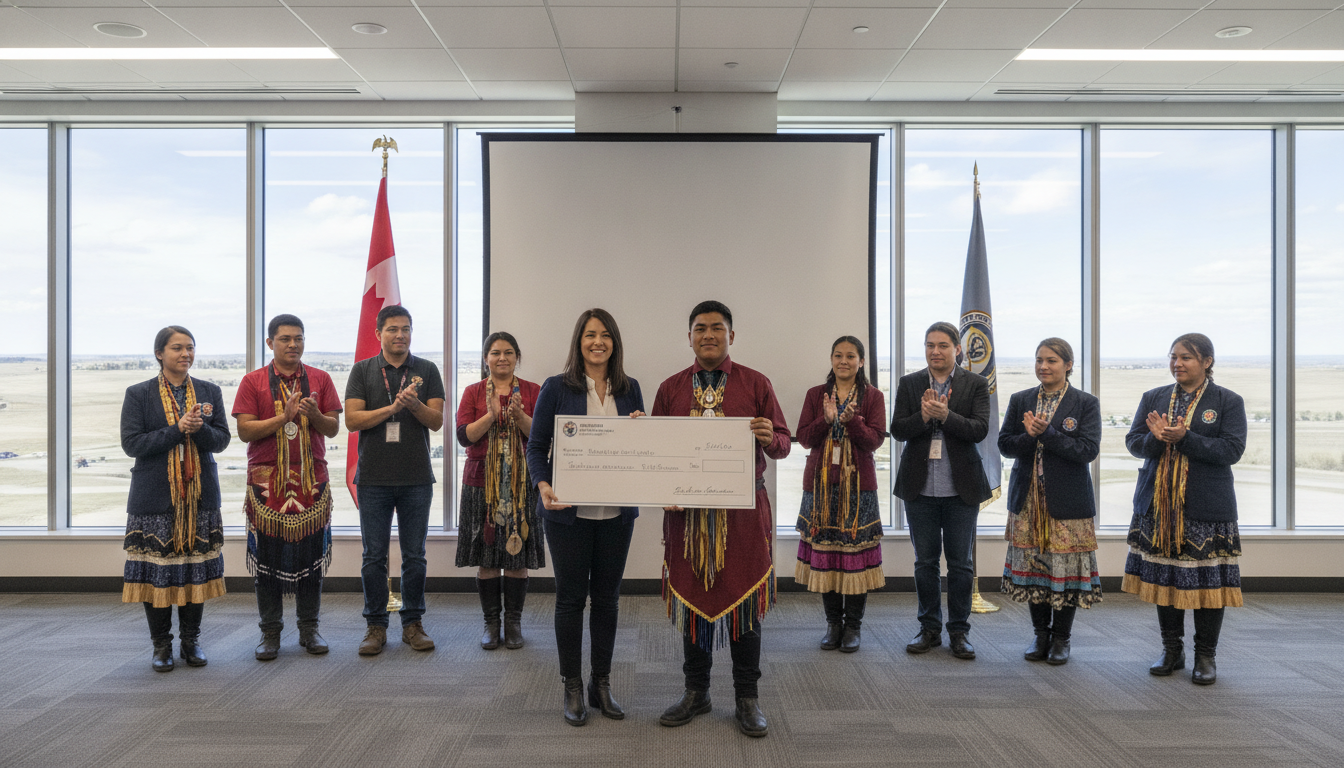
Federal $3.2M boost for Indigenous youth employment in Alberta through Treaty 7 skills program
Ottawa commits $3.2M to Treaty 7 youth employment in Alberta, funding training, paid placements and employer subsidies to connect Indigenous youth to long-term jobs.
The federal government announced a $3.2-million investment on Aug. 11, 2026, aimed at expanding Indigenous youth employment in Alberta through a Treaty 7–led skills initiative. The funding, delivered under the Youth Employment and Skills Strategy, will back Community Futures Treaty 7’s Regional Skills Link Project to deliver training, paid work placements and employer supports across southern Alberta. Officials said the package targets practical barriers that prevent many First Nations young people from accessing jobs beyond their home communities.
Federal funding announced in Calgary
The announcement was made at the Grey Eagle Resort and Casino in Calgary and confirms a three-year agreement that began in January 2025 and runs through March 2028. Federal officials framed the investment as part of a broader effort to prepare Indigenous youth for a shifting labour market and to promote local, culturally relevant pathways into employment. Indigenous Services Minister Mandy Gull-Masty emphasised the need for programs tailored to the distinct circumstances faced by First Nations communities.
Regional Skills Link to deliver two streams of support
Community Futures Treaty 7 will operate the Regional Skills Link Project in two main streams to reach youth with different needs and readiness levels. The first stream is a cohort-style program combining classroom-based skills development with follow-up paid work experience, while the second stream focuses on placing participants into longer-term positions with wage supports for employers. CFT7 officials describe the model as a mix of training, exposure and employer incentives designed to translate training into sustainable jobs.
Classroom training and paid placements outlined
Under the cohort stream, 105 participants will undertake nine weeks of classroom training that focuses on job-specific skills, workplace readiness and labour-market information. That classroom phase will be followed by 12 weeks of paid work experience, which can take place on or off reserve depending on community and employer arrangements. Project staff say the sequential model is intended to build confidence and practical experience before participants transition into competitive employment.
Long-term placements and employer wage subsidies
The second stream will support 20 long-term placements each year and provide wage subsidies to employers who hire Indigenous youth, aiming to reduce hiring risk and create pathways to retention. Program leads stressed that employer engagement is central to converting placements into permanent jobs, and that subsidy design will vary to match local labour-market realities. Officials hope the employer-focused stream will open opportunities in industries not traditionally visible to youth in Treaty 7 communities.
Local leaders highlight access and awareness gaps
Community leaders and youth workers at the announcement underlined persistent barriers beyond training, including limited awareness of job options and weaker employer networks in some communities. CFT7’s youth labour market consultant said past research showed many students could only name occupations they regularly saw locally, underscoring a need to broaden career exposure. Front-line youth workers added that building industry connections and follow-through supports are crucial to keeping young people employed after placement periods end.
CFT7 results and federal partnership history
CFT7 is a community-based economic development organization with more than three decades of work supporting Indigenous Albertans with employment and business development. Since 2019, the organization reports having helped thousands of First Nations youth find work and return to education, and the federal government has provided substantial support through Indigenous skills and employment initiatives. Officials point to a history of federal–community collaboration as a foundation for scaling the Regional Skills Link effort.
Program managers said tracking outcomes — including job retention, re-entry to school and employer uptake — will guide adjustments over the remaining contract period. They also noted the project’s reach across on-reserve and off-reserve settings, with the intention of tailoring supports to each community’s labour market and cultural priorities.
The new investment reflects Ottawa’s stated priority to position Indigenous youth at the forefront of a changing economy through targeted supports that combine training, experiential placements and employer incentives. Community leaders welcomed the funding while urging continued focus on employer engagement, transportation and culturally relevant mentorship to ensure trainees convert skills into lasting careers.
