
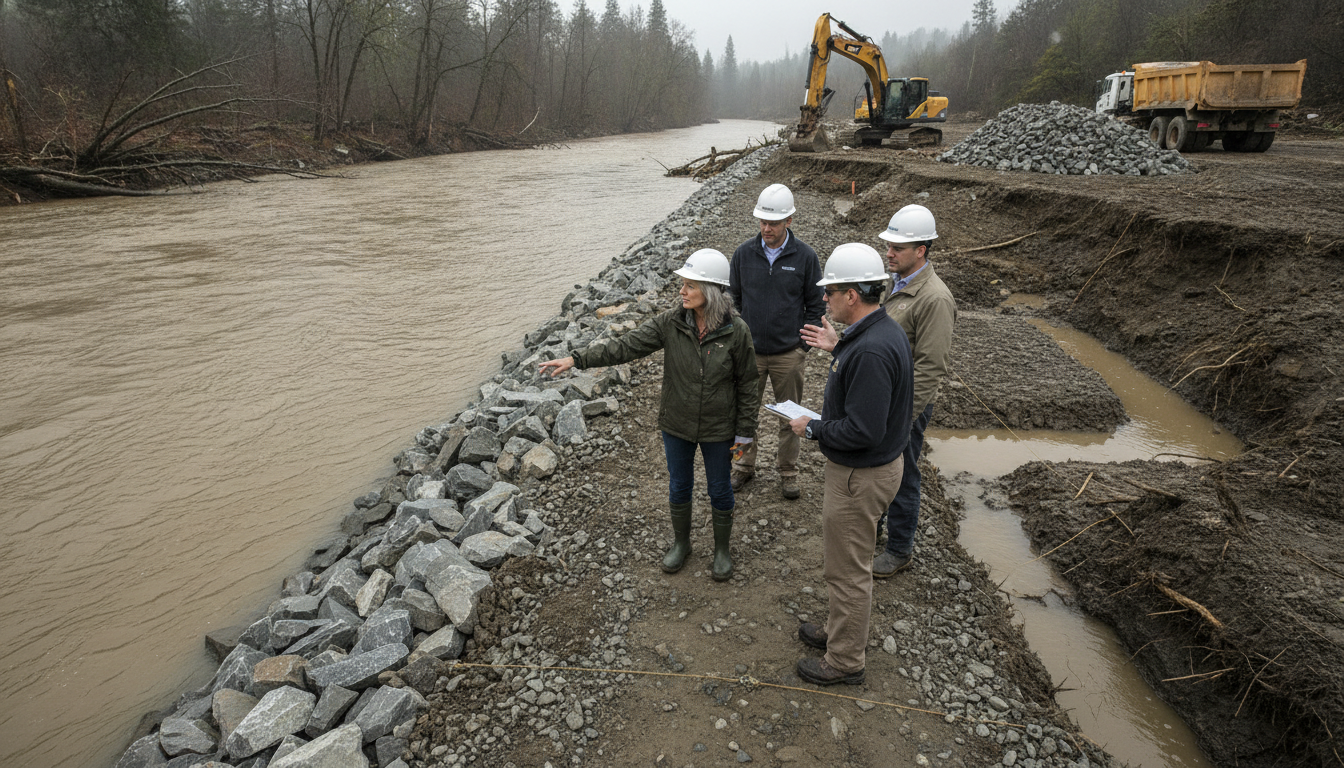
Erosion Mitigation Through Runoff Channeling, Rock Revetments and Dams
Erosion mitigation measures such as runoff channeling, rock revetments and dams are being highlighted by engineers as effective tools to protect riverbanks, infrastructure and sensitive habitats. Macciotta said directing surface runoff into protected channels and safely discharging it away from vulnerable areas reduces soil loss and sediment delivery to waterways. The expert also noted that large rock blocks and flow-control structures can slow water and prevent embankment failure when properly designed and maintained.
Runoff Management and Protected Discharge
Runoff channeling redirects surface water from roads, fields and developed lots into engineered pathways that reduce erosive velocity and concentrate flows in reinforced corridors. Features such as vegetated swales, lined channels and subsurface drains funnel runoff into retention basins or controlled outlets where sediment settles before water is released.
By managing runoff at its source, municipalities and property owners can lower the volume and speed of water reaching gullies and riverbanks, limiting undercutting and slope collapse. These measures also reduce turbidity downstream, improving water quality for fish and drinking-water intakes.
Bank Stabilization with Large Rock Revetments
Large rock revetments, commonly called riprap, absorb and dissipate the energy of flowing water to protect embankments from scouring and erosion. Placed along vulnerable bank faces and toes, these armouring systems are engineered to suit local flow regimes and soil conditions, and they often incorporate filter layers to prevent soil migration.
Properly designed rock revetments provide immediate stability and can be combined with vegetated buffers to restore ecological function. However, engineers warn that poorly sized or placed rock can displace erosive forces downstream or harm aquatic habitat, so professional assessment and permitting are typically required.
Dams and Flow Control to Slow River Erosion
Dams, weirs and small-scale flow-control structures reduce peak velocities and regulate discharge, lowering the river’s capacity to erode banks and transport sediment. Temporary or permanent installations can be used to trap sediment upstream, create calmer pools, and attenuate flood peaks that drive rapid bank loss.
While flow-control works can be effective, they demand careful design to avoid negative consequences such as altered sediment budgets and impacts to fish migration. Agencies and engineers must balance erosion control benefits with ecological and regulatory considerations before moving forward.
Combining Hard and Soft Approaches for Long-Term Stability
Integrated solutions that pair hard engineering with nature-based practices often deliver the best outcomes for erosion mitigation. For example, placing rock revetments at the toe of a slope while replanting native deep-rooted vegetation on the bank provides both structural protection and biological reinforcement.
Soft measures—riparian buffers, live staking and engineered log jams—can slow flows, trap sediment and gradually rebuild bank resilience without the permanence of concrete. Decision-makers increasingly favour hybrid approaches that reduce erosion while preserving or enhancing habitat values.
Environmental Safeguards and Permitting Requirements
Erosion control projects intersect with fisheries, wetlands and water-quality regulations, meaning approvals are usually required before construction. Mitigation plans must consider timing windows for fish, sediment-control measures during works, and provisions for post-construction monitoring to confirm objectives are met.
Consultation with watershed authorities, Indigenous communities and environmental regulators is an essential step to secure the permits and to design measures that respect ecological thresholds. Transparent planning reduces the risk of costly redesigns or mitigation mandates after work has begun.
Costs, Maintenance and Community Involvement
Upfront costs for rock armouring, channel reconstruction or small dams can be significant, but proponents argue they are often lower than the cumulative cost of repeated emergency repairs and lost land. Long-term maintenance—inspecting armour, unclogging outlets and repairing erosion after storms—is critical to sustain performance and protect public investments.
Local communities, landowners and municipal governments play a central role in funding, implementing and monitoring erosion mitigation projects. Education about proper drainage practices, early reporting of bank distress and cooperative watershed planning can amplify the effectiveness of engineered solutions.
Integrated action that combines runoff management, targeted bank armouring and flow control, together with ecological restoration, provides a pragmatic path to reduce soil loss and protect infrastructure. As Macciotta noted, tailoring a mix of measures to site conditions and committing to maintenance and environmental safeguards is the most reliable way to keep rivers and shorelines stable.
