
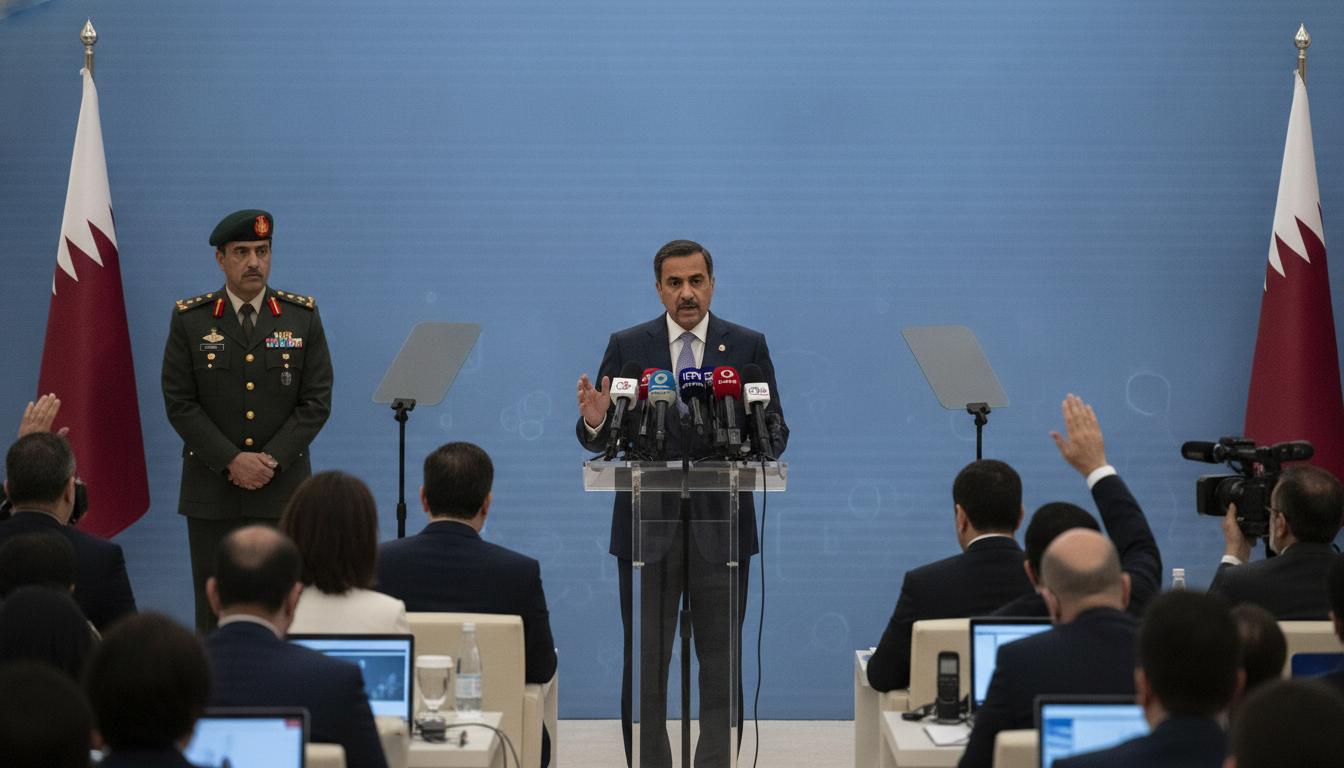
Qatar denies holding Iranian pilots after March shoot-down
Qatar denies holding Iranian pilots after March shoot-down, rejecting Tehran’s detention claims as Doha pursues mediation ahead of the August 17, 2026 deadline.
Qatar has publicly rejected Iranian assertions that three Iranian airmen are being held in secret detention following the downing of their aircraft in March, saying no surviving crew members are in Qatari custody. The denial, issued by a Foreign Ministry spokesman and reported by regional outlets, comes after Tehran made public demands for the release of the aviators. Doha characterized the Iranian statements as misleading while stressing its ongoing diplomatic efforts to ease tensions in the Gulf. The dispute deepens an already fraught diplomatic landscape as a mediation window approaches its August 17, 2026 deadline.
Qatar’s official response
A Foreign Ministry spokesman, Majed Al-Ansari, said Qatari authorities were surprised by Tehran’s public claims and reiterated that Qatari forces are not detaining any surviving aircrew. The statement, carried by Al Jazeera Arabic, emphasized Doha’s continued role as a mediator and its desire to avoid inflaming the situation. Qatari officials noted that they had cooperated with Iran in repatriating remains recovered after the March incident. The ministry framed its remarks as part of efforts to preserve channels for negotiation rather than escalate accusations.
Tehran’s allegations and named airmen
Iranian military officials have told international organizations that three pilots — identified as Javad Salehi, Abdolmajid Dashtian and Omran Behraveshian — were captured alive after their Sukhoi Su-24 aircraft crashed in March. In a letter to the International Committee of the Red Cross, General Mohammad Bagherzadeh said the men had been held incommunicado for six months and called for humanitarian intervention, according to Iran’s Fars news agency. Tehran had previously acknowledged one pilot was killed and others listed as missing, but the fresh statement marked the first public claim of capture and detention. Iranian authorities are pressing the Red Cross and other bodies for access and clarification.
What happened in March
Qatar has said its air-defence forces intercepted and engaged aircraft that entered Qatari airspace without authorization in March after warnings were ignored. Qatari search-and-rescue teams recovered the remains of one pilot, identified as Majid Kazemi, and coordinated with Iranian authorities for repatriation. Doha described the engagement as a response to an airspace breach and provided limited operational detail while declining to confirm other casualties or captures. The interception took place amid a wider spike in regional hostilities that have involved multiple strikes and counterstrikes since late February.
Wider military backdrop
The March engagement occurred during an attack on Al Udeid Air Base, which hosts U.S. Central Command personnel and is the largest U.S. military facility in the region. Qatari defence officials reported shooting down two Iranian Su-24 bombers, marking one of the first public instances of a Gulf state saying it had downed Iranian aircraft in the conflict. The incident fits into a pattern of reciprocal strikes and maritime confrontations that flared after hostilities began on February 28. A brief ceasefire in April, brokered with the assistance of Pakistan, eased some fighting but layered ceasefire talks and a later breakdown left the Gulf tense and shipping at reduced capacity.
Diplomatic timelines and the August deadline
Doha is pressing for a negotiated settlement even as diplomatic efforts face strain, with a 60-day negotiating window set by a mid-June memorandum of understanding due to expire on August 17, 2026. Officials close to the talks say few direct meetings between the main parties have taken place inside that timeframe, leaving mediators scrambling to salvage dialogue. The approaching deadline has raised urgency around confidence-building measures and humanitarian access, particularly in the Strait of Hormuz where commercial traffic has slowed. Qatar has continued shuttle diplomacy with regional capitals and international intermediaries in an attempt to keep lines open.
Reactions from Washington and Tehran
In New York on Friday, August 14, 2026, U.S. President Donald Trump said Iran was being “very badly defeated” and suggested stronger U.S. assertions of control over the Strait of Hormuz, remarks that Tehran quickly denounced. Iran’s Deputy Foreign Minister Kazem Gharibabadi posted on X that the waterway “cannot be seized with a tweet, nor with an aircraft carrier,” and vowed to maintain pressure until Washington recognizes what he called realities on the ground. The exchange underscores how public rhetoric from major powers complicates discreet mediation efforts led by regional actors such as Qatar.
Humanitarian groups and legal experts say allegations of captives held without access to family or diplomatic representation would trigger obligations under international humanitarian law and warrant immediate inquiry. The International Committee of the Red Cross has been named in Iran’s appeal for intervention, and independent monitors have urged transparent verification of detainee claims. Without on-the-ground access and with competing assertions from Tehran and Doha, third-party verification remains the most realistic path to resolving the dispute over the pilots’ status.
As diplomatic channels continue to move under intense international scrutiny, Qatar has maintained that it is not holding the Iranian pilots and is focused on mediation to prevent further military escalation. The coming days, including the August 17, 2026 deadline, are likely to test whether regional and international actors can convert statements into verifiable humanitarian and security outcomes.
