
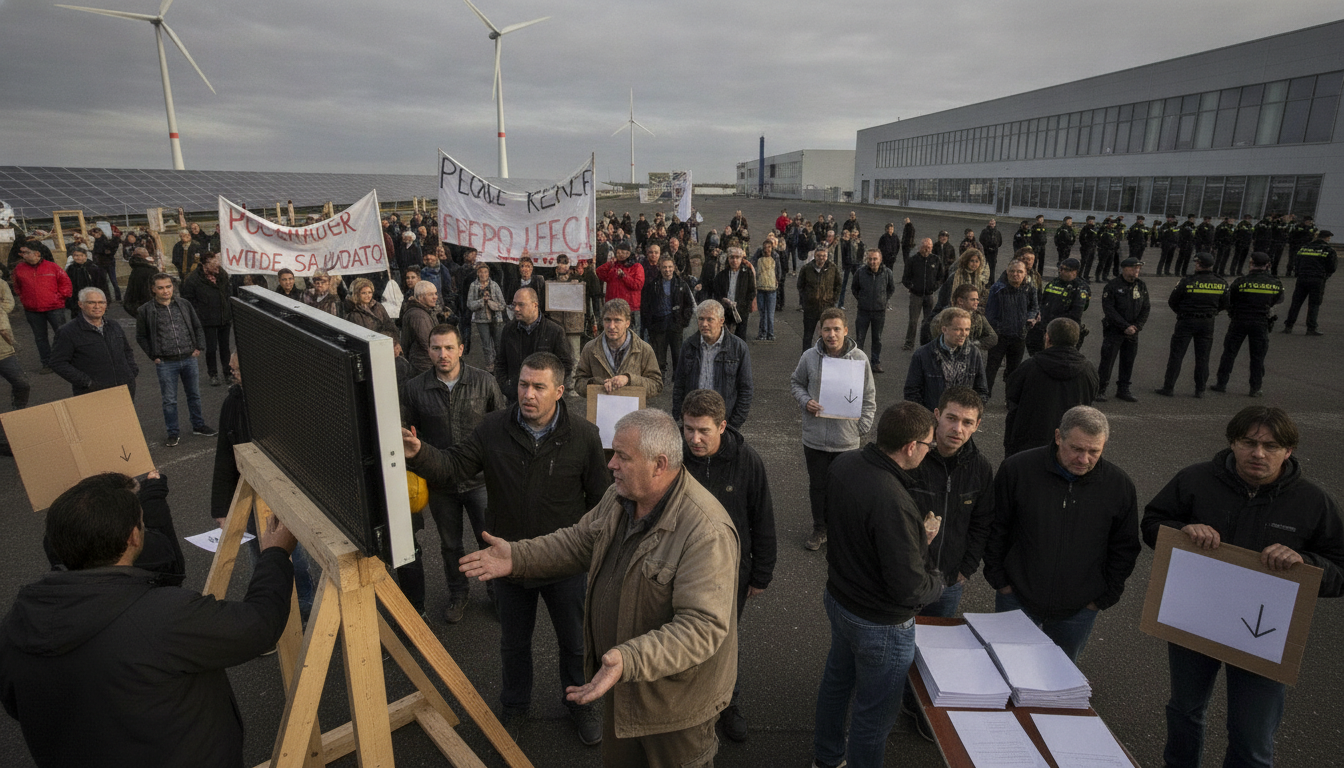
Energy transition already reshaping labour market, experts warn
Communities across Canada are reporting job losses, wage stagnation and rising anxiety even as many residents fail to link those changes to the energy transition. Experts say the shift from fossil fuels to lower-carbon systems is underway and its labour-market effects are becoming increasingly visible in towns and industrial regions.
Energy transition already visible in local economies
Residents and workers in energy-producing regions describe sudden layoffs and hiring freezes in sectors long viewed as stable. These changes are being felt in household budgets and local services as employers adjust to shifting demand and investment patterns tied to the energy transition.
Analysts caution that headline figures for employment can mask localized shocks where single employers or projects dominate an economy. In communities dependent on oil, gas or coal, even modest reductions in activity translate quickly into visible job loss and reduced consumer spending.
Wage stagnation and household stress reported
Several workers report wage freezes and fewer opportunities for overtime or contract work, increasing pressure on families already coping with high living costs. Wage stagnation is compounding the direct impact of job reductions, making recovery slower for affected households.
Community leaders say the psychological toll is significant: uncertainty about future work prospects, retraining availability and the timeline of change has amplified anxiety. Those concerns are prompting calls for clearer transition planning that puts workers and small businesses at the centre of policy responses.
Disconnect between experience and policy language
“It’s clear that the transition is already underway, even if people on the ground don’t recognize it as such,” McGowan said. Many residents experience displacement and economic strain without connecting these personal impacts to broader discussions about the energy transition.
This gap between lived experience and public discourse can slow support for necessary policy measures and make targeted interventions harder to accept. Officials and advocates say communicating how transitions will unfold at the local level is essential to build trust and design effective supports.
Industry restructuring and regional ripple effects
As demand patterns shift, companies are retooling operations, which can reduce the number of traditional roles while creating new positions that require different skills. The pace and location of new jobs do not always match where losses occur, creating spatial mismatches that hurt workers who cannot easily relocate.
Supply chains and small businesses that support energy-sector employers also feel the strain, reducing revenue for local contractors, restaurants and service providers. The result is a broader economic contraction in affected towns, with spillover into municipal budgets and service delivery.
Policy options and retraining initiatives under debate
Policymakers and labour groups are discussing a range of responses, from wage supports and targeted job-creation projects to large-scale retraining and credential-recognition programs. The aim is to help displaced workers pivot into opportunities in renewables, grid modernization, and other emerging parts of the low-carbon economy.
Experts stress that timing and design matter: retraining must match employer needs and be delivered where workers live, while transition funding should be predictable enough to allow long-term planning. Stakeholders also emphasize the importance of involving local communities in program design to avoid solutions that miss local realities.
Business adaptation and private-sector roles
Companies in traditional energy sectors are adopting new technologies and altering business models, which can both eliminate and create roles. Some firms are investing in hydrogen, carbon capture, or electrification, signaling potential pathways for workforce redeployment.
Private-sector partnerships with colleges and apprenticeship programs are emerging as practical ways to bridge skill gaps. However, scaling these partnerships requires coordination, funding and recognition that not every displaced worker will or should follow the same pathway.
The conversation about the energy transition is shifting from abstract policy debate to urgent local economic planning as communities feel tangible effects. Clearer communication, better-aligned retraining, and coordinated support for affected regions will be critical to easing displacement and helping workers benefit from new opportunities in a changing energy landscape.
