
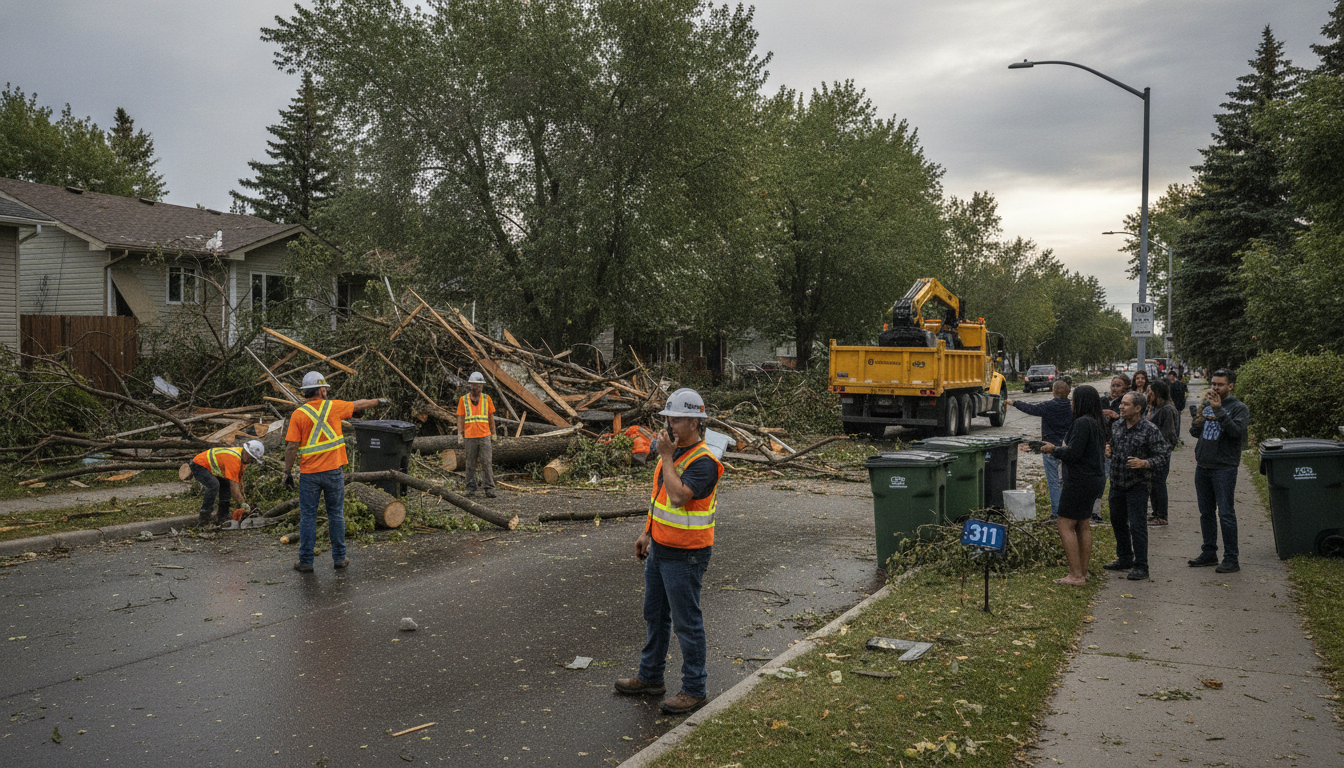
Edmonton 311: City urges residents to report blocked catch basins; crews aim to clear major debris within 24 hours
Edmonton asks residents to report blocked catch basins and storm debris to 311; crews target clearing major debris within 24 hours and offer safety guidance.
City asks residents to report debris through Edmonton 311
McKeown said the city is relying on Edmontonians to lend their eyes and report problems to Edmonton 311. The appeal comes as crews prioritize public-safety hazards and major obstructions in the drainage network. Officials stress that timely reports help crews locate and respond to issues faster across the city.
Crews set a 24-hour target for reported major debris
City officials confirmed the aim to clear reported major debris within 24 hours of notification. That target applies to significant obstructions that present flood or traffic hazards, or that pose risks to public safety. Response times may vary depending on the volume of reports and operational priorities, but municipal crews are prioritizing the most urgent sites.
Guidance on what residents can safely clear
Smaller debris — such as leaves and loose yard waste blocking a catch basin — can be cleared by residents if it is safe to do so. The city advises people to avoid working in traffic, on slippery banks, or near electrical hazards, and to use gloves and basic tools rather than bare hands. If a task feels risky or the obstruction is extensive, residents should report the problem to Edmonton 311 and wait for trained crews.
Why catch basin clearance prevents local flooding
Blocked catch basins can impede stormwater flow and increase the risk of street and property flooding during heavy rain. Clearing leaves and large litter from grates helps maintain the drainage system’s capacity and reduces pressure on downstream infrastructure. Municipal maintenance combined with resident vigilance reduces the likelihood of localized damage and costly cleanups.
What information to provide when calling 311
When reporting to Edmonton 311, officials recommend including the exact location, a brief description of the debris, and any immediate hazards such as standing water or traffic obstruction. Photos or precise landmarks can help crews identify the site quickly and assign appropriate resources. Clear, accurate reports improve the city’s ability to triage calls and dispatch crews where they are needed most.
City balance between routine maintenance and emergency response
Municipal crews must balance routine catch basin maintenance with emergency responses, which can affect scheduling and priorities. During periods of widespread debris or severe weather, the city may concentrate resources on critical routes and high-risk neighbourhoods first. Residents should expect the city to communicate priority areas and timelines as conditions evolve.
Safety and legal considerations for homeowners
Homeowners who clear debris should take ordinary precautions, including wearing protective gloves and avoiding manual clearing in heavy traffic or extreme weather. Removing debris from a public right-of-way does not transfer responsibility for ongoing maintenance, but it can reduce immediate risk. The city advises against using high-pressure equipment or attempting work that could damage infrastructure or create new hazards.
How community reporting strengthens municipal response
Neighbour reports through Edmonton 311 serve as a force multiplier for municipal crews by revealing problems crews may not have yet seen. Timely, accurate reporting allows the city to allocate staff and equipment more efficiently across a broad service area. Community participation also helps the city maintain service standards and meet response-time targets for urgent issues.
Residents play a practical role in preventing basement flooding and street hazards by reporting blocked catch basins and significant debris to Edmonton 311, while leaving major or dangerous removals to trained city crews.
