
Edmonton heat prompts city to activate extreme heat response as highs near 30°C
Edmonton heat: city activates extreme heat response as highs near 30°C. Cooling centres, water stations and pools open; air quality improving but smoke risk persists.
Edmonton has activated its extreme heat response after Environment Canada forecasted highs in the 30°C range over the next 72 hours, bringing relief from recent heavy rain and lingering puddles. The activation, announced Wednesday, covers services across the city and is scheduled through Saturday morning but could be extended if the hot period continues. Residents are being advised to use cooling facilities and take precautions as daytime temperatures and dry conditions arrive.
City activates extreme heat response
The City of Edmonton moved to an elevated heat response after forecasts showed three consecutive days with highs at or above 29°C, the threshold in municipal policy that triggers support measures. The activation will run through Saturday morning by default, with officials prepared to extend the response if Environment Canada’s outlook remains hot. City spokespeople say the decision aims to protect vulnerable populations and reduce heat-related health impacts.
The policy requires three straight days of forecast highs of 29°C or more before formal activation, a measure designed to ensure resources are targeted during sustained warm stretches. Officials emphasized that the activation is operational — not a public alarm — and signals that additional city services and staff are being mobilized. Residents should expect increased presence of peace officers and city workers in neighbourhoods offering direct assistance.
Cooling centres, water depots and services
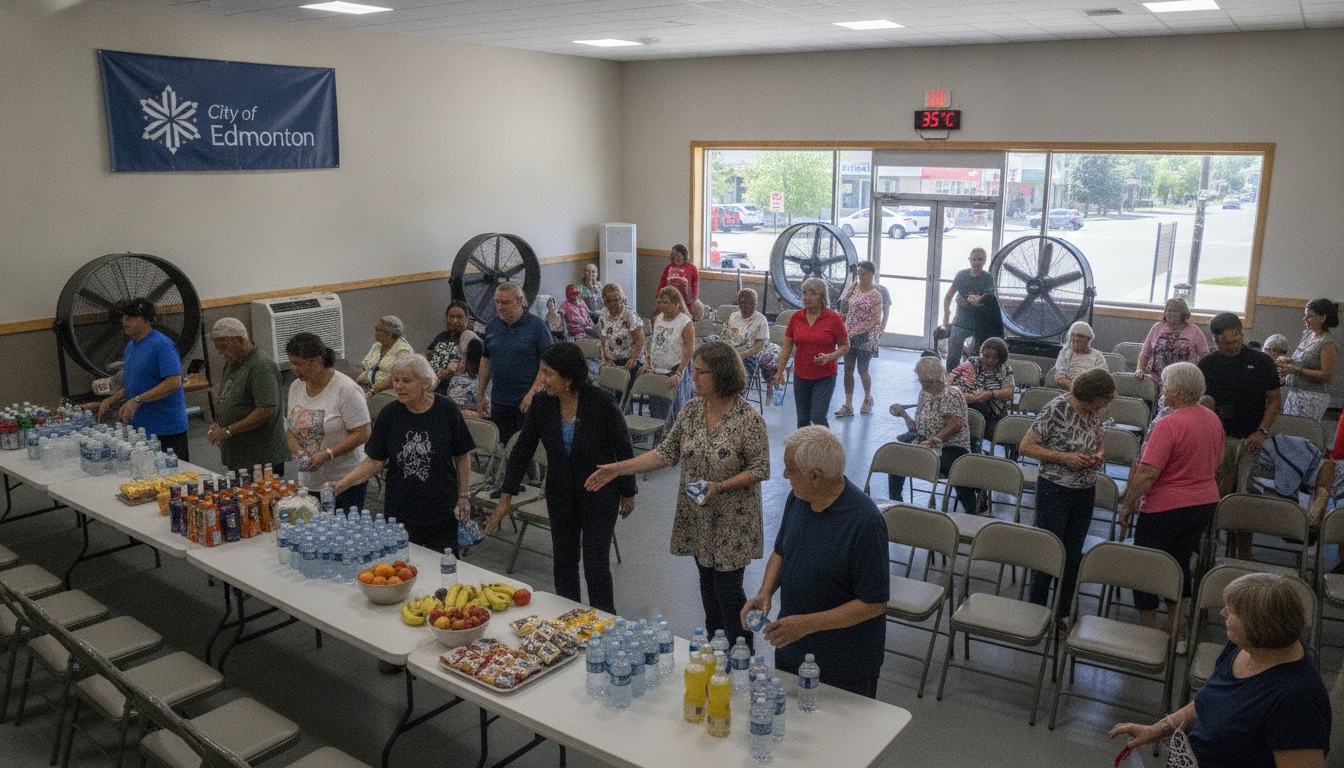
As part of the response, water stations attached to fire hydrants will be set up at 29 locations around Edmonton to provide easy access to drinking water. Peace officers will carry bottled water to distribute directly to people experiencing homelessness or other vulnerabilities, and free bottled water is available for pickup at designated city facilities. The goal is to reduce dehydration and heat exposure among those with limited access to cool environments.
Recreation centres, public libraries and outdoor pools will be available as cooling centres, offering air-conditioned spaces and swimming opportunities for residents seeking relief. City-run pools and splash pads are being encouraged as short-term ways for families to cool down safely. Officials remind users to follow posted safety guidance at pools and to supervise children closely.
Meteorologist explains the shift to sun and heat
Environment Canada meteorologist Janelle Gergely said an upper-level ridge is moving into Alberta, bringing sinking air that prevents cloud development and allows temperatures to build. That pattern change shifts conditions from grey and stormy to mostly sunny and dry, reducing the frequency of the thunderstorms that affected the region in recent weeks. Gergely noted the change in upper-level winds will also curtail fresh smoke coming from the Northwest Territories.
She cautioned, however, that smoke already present in the region will take time to disperse because surface winds are light, so air quality could improve gradually over the next 24 hours rather than instantly. There remains a risk of smoke transport from British Columbia depending on fire activity and wind patterns, a persistent summer concern across Western Canada. Residents with respiratory issues were advised to monitor air quality updates and limit outdoor exertion if conditions worsen.
Forecast details and public safety outlook
Environment Canada’s forecast indicates daytime highs in the low 30s Celsius from Thursday through Saturday, with dry conditions expected apart from a 30 per cent chance of evening rain Saturday. Overnight temperatures are expected to moderate but may remain warm in built-up areas, increasing nighttime heat exposure for some residents. The city’s activation criteria and services are designed to address both daytime and overnight risks associated with prolonged warm spells.
Health officials advise people to stay hydrated, avoid strenuous outdoor activity during peak heat hours, and check on neighbours who may be more vulnerable, including older adults and people with chronic illnesses. Pets should not be left in vehicles or outside without shade and water, and caregivers are encouraged to seek cool spaces for anyone showing signs of heat stress. Employers and outdoor workers are reminded to follow occupational safety guidelines for heat exposure.
Logistics for residents and at-risk populations
City personnel say the network of cooling centres and the 29 hydrant-linked water stations will be clearly signposted and staffed where possible to assist people with access needs. Mobile response teams will circulate through areas with higher concentrations of vulnerable residents to offer water and guidance. Non-profit partners and outreach groups are coordinating with municipal services to reach people experiencing homelessness or who have difficulty accessing fixed facilities.
Transit riders and those planning outdoor events should anticipate hotter conditions and consider rescheduling strenuous activities to cooler parts of the day. Municipal crews will continue monitoring park irrigation and water usage to balance public comfort and conservation needs after weeks of heavy rainfall followed by the sudden dry-up. The image of misting stations and cool pools around the city reflects both community resilience and municipal preparedness as Edmonton transitions into this warm spell.
Edmonton residents are urged to keep informed through official city and Environment Canada notices, use cooling centres if needed, and take routine precautions during the heat. The city emphasizes that the activation may be extended if forecasts call for continued high temperatures, and officials will reassess conditions daily to guide resource deployment.
