
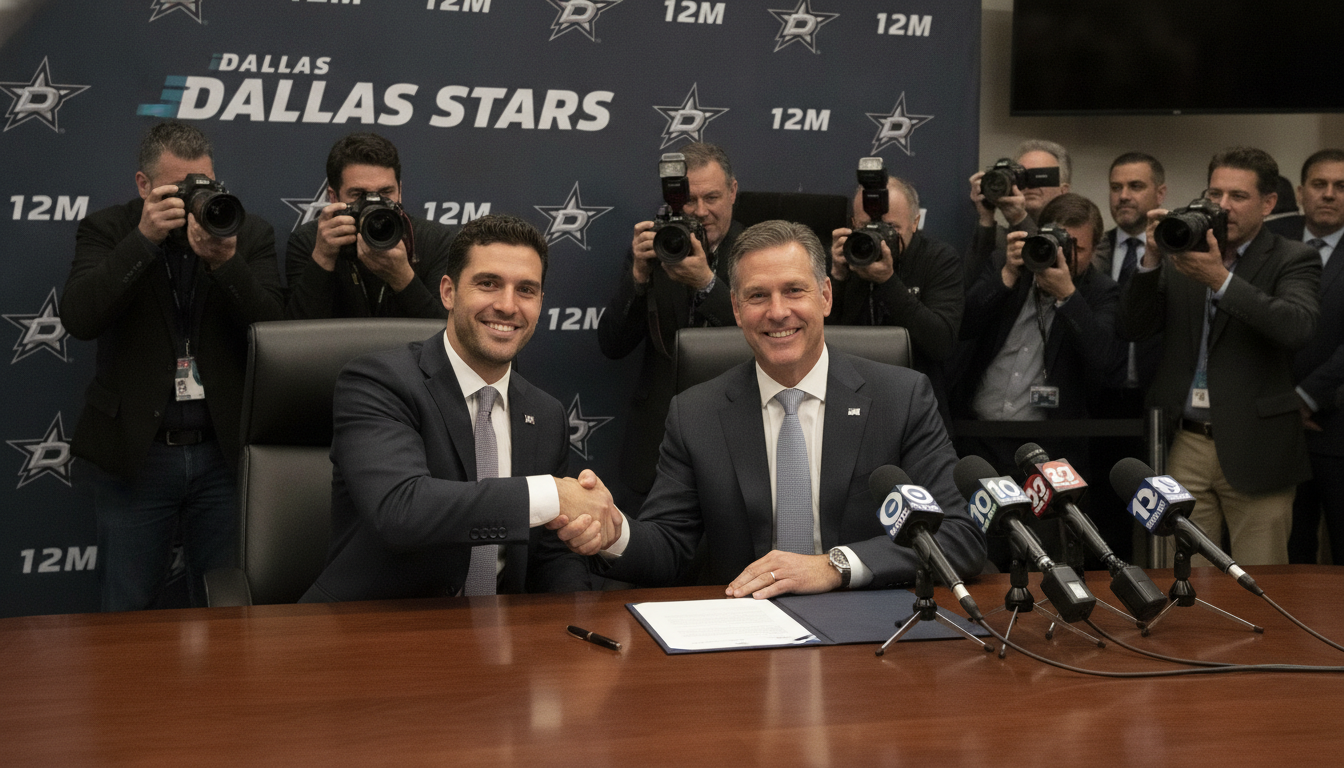
Jason Robertson Signs One-Year, $12M Deal with Dallas Stars to Avoid Arbitration
Jason Robertson agreed to a one-year, $12-million contract with the Dallas Stars, avoiding arbitration and extending his stay while deferring a long-term decision.
Agreement averts arbitration and keeps Robertson in Dallas
Jason Robertson and the Dallas Stars reached a one-year, $12-million deal on Wednesday that halted an arbitration hearing scheduled for the weekend. The short-term contract preserves Robertson’s place in Dallas and buys both sides more time to negotiate a potential long-term agreement.
The winger arrives at the 2026–27 season coming off a 45-goal, 96-point campaign, his second-most productive year in the NHL. That performance concludes the four-year, $31-million contract Robertson signed with the Stars in 2022 and reinforces his status as one of the league’s premier offensive players.
Player bets on himself with a contract year
By accepting a single-season deal, Robertson effectively wagered on his ability to maintain or improve his recent form and maximize future earnings on the open market. If he produces another 40-goal season, he will enter unrestricted free agency in 2027 at age 27 with rising salary-cap conditions and a strong market position.
The move, however, brings risk: injury or a dip in production this season could significantly alter Robertson’s leverage next summer. The decision echoes past situations where players who turned down long-term security found their bargaining power diminished after a down year.
Trade discussions with Seattle collapsed this summer
Negotiations earlier in the offseason reportedly included a near-trade to the Seattle Kraken that would have involved a high draft pick in the 2026 NHL Draft. Seattle was said to be willing to offer a long-term deal in the neighborhood of $15 million per season, but Robertson declined the proposal and the transaction collapsed.
That failed trade underscored both the player’s market value and his preference to remain where he believes he can showcase his best work. The brief flirtation with a move to Seattle also heightened urgency in Dallas’ front office to find a temporary solution that avoided further rancor.
Dallas cap constraints shaped the short-term approach
Cap reality was a primary driver of Dallas’ willingness to sign a one-year contract rather than agree to a multiyear, high-AAV deal. The Stars have limited wiggle room this summer and already moved a young forward, Mavrik Bourque, in part to help manage the payroll picture.
Financial relief is expected to arrive next season when veteran Tyler Seguin’s $9.85-million cap hit comes off the books and several other contracts expire. The NHL salary cap is also projected to rise, which could create more than $40 million in available space for Dallas in the 2027 off-season and permit the club to revisit a larger offer.
Front office and player frames for future talks
General manager Jim Nill framed the contract as a pragmatic compromise that matched Dallas’ short-term constraints with Robertson’s immediate interests. Nill indicated the organization still aims to find a pathway to a long-term agreement and plans to resume substantive discussions once the calendar permits.
Robertson described the deal as a business decision and said both sides will use the extra time to reassess. He also emphasized his focus on preparing for the upcoming season and left open the possibility of re-signing long term, while acknowledging uncertainty about his ultimate destination.
Market context and comparables for elite forwards
This contract came amid a busy free-agent climate that has seen large deals for top forwards, shifting the market baseline for elite scoring talent. Recent long-term contracts for young stars have included AAVs well above the $12-million threshold, which makes Robertson’s one-year figure appear modest relative to other top-of-market signings.
The short-term pact puts Robertson in a rare position: he can return to market as a proven, elite scorer in his prime, likely attracting significant interest. At the same time, the Stars have signaled they want parity between Robertson and other top earners on the roster, creating the potential for a repeat negotiation if both parties remain at odds over valuation.
What this means for Dallas’ 2026–27 campaign
For the 2026–27 season, the Stars retain their leading offensive catalyst and avoid the disruption that a protracted arbitration battle or mid-summer trade might have produced. Keeping Robertson on the roster preserves Dallas’ competitive window and maintains continuity on a team that remains a contender.
Yet the one-year term introduces added uncertainty into roster planning beyond this season, as Dallas could face the prospect of losing Robertson in free agency or restarting high-stakes contract talks next winter. How the club manages its cap flexibility and player acquisitions in the months ahead will influence whether Robertson remains a long-term fixture.
The agreement settles the immediate impasse but leaves the broader question unresolved: whether Robertson and the Stars can bridge their valuation gap before the winger tests unrestricted free agency in 2027.
