
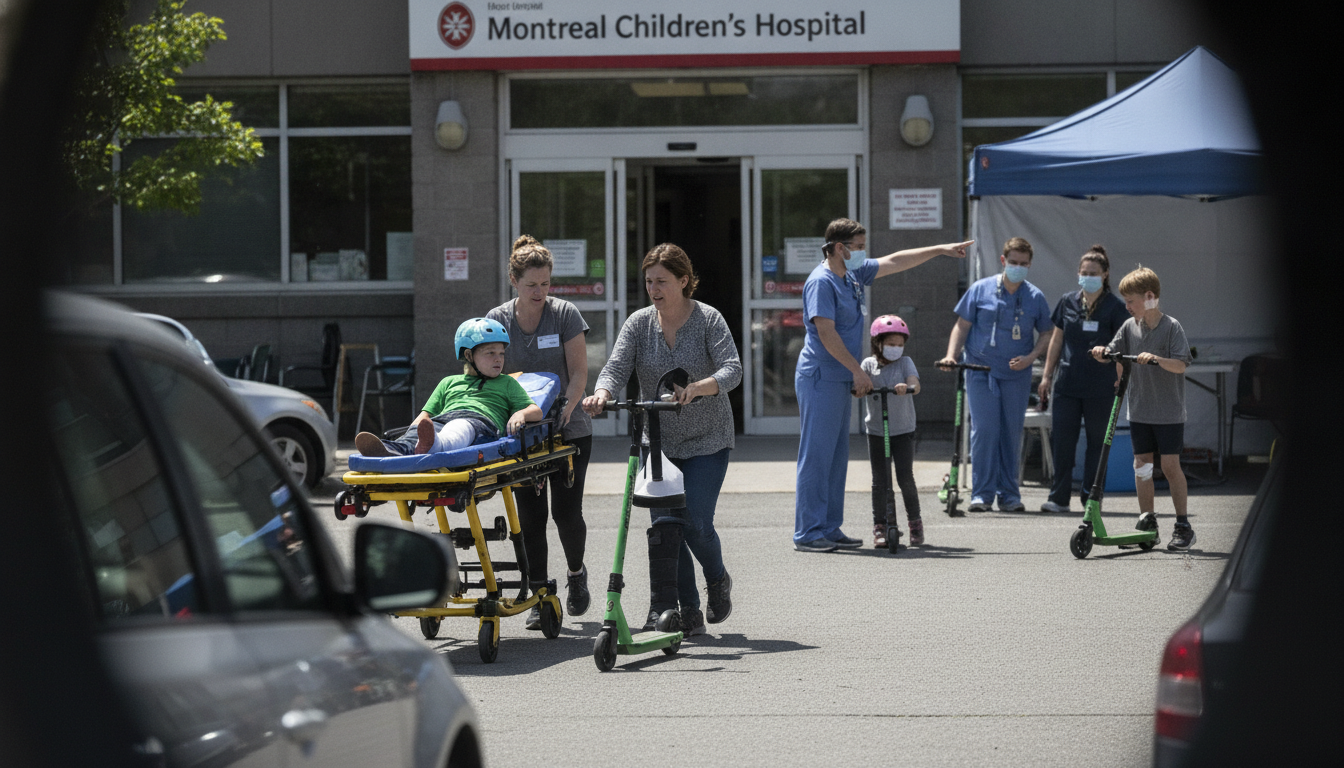
Montreal doctors warn of surge in electric scooter injuries among children
As of early August 2026, Montreal Children’s Hospital reports 80+ child electric scooter injuries and urges Quebec to raise the minimum riding age to 16.
Montreal Children’s Hospital sounds the alarm
As of early August 2026, trauma specialists at the Montreal Children’s Hospital say they have treated more than 80 children and adolescents for electric scooter injuries this summer. That caseload, they warn, already exceeds the total number of similar cases seen across the previous year.
Physicians who signed an open letter describe a marked rise in both the number and severity of incidents, prompting calls for urgent public-health action. The surge has focused attention on how e-scooters are regulated and used around the province.
Severity and types of injuries reported
Clinicians report a broad spectrum of harm, from facial fractures to internal organ injuries and serious head trauma. About 65 percent of the children admitted with e-scooter-related injuries presented with complex trauma that required surgery or extended intensive-care stays, according to the hospital team.
Medical staff say forward falls are common, which helps explain the frequency of facial and brain injuries. Those patterns are heightening concerns about long-term recovery and disability among young patients.
Many injured riders are under the legal minimum
Hospital data show that 56 percent of the injured children were under 14 years of age, despite the legal minimum set for electric scooter operation. That discrepancy has alarmed doctors who argue that current age rules do not reflect developmental readiness for managing motorized vehicles in traffic.
Trauma specialists stress that many young riders lack the judgment and motor skills needed to navigate complex road environments at speed. The result, they say, is a disproportionate share of injuries among the youngest users.
Calls to raise the minimum riding age to 16
Signatories of the hospital letter are urging Quebec to raise the minimum age for operating electric scooters to 16 years. They argue that higher age thresholds would better align with cognitive and physical development and could reduce the number of high-risk riders on the road.
Proponents of the change also point to the absence of required training or licensing for e-scooter users, even though some devices can reach speeds comparable to mopeds. Raising the age limit would be one part of a broader regulatory review the doctors are recommending.
Helmet standards and protective gear recommendations
Medical staff recommend stronger protective measures, including the use of full-face helmets that also shield the face, as an immediate harm-reduction step. Clinicians say conventional bike helmets often fail to prevent the facial and cranial injuries that occur when riders are thrown forward.
Public health advocates and road-safety groups are urging clearer guidance on acceptable helmet types and wider education campaigns, especially targeting families of younger teens and preteens. They say equipment guidance should be paired with enforcement of existing helmet rules.
Enforcement challenges and vehicle modifications
Current pilot regulations in Quebec limit e-scooter speeds to 25 km/h and restrict their use to roads with maximum speed limits under 50 km/h, while requiring helmets. However, enforcement remains inconsistent and many riders flout rules on two-up riding, speed and proper helmet use, officials say.
Experts also warn that some commercial models sold online are easily modified to far higher speeds, with anecdotal reports of modified scooters capable of reaching 85 km/h. That gap between regulation and on-street reality complicates policing and increases the risk posed by more powerful machines.
Recommendations beyond age limits
In addition to raising the minimum age, hospital signatories recommend firmer enforcement of single-rider rules, speed checks and targeted public education led by health professionals. They also suggest exploring training requirements or a permit system similar to those used for other low-powered motor vehicles.
Safety advocates emphasize that legislation alone will not solve the problem without investment in safe infrastructure, better consumer information and regular inspections to prevent dangerous modifications. They call for a coordinated strategy that includes government, health agencies and community organizations.
Montreal trauma specialists say the recent uptick in electric scooter injuries among children demands immediate attention from policymakers, parents and enforcement authorities. They urge a mix of regulatory tightening, protective equipment standards and public education to curb a trend that they fear will leave lasting harm among a new generation of young riders.
