
Colorado Avalanche face pivotal offseason after shock sweep, Bednar under scrutiny and Makar extension looms
Colorado Avalanche face a pivotal offseason after a sweep by Vegas — Jared Bednar’s future and Cale Makar’s extension will shape the club’s next chapter.
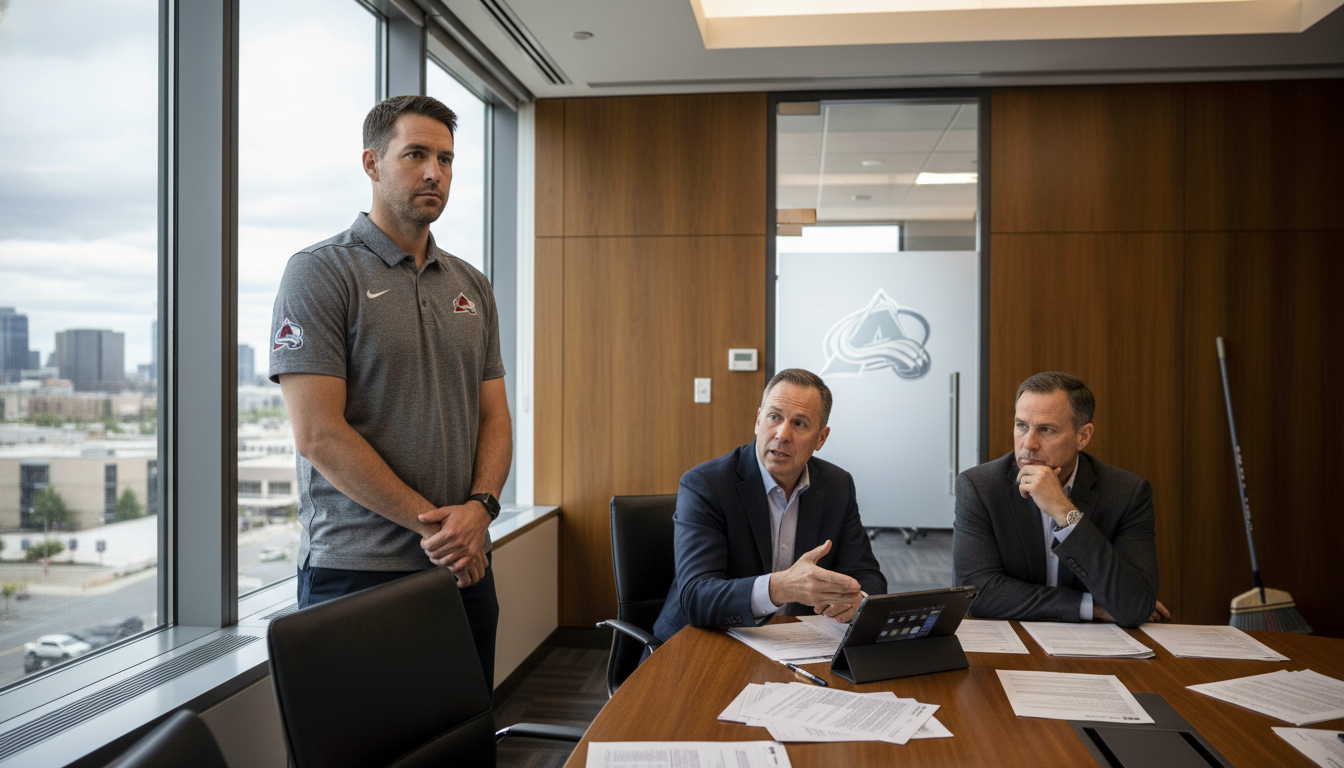
The Colorado Avalanche enter a critical offseason after a surprising four-game sweep by the Vegas Golden Knights in the Western Conference Final. Expectations for the Presidents’ Trophy winners were championship-or-bust following a 121-point regular season, and the abrupt exit has intensified questions about coaching, roster construction and looming contract decisions. With star defenseman Cale Makar poised for an extension on July 1 and several veteran players nearing or past 30, Colorado must balance immediate pressure to win with long-term cap planning.
Bednar’s tenure and the case for change
Jared Bednar remains one of the NHL’s longest-tenured coaches and the architect of Colorado’s Stanley Cup triumph four years ago. That pedigree gives him significant credibility, but four consecutive postseasons of underperformance relative to regular-season standards has amplified criticism. The Avalanche have topped 100 points in each of the past four seasons yet advanced past the second round only once, producing a string of disappointing playoff exits despite elite regular-season results.
Speculation about a coaching change has gained traction because the organization possesses the resources and urgency to pursue high-profile options. Names such as David Carle, Jay Woodcroft and Bruce Cassidy have been floated as potential fits to provide a fresh voice behind the bench. Any decision will hinge on whether ownership and management view this year’s result as an anomaly driven by injuries and circumstance, or part of an unacceptable pattern requiring new leadership.
Injuries and goaltending shaped the series outcome
Colorado’s series was heavily affected by personnel setbacks that complicated Bednar’s task. Cale Makar missed the first two games of the Conference Final, and his absence altered Colorado’s transition game and neutral-zone control. Nathan MacKinnon’s injury after blocking a shot in Game 3 left the team without full-strength finishes from its top forwards, further limiting offensive options.
Vegas netminder Carter Hart also played a decisive role, posting a .944 save percentage across the series and keeping the Golden Knights in every game. Those factors combined to create a narrow window for coaching adjustments; when your two best players are hampered and the opposition’s goaltender is at peak form, tactical changes can only do so much. The Avalanche’s depth and coaching will be evaluated in light of how the club performs when key contributors are unavailable.
Cale Makar extension will test Colorado’s salary-cap strategy
Makar’s impending July 1 eligibility for an extension has already become the central financial question for the franchise. Currently earning $9 million, the Norris Trophy winner is widely expected to command a substantial raise as his next deal would kick in amid a projected salary-cap rise. Given projections for the cap to reach approximately $113.5 million by the 2027–28 season, theoretical contracts could approach unprecedented averages, though Colorado will likely seek a structure that preserves roster flexibility.
Team executives face a delicate calculus: reward an elite defenseman with market-leading compensation while ensuring enough cap space to replenish aging forwards and defensemen. Several Colorado regulars — including Devon Toews, Nazem Kadri, Brock Nelson, Gabriel Landeskog, Valeri Nichushkin and Josh Manson — are 31 or older, and replacements will be needed as those players decline. Reports and industry comparisons suggest a realistic Makar outcome in the $14–$15 million AAV range on a long-term deal, a number that would acknowledge his impact while limiting disruption to the broader roster.
Carolina Hurricanes set a new playoff standard through three rounds
While Colorado wrestles with an uncertain offseason, the Carolina Hurricanes have provided a contrasting blueprint for postseason dominance. Carolina reached the Stanley Cup Final after a 12–1 start to the playoffs, the best opening mark since the NHL standardized seven-game rounds in 1987. The Hurricanes swept both Ottawa and Philadelphia and dismantled Montreal defensively, allowing the fewest shots in playoff history over a five-game series.
Rod Brind’Amour’s group has combined defensive discipline, depth scoring and relentless forechecking to overwhelm opponents, and the team now faces its stiffest test against Vegas. If Carolina can convert this historic run into a championship, few will dispute the Hurricanes’ claim to the most dominant postseason performance of the current era.
Prospects and veteran moves reshape league narratives
Beyond Colorado and Carolina, several individual developments are reshaping the hockey landscape. Swedish prospect Ivar Stenberg enhanced his draft stock with four goals and eight points in eight games at the IIHF World Championship, bolstering arguments that he could challenge for a top selection. Meanwhile, Gavin McKenna’s absence from the tournament has kept the No. 1 debate open, but Stenberg’s performances have injected new momentum into discussions among scouts and general managers.
On the veteran side, the Pittsburgh Penguins secured Evgeni Malkin on a one-year, $5.5 million deal that keeps Sidney Crosby and Malkin together for at least another season. The contract underscores how rising salary-cap projections are reshaping perceptions of value, as deals that once seemed large become more palatable in a high-cap environment.
Colorado—facing coaching scrutiny, an expensive extension decision in Makar and an aging core—must navigate a narrow path between preserving a championship window and executing prudent cap management. The coming weeks will test the Avalanche’s ability to turn disappointment into a clear, sustainable plan.
