
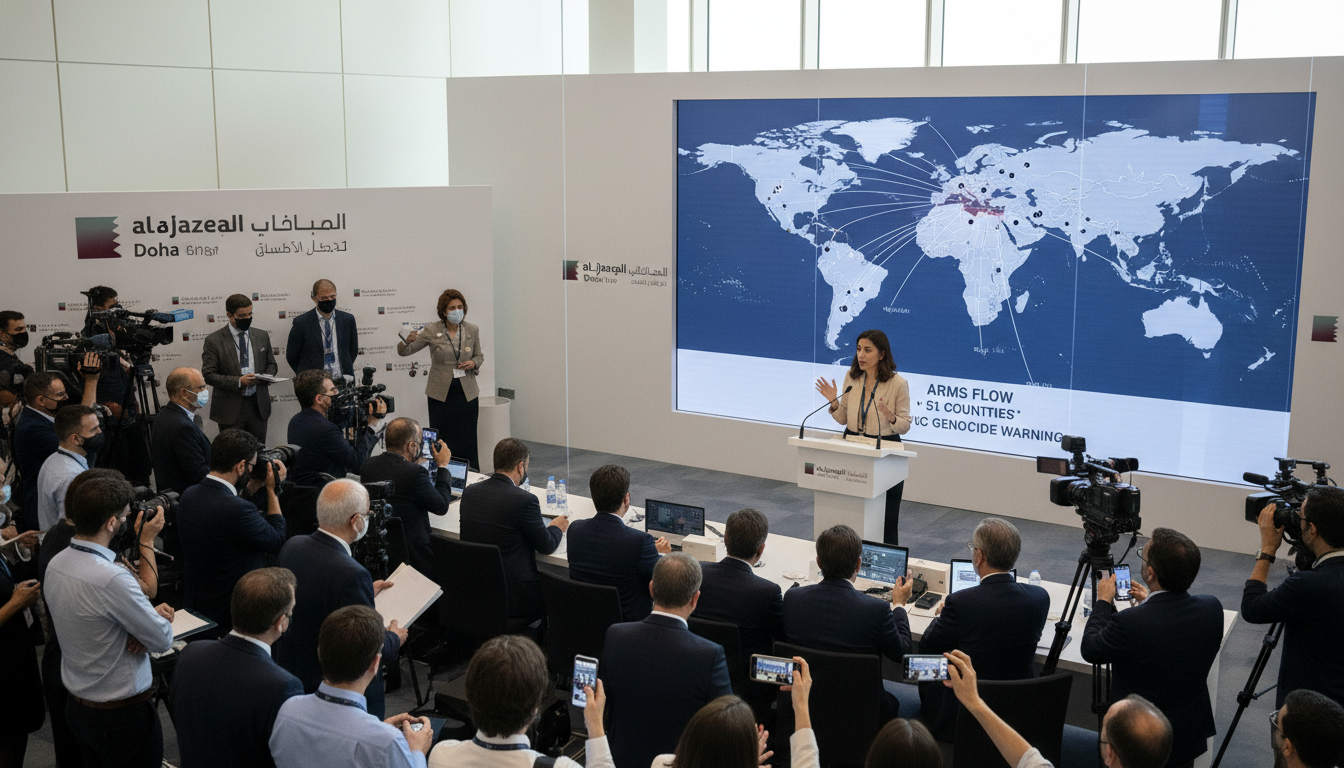
Arms exports to Israel continued from 51 countries after ICJ genocide warning, Al Jazeera finds
Al Jazeera finds military goods from 51 countries continued entering Israel after the ICJ’s genocide warning, prompting scrutiny of arms exports to Israel.
An Al Jazeera investigation released on May 31, 2026, found that military-related goods from at least 51 countries and territories continued to enter Israel after the International Court of Justice warned of a plausible risk of genocide in Gaza. The report links those flows to a range of materiel, and identifies a notable rise in imports connected to ammunition in the weeks before a mass killing at a food distribution site. The findings have renewed scrutiny of how arms exports to Israel have been managed amid allegations of widespread civilian harm.
Investigation scope and methodology
Al Jazeera said its probe examined customs, shipping and trade records to trace military-related items bound for Israel and Israeli-controlled areas. Investigators identified a diverse set of cargoes with military applications and supply-chain links across multiple jurisdictions. The report emphasizes shipment origins and transit points rather than alleging direct intent by all listed suppliers.
Transfers persisted after ICJ warning and before October 2025 ceasefire
The investigation found transfers continued in the period after the International Court of Justice issued its warning regarding a plausible risk of genocide in Gaza. Many of the shipments it documents were recorded up until an October 2025 ceasefire, according to the report. That timeline raises questions about the timing of export controls and the processes governments use to assess risk when international courts highlight potential mass atrocity situations.
Countries named include Britain, Canada, France, Germany, Italy and Spain
Al Jazeera reported that arms-origin traces led back to suppliers in Britain, Canada, France, Germany, Italy and Spain among others. The network said some of those states had publicly supported restrictions or embargoes at various points, yet exports of military-related goods continued to arrive. The investigation does not attribute specific decisions to individual companies or government licences, but it places state-level supply chains at the centre of scrutiny.
Spike in ammunition-linked imports before Gaza Humanitarian Foundation massacre
The report identifies a surge in imports associated with bullets and related materials in the lead-up to the Gaza Humanitarian Foundation massacres, when Palestinian civilians seeking food were shot while collecting aid. Al Jazeera’s analysis suggests an increased flow of ammunition-related items in the weeks preceding that episode, though it notes causation is not established. The finding has fueled calls for further forensic and policy-level examination of how such consignments are authorised and tracked.
Legal context and obligations under international law
The International Court of Justice’s finding that there was a plausible risk of genocide places a specific legal spotlight on third countries’ conduct, experts say, because international law can restrict transfers that would facilitate serious violations. States party to instruments such as the Arms Trade Treaty face obligations to assess whether exports would contribute to human-rights abuses or breaches of international humanitarian law. The Al Jazeera report has prompted legal scholars and advocacy groups to reiterate the need for rigorous, evidence-based export assessments when courts issue grave warnings.
Governments, industry and calls for transparency
Responses from governments named in the investigation have varied in recent weeks, with some reiterating commitments to export controls and others stressing compliance with existing licensing regimes. Industry groups typically point to legal frameworks and due diligence procedures governing private exporters and manufacturers. Human-rights organisations responding to Al Jazeera’s findings are calling for increased transparency, independent audits of export licences and clearer criteria for suspending transfers when there is credible risk to civilians.
Questions remain about how recorded shipments align with individual licensing decisions, and whether transit or dual-use categorisations affected classification in customs records. Investigators and civil-society groups are urging governments to publish more detailed export data and to cooperate with independent reviews so that evidence can guide policy changes.
The Al Jazeera investigation adds to an ongoing international debate about the regulation of arms exports when allegations of mass atrocities emerge, and about the mechanisms available to states to prevent materiel reaching zones of intense conflict. The network’s findings make clear that supply chains often span many jurisdictions and that publicly stated restrictions do not always produce immediate or complete halts in movements of military-related goods.
Longer-term policy responses could include more onerous pre-shipment verification, enhanced intergovernmental information-sharing, and stronger penalties for breaches of export controls, experts suggest. For now, the report intensifies pressure on governments to reconcile commercial and strategic relationships with their legal and moral obligations to prevent harm to civilians in conflict zones.
The Al Jazeera investigation, published May 31, 2026, leaves open significant questions about specific authorisations and the role of private and state actors in complex supply chains; it has prompted renewed calls for clearer, faster and more transparent controls on arms exports to Israel when international bodies signal serious risk to civilian populations.
